How Much Does It Cost to Study Medicine in Georgia? 2026 Figures
11.09.2026

What are the tuition fees for medicine in Georgia in 2026?
Tuition at Georgian medical universities ranges from $5,500 to $8,000 per year (approximately €5,050–€7,350) for standard English-medium MD programmes. Tbilisi State Medical University also offers an American MD track at $13,500 per year, though most international students from Europe opt for the standard MD. Fees have remained broadly stable since 2023.
| University | Annual Tuition (USD) | Annual Tuition (EUR approx.) | Duration |
|---|---|---|---|
| European University Georgia | $5,500 | ~€5,050 | 6 years |
| Caucasus International University | $6,000 | ~€5,520 | 6 years |
| David Tvildiani Medical University (AIETI) | $6,000 | ~€5,520 | 6 years |
| University of Georgia (School of Medicine) | $6,000–$6,500 | ~€5,520–€5,980 | 6 years |
| New Vision University | $7,000 | ~€6,440 | 6 years |
| Tbilisi State Medical University (TSMU) | $8,000 | ~€7,360 | 6 years |
| Source: Official university websites, 2025/26 academic year. EUR conversion at 1 USD = 0.92 EUR (September 2026 approximate). | |||
Which Georgian medical universities are WFME-accredited?
WFME accreditation is the credential that counts most for internationally mobile graduates. It is required for ECFMG certification in the United States (mandatory since 2024), and it signals quality to licensing bodies in Canada, Australia and across the EU. Four of the six major Georgian medical schools currently hold this standard.
WFME-accredited institutions in Georgia (2025/26):
- Tbilisi State Medical University (TSMU) — WFME-accredited, listed in WDOMS, WHO-recognised
- David Tvildiani Medical University (DTMU / AIETI) — WFME-accredited, NMC-recognised
- Caucasus International University — WFME-accredited, listed in WDOMS
- University of Georgia (School of Medicine) — WFME-accredited, ECFMG-eligible
New Vision University and European University Georgia are listed in the World Directory of Medical Schools and recognised by national bodies, but their direct WFME accreditation status should be confirmed with each institution before applying. Being in WDOMS is not the same as WFME accreditation. Always verify the current status with both the university and your home country's licensing authority.
What are the living costs for international students in Tbilisi in 2026?
Tbilisi is affordable by European standards. A realistic student budget sits between €480 and €650 per month, depending on accommodation choice and lifestyle. The city has efficient public transport, cheap local markets, and rents well below those in Bucharest, Budapest or Warsaw.
| Expense | Budget / month | Mid-range / month | Notes |
|---|---|---|---|
| Rent (shared apartment) | €170–200 | €220–320 | University dorms from €80/mo; private rooms in Saburtalo/Vake districts |
| Food & groceries | €130–160 | €165–200 | Home cooking; local markets very cheap compared to Western Europe |
| Health insurance (mandatory) | €50–60 | €70–90 | Required for visa; minimum 30,000 GEL coverage since 2026 |
| Utilities & internet | €40–55 | €55–80 | Higher in winter (gas heating); fibre internet ~€10/mo |
| Public transport | €12–15 | €15–18 | Metro + bus; single ride ≈ €0.35; student card available |
| Personal & social | €40–60 | €80–120 | Vibrant café culture; dining out remains inexpensive |
| Monthly total | €442–550 | €605–828 | |
| Sources: Numbeo Tbilisi (September 2026), applygeorgia.com. EUR: 1 GEL ≈ 0.34 EUR. | |||
What is the total cost of a 6-year medical degree in Georgia?
The all-in six-year cost depends primarily on university choice and lifestyle. Here is a worked example using Caucasus International University at $6,000/year tuition.
Worked example — Caucasus International University, September 2025 intake:
- Tuition: $6,000 × 6 years = $36,000 (≈€33,100)
- Living costs: €550/month × 72 months = €39,600
- Health insurance: €750/year × 6 years = €4,500
- Flights home (2 × year): €500/year × 6 years = €3,000
- Year-one setup (visa, registration, furnishings): €800
- Total 6-year all-in estimate: ≈€81,000
At the lower end — European University Georgia ($5,500/year) with a budget lifestyle of €480/month — the six-year total including insurance and flights comes to approximately €68,000. At TSMU ($8,000/year) with a mid-range lifestyle, expect ≈€94,000.
Are there scholarships for international students studying medicine in Georgia?
Options exist. They are limited.
The Georgian government does not operate a broad scholarship programme targeting international medical students. What is available falls into three categories:
- University merit discounts. Several private Georgian medical schools offer partial tuition reductions — typically 10–20% — to students who maintain strong academic performance across their first two years. TSMU and DTMU have both offered such arrangements. Details change annually; ask the admissions office directly.
- Home-country funding. Students from Germany may apply for BAföG for study abroad. Swiss students may access cantonal grants. Austrian students have comparable instruments. Georgia is generally an eligible country — verify with your local authority before applying.
- External foundations. The DAAD and select private foundations fund study abroad in exceptional cases. None target Georgia specifically. Competition is high; deadlines are early.
For advice on funding matched to your specific situation, a free individual consultation is the fastest route to clarity.
How do Georgian medical school costs compare to other affordable destinations?
Georgia's main competitors for cost-conscious international students are Romania, Hungary, Poland and the Baltic states. On price, Georgia holds its own — and beats most on ease of English instruction and total cost of living.
Approximate annual all-in comparison (tuition + living costs, 2025/26):
- Georgia (Caucasus / DTMU): ~€5,520 tuition + €6,600 living = ~€12,100/year
- Romania (Cluj, Iași): ~€5,000–7,000 tuition + €6,000–7,200 living = ~€11,000–14,200/year
- Hungary (Pécs, Debrecen): ~€7,000–16,000 tuition + €7,200–9,600 living = ~€14,200–25,600/year
- Poland (Warsaw, Wrocław): ~€11,000–14,000 tuition + €8,400–10,800 living = ~€19,400–24,800/year
- Baltic states (Latvia, Lithuania): ~€8,000–12,000 tuition + €8,400–10,800 living = ~€16,400–22,800/year
Georgia's cost advantage is real — particularly at the $5,500–6,000 tuition tier. The trade-off is distance from Central Europe and a smaller international alumni network compared to longer-established destinations.
{{cta}}What hidden costs should medicine students in Georgia budget for?
Most cost guides stop at tuition and rent. These are the expenses that catch students off-guard.
- Visa and documentation (year one): Notarisation, certified translation of school-leaving certificates, and administrative registration fees add €200–350 to your first-year bill.
- Health insurance (mandatory since 2026): International students must hold Georgian health insurance with minimum coverage of 30,000 GEL (≈€10,200). Annual premiums run €600–900. Some universities bundle this; most do not. Ask explicitly.
- Flights home: Tbilisi has direct connections to several European cities but fares are not cheap. Budget €400–700 per round trip; two trips home per year adds €800–1,400 annually.
- USMLE / PLAB prep materials: If you intend to practise in the US or UK, budget $500–1,500 for Step 1 resources across your pre-clinical years.
- Year-one setup: Laboratory coat, equipment and textbooks cost €200–400 at intake. Georgia has no meaningful second-hand textbook market — build your library digitally where possible.
- Currency fluctuation: Fees are denominated in USD. If you budget in EUR, a strengthening dollar raises your real cost. The USD/EUR rate moved meaningfully in both directions between 2022 and 2025.
What is the application and registration process timeline for Georgian medical schools?
Most Georgian universities accept applications from January through August for a September intake. A February intake also exists at several institutions.
- January–March: Research and shortlist universities. Verify accreditation status directly. Request official fee schedules — not third-party estimates.
- April–May: Submit applications. Most require official transcripts, a passport copy and a personal statement. No IELTS or TOEFL is required at most Georgian institutions for the English-medium track.
- May–June: Receive offers. Confirm your place with a tuition deposit ($500–1,000 typical).
- June–July: Begin student visa processing. Document notarisation and translation can take 4–6 weeks — start early.
- August: Secure accommodation. University dormitories fill by June; private apartments in Saburtalo and Vake districts near major medical campuses are the practical alternative.
- September: Arrive, complete university registration, obtain your resident permit, activate health insurance.
For questions about whether your specific academic background fits a particular programme, speak with an advisor before applying. Our free individual consultation exists for exactly that conversation.
What most cost guides miss about studying medicine in Georgia
Three things rarely appear in the standard comparison articles.
1. Tbilisi rents moved sharply upward after 2022. The significant influx of international workers and relocating businesses pushed apartment prices up 35–50% between 2021 and 2023. A one-bedroom that cost $350/month in 2021 now averages $440–500. University dormitories — which still run $80–150/month — are the genuine budget option, but places are limited. Apply for dormitory placement the moment you accept your offer, not after you arrive.
2. The GEL-to-EUR exchange rate is not your friend by default. Tbilisi rents are often quoted in GEL or USD, not EUR. When the lari strengthened against the euro in 2022–23, students paying from EUR bank accounts saw their effective housing cost rise even though nominal GEL prices were flat. Build a 10–15% exchange rate buffer into your annual budget.
3. Clinical rotations in years 4–6 can shift your cost base. Some Georgian universities arrange rotations partly in regional hospitals outside Tbilisi. This may mean temporary relocation, travel costs, or — in some cases — lower accommodation costs. Ask your target university specifically how rotations are structured and whether additional fees apply in clinical years.
The author's view
I studied dentistry in Sofia, Bulgaria from 2015 to 2021. Eastern Europe and the Caucasus have genuine strengths in affordable, English-medium health science education, and I can speak to that landscape with some firsthand grounding. What varies dramatically — between countries, and between universities within the same country — is the quality of clinical exposure in years four through six. Tuition figures tell you what the degree costs. The hospitals where you rotate, and the cases you actually handle, tell you what it is worth.
From more than 500 student placements I have been involved in since becoming Swiss-licensed and settling in Bern, the students who struggled most after graduating from Caucasus and Eastern European programmes were not those who found the academics too hard. They were those who underestimated the practical gap between their degree and the licensing requirements of their intended country of practice. Georgia is a legitimate option — several of my clients have had strong outcomes there — but it requires genuine due diligence on accreditation, recognition pathways, and the specific clinical training on offer. The €5,500 versus €8,000 tuition decision matters far less than getting the accreditation question right from day one.
If you are weighing Georgia against Romania, Hungary or another destination, the right comparison is not purely annual cost. It is cost per year alongside the realistic probability that the degree unlocks your intended career in your intended country. For a direct, honest conversation about that calculation specific to your profile, I am available through our free consultation service.
Summary
- Georgian medical universities offer English-medium MD programmes at $5,500–$8,000 per year in tuition for 2025/26 — among the lowest in Europe for WFME-accredited institutions.
- Four universities hold direct WFME accreditation: TSMU, David Tvildiani Medical University (DTMU), Caucasus International University, and the University of Georgia.
- Living costs in Tbilisi run €480–650/month for most students — significantly below comparable cities in Hungary, Poland or the Baltic states.
- The all-in six-year cost ranges from approximately €68,000 (budget, European University Georgia) to €94,000 (TSMU with a comfortable lifestyle), including insurance and flights.
- Hidden costs to budget for: mandatory health insurance (€600–900/year), visa and documentation fees (€200–350 in year one), and flights home.
- University dormitories — the most affordable housing option at €80–150/month — fill quickly. Apply by June for a September intake.
- Direct government scholarships for international medical students are limited; home-country funding (BAföG, cantonal grants) is often more accessible.
- Tbilisi rents have risen 35–50% since 2021; budget figures from pre-2022 guides are outdated.
Conclusion
Georgia is not the cheapest country in Eastern Europe on every metric — Romania can marginally undercut it on tuition at the low end. What Georgia offers is the combination: English-medium instruction, WFME accreditation at four major institutions, a functional capital city, and a total cost structure that typically stays between €68,000 and €94,000 for six years all-in. That package is difficult to replicate in Western or Central Europe at anything close to those figures.
The practical decision comes down to which university matches your intended country of practice and what the accreditation trail looks like for your specific goal. Price is the starting filter, not the finishing one. For a direct, no-obligation conversation about which Georgian university — or which country — makes most sense for your profile and career plan, book a free consultation with our team.
Frequently Asked Questions about Studying Medicine in Georgia
Is Georgia a good country to study medicine?
Yes, with qualification. Georgia offers affordable English-medium medical education at universities listed in the World Directory of Medical Schools, with four major institutions holding WFME accreditation directly. Georgian MD degrees are recognised in most European countries subject to individual licensing procedures. The main trade-offs are distance from Central Europe and a smaller international alumni infrastructure compared to longer-established destinations like Hungary or Romania. For cost-conscious students wanting an English-medium programme, Georgia is a serious option worth evaluating carefully.
How much does it cost to study medicine in Georgia per year, all-in?
Tuition runs $5,500–$8,000 per year (2025/26) depending on the university. Add living costs of €480–650/month, mandatory health insurance of €600–900/year, and flights home, and the realistic annual all-in figure is approximately €11,000–15,500. TSMU's American MD track costs $13,500/year in tuition alone and targets students aiming specifically at US licensing pathways.
Can I work while studying medicine in Georgia as an international student?
Georgian law permits international students to work part-time. English-speaking students can find tutoring, translation and hospitality work in Tbilisi. In practice, the medical curriculum — particularly from year three onward — leaves limited time for meaningful employment. Budget conservatively on the assumption that paid work will be difficult to sustain alongside clinical studies.
Are Georgian medical degrees recognised in Germany, Austria and Switzerland?
Recognition is possible but not automatic. A Georgian MD from a WFME-accredited university listed in WDOMS satisfies the basic documentation requirement for EU licensing processes. German Approbation requires the equivalency process under the Approbationsordnung; Swiss licensing involves MEBEKO review. Assessment is individual. Verify your specific situation with the relevant licensing body before applying — and use our free individual consultation to map this out with an advisor who has placed students in your target country.
Do I need to learn Georgian to study medicine there?
No. English-medium MD programmes at all six universities covered here are delivered entirely in English. Georgian language skills are useful for daily life — shopping, navigating the city, communicating with local patients during clinical rotations — but are not a formal programme requirement for international-track students. Most universities offer optional Georgian language courses.
What is the difference between DTMU and TSMU?
Both are WFME-accredited and teach in English. David Tvildiani Medical University (DTMU / AIETI) charges $6,000/year and is a smaller, focused medical institution founded in 1992. Tbilisi State Medical University (TSMU) is Georgia's oldest and largest medical university (founded 1918), charges $8,000/year for its standard MD, and carries stronger name recognition internationally — particularly for ECFMG certification in the United States. The right choice depends on budget, intended country of practice, and campus fit.
Are there hidden fees at Georgian medical universities?
Most universities charge a registration or enrolment fee of $100–500 in year one. Some charge separately for laboratory materials, examination resits or library access. Health insurance — mandatory for student visa holders from 2026 — is not always included in quoted tuition figures. Ask any prospective university for a complete fee schedule covering registration, insurance and materials before committing to a deposit.
How safe is Tbilisi for international students?
Tbilisi consistently ranks as one of the safer capitals in the Caucasus and Eastern Europe for foreign residents. The Numbeo Safety Index placed it above several EU capitals in 2024–2025. The medical student community is large and internationally diverse, and most universities run orientation programmes and student welfare offices to support new arrivals. Standard urban caution applies — the same common sense you would exercise in any city you do not yet know.
What students say about Medschool Experts
Over 500 placements at more than 25 partner universities across 10+ countries. Read independent student reviews on Trustpilot.
About the author
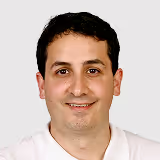
Marcel Kloos
Swiss-licensed dentist and founder of Medschool Experts
Marcel Kloos founded Medschool Experts while studying abroad; since then, over 500 study places have been secured. The Stuttgart-born dentist studied dentistry from 2015 to 2021 in Sofia and holds a Swiss dental licence.
Today he lives in Bern and runs Medschool Experts full-time as its owner.
More articles worth reading
Why Students Transfer from Medical University of Varna — Your Options
Why Students Transfer from Medical University of Warsaw — Your Options
Why Students Transfer from Masaryk University Faculty of Medicine — Your Options
Ahmad
Sabrina
Rami
Noah
500+ students placed.
Now it's your turn!
No daydreaming, no empty promises. Just a clear plan — for the start of your medical degree.
40 minutes, no obligation