Studying Medicine in Europe as a Pakistani Student 2026
18.09.2026

Which European countries teach the entire medical degree in English?
Bulgaria, Latvia, Lithuania, Romania, Hungary, Poland and Italy each run six-year medical programmes taught in English from the first anatomy lecture through to the final state examination. The English stream runs alongside the university's native-language stream, inside the same faculty, using the same teaching hospitals. You are not studying a translated version of the degree. You are studying the degree.
Named examples, all with published English-language programmes for 2026/2027: the Medical University of Varna and the Medical University of Sofia in Bulgaria, Rīga Stradiņš University in Latvia, the Lithuanian University of Health Sciences in Kaunas, and the Carol Davila University of Medicine and Pharmacy in Bucharest. Each publishes its own tuition schedule. Each sets its own entry requirements, and those differ enough between institutions that the only sensible way to build a shortlist is to start from the profile. Our universities directory is the starting point; a free individual consultation is where the shortlist gets narrowed.
Local language still matters, but later. Clinical years put you in front of patients who speak Bulgarian, Latvian or Romanian, so these universities teach the local language as a timetabled subject in the early years. Curriculum, not admission barrier.
What is actually inside a six-year European medical degree?
European Union law sets the floor. Directive 2005/36/EC, Article 24(2), requires basic medical training to comprise "a total of at least six years of study or 5 500 hours of theoretical and practical training". For dentistry, Article 34(2) sets the minimum at five years or 5,000 hours. That is the floor. Every EU medical faculty builds its curriculum on top of it, which is why the shape repeats from Varna to Vilnius.
In practice the six years divide into roughly two pre-clinical years of anatomy, physiology, biochemistry and histology; three clinical years of rotations through internal medicine, surgery, paediatrics, obstetrics and the rest; and a final year that is mostly supervised hospital work leading to the state examination. Carol Davila University of Medicine and Pharmacy states the load in credits: six years, 360 ECTS, for both Medicine and Dental Medicine.
One difference from the Pakistani model changes how you plan the end of the degree. MBBS in Pakistan runs five years, then a house job. The European degree runs six, with the sixth year already carrying much of the supervised clinical load.
How does the cost compare with a private medical college in Pakistan?
Closer than most people expect, and in several countries the European figure is lower. In a press release dated 27 March 2025, the Pakistan Medical and Dental Council announced a tuition fee cap of PKR 1.8 million a year for MBBS and BDS at private colleges, with increases tied to the Consumer Price Index, and a ceiling of PKR 2.5 million for colleges that submit financial justification for exceeding it.
Set that against published European tuition. The Medical University of Varna charges €10,000 a year for the first two years of English-language Medicine in 2026/2027, €9,100 for years three and four, and €9,000 for years five and six. That is €56,200 for the whole degree, fixed in the published schedule rather than escalating annually. The Medical University of Sofia publishes €9,950 a year for English-language Medicine over six years.
The two figures are not in the same currency, and any comparison depends on the rupee-euro rate on the day each instalment is paid. That is the honest version. What is stable is the structure: a European schedule that steps down as you progress, against a domestic cap indexed to inflation.
What does English-taught medicine cost, university by university, in 2026/2027?
Published annual tuition for English-language medical programmes runs from roughly €9,000 to €13,500 a year across the universities below, all figures taken from each institution's own fee schedule for the 2026/2027 academic year. Dentistry usually costs more per year and runs five years instead of six. Fees are quoted in euros because that is how they are billed.
| University and country | Medicine, annual tuition 2026/2027 | Dentistry, annual tuition 2026/2027 | Length |
|---|---|---|---|
| Medical University of Varna, Bulgaria | €10,000 (yrs 1-2), €9,100 (yrs 3-4), €9,000 (yrs 5-6) | €10,000 (yrs 1-2), €9,000 (yrs 3-4), €8,000 (yrs 5-6) | 6 yrs / 6 yrs |
| Medical University of Sofia, Bulgaria | €9,950 | €10,000 | 6 yrs (Medicine) |
| Lithuanian University of Health Sciences, Lithuania | €12,800 (yrs 1-3), €13,300 (yrs 4-6) | €13,600 (yrs 1-3), €14,100 (yrs 4-5) | 6 yrs / 5 yrs |
| Rīga Stradiņš University, Latvia | €13,500 | €15,500 | 6 yrs / 5 yrs |
Sources: published 2026/2027 tuition schedules of the Medical University of Varna, the Medical University of Sofia, the Lithuanian University of Health Sciences and Rīga Stradiņš University.
Romania publishes its admission methodology before its fee schedule, so the Carol Davila tuition figure for 2026/2027 was not public at the time of writing. What the university does publish is a non-refundable competition registration fee of 2,500 lei. Budget it early. It is payable before you know the outcome.
What does a full six-year budget look like from start to finish?
Here is the arithmetic on one real fee schedule. Take the Medical University of Varna's published 2026/2027 rates for English-language Medicine and run them across all six years. Living costs, flights, visa fees and insurance vary too much for us to invent a number, so they sit outside the table and you fill them in yourself against the figures given elsewhere in this guide.
| Year of study | Published tuition | Running total |
|---|---|---|
| Year 1 | €10,000 | €10,000 |
| Year 2 | €10,000 | €20,000 |
| Year 3 | €9,100 | €29,100 |
| Year 4 | €9,100 | €38,200 |
| Year 5 | €9,000 | €47,200 |
| Year 6 | €9,000 | €56,200 |
| Tuition, six years | — | €56,200 |
Figures: Medical University of Varna published tuition schedule, English-language Medicine, academic year 2026/2027.
Two things about that number. It is the whole degree, not one year, and it steps down rather than up, so the expensive years land while you are still living cheaply as a first-year. The one-off items are smaller than people fear: legalisation, translation, and a consulate fee in tens of thousands of rupees rather than lakhs. Budget them anyway. They arrive all at once.
Health insurance is the item people forget. The Bulgarian long-stay visa rules require cover of at least €30,000 including repatriation and emergency medical care, and Italy's study visa checklist for applicants in Islamabad sets the same €30,000 minimum. That is an annual cost for six years.
How do you pay a European university from a bank account in Pakistan?
Through an Authorised Dealer bank, directly to the university, under the State Bank of Pakistan's published rules for education remittances. FE Circular No. 08 of 2015 permits Authorised Dealers to remit foreign exchange to educational institutions abroad on behalf of students up to US$70,000 per student per year, without prior case-by-case approval from the State Bank.
The circular is specific about mechanics. Tuition goes to the institution by SWIFT or telegraphic transfer, not into the student's hands; living expenses may be sent to the student where the institution permits; and Authorised Dealers may release cash foreign exchange equivalent to US$5,000 for initial boarding and lodging on arrival. The bank will ask for the Appendix V-78 form, CNIC copies of student and guardian, the passport copy, the admission letter and a cost sheet.
US$70,000 a year is a wide ceiling next to a €10,000 tuition bill, so for most medical students the limit is irrelevant. That is the point: ordinary banking, not a special case. Ask your bank which branch handles education remittances before the first instalment falls due, because the university's payment deadline will not move for you. Rates move. Keep the budget in euros and do the conversion on the payment date.
Which documents must be legalised before a consulate will look at your file?
Your HSSC or A-level certificates, your birth documents and, later, your degree. Since 9 March 2023, when the Hague Apostille Convention entered into force for Pakistan following the deposit of its instrument of accession on 8 July 2022, Pakistani public documents can carry an apostille instead of going through chain legalisation at each foreign embassy. The Ministry of Foreign Affairs issues it.
The apostille sits at the end of a chain that starts at home. The Inter Boards Coordination Commission attests SSC and HSSC certificates issued by the Boards of Intermediate and Secondary Education, and requires the issuing Board to verify them first, with CNIC copies of student and father. The Higher Education Commission attests university degrees, transcripts and equivalence letters online at Rs 3,000 per document, and does not attest degrees awarded by foreign universities — only its own equivalence letters for them.
Your BISE verifies the HSSC certificate and marks sheet before anyone else will touch them.
Inter Boards Coordination Commission attests the verified certificates, with CNIC copies attached.
Ministry of Foreign Affairs issues the apostille, in force for Pakistan since 9 March 2023.
Into the destination language. Bulgaria requires a certified Bulgarian translation of the diploma.
Two country-specific items catch people out. The Medical University of Sofia requires, alongside the legalised diploma, a document certifying your right to pursue higher education in your country of origin, plus a Certificate of Recognised Completion of secondary education from Bulgaria's National Centre for Information and Documentation. Italy's Islamabad checklist asks for a NADRA Family Registration Certificate issued within the previous six months. Both take weeks.
{{cta}}How does the student visa work from Islamabad, Lahore or Karachi?
You apply for a national long-stay visa, usually called a type D, at the destination country's mission in Islamabad or through its appointed visa service centre, after the university has issued an admission letter. It is a national visa, not a Schengen tourist visa, and each country publishes its own checklist, fee and processing time. The table below sets out four of them as published in 2026.
| Country | Where you apply from Pakistan | Published fee | Stated processing time | Rule worth knowing |
|---|---|---|---|---|
| Hungary | Embassy of Hungary, Islamabad, via Gerry's Visa Services | PKR 34,200, cash in PKR on the day of submission (from 1 August 2026) | 15 calendar days, extendable by a further 21 | Applications accepted only within 90 days before the intended date of entry |
| Poland | Embassy of Poland, Diplomatic Enclave II, Islamabad; registration via e-konsulat | PKR 65,771, non-refundable | 15 working days from payment, extendable to 45 days | In-person submission only; no post, fax or email applications |
| Italy | Embassy of Italy, Islamabad, appointments through BLS-Intiana | Published on the embassy visa page | Appointments allocated in order of Universitaly validation | Pre-enrolment on Universitaly must be validated by the university first; funds of at least €10,179.85 per year |
| Bulgaria | Embassy of the Republic of Bulgaria, Islamabad | Published on the Ministry of Foreign Affairs fee schedule | Not published on the visa D information sheet | Needs a certificate of acceptance for study issued by the Ministry of Education and Science; apply no earlier than 3 months before departure |
Sources: Embassy of Hungary Islamabad consular fee schedule and D-type residence permit page, 2026; Embassy of Poland in Pakistan, D-type national visa page, 2026; Embassy of Italy Islamabad study visa checklist and 2026/2027 enrolment notice; Bulgarian Ministry of Foreign Affairs visa D information sheet.
Notice the tension in those columns. Hungary will not accept an application more than 90 days before entry, and Bulgaria not more than three months before departure, yet Poland's decision period can stretch to 45 days and Hungary's to 36. The window is narrow. That is why the calendar below starts in autumn of the preceding year rather than in spring.
One Italian date shows how late these windows can run: for 2026/2027 the Embassy of Italy in Islamabad set 30 November 2026 as the deadline for study visa applications, with appointments allocated in the order universities validated pre-enrolment on Universitaly.
When should you start, month by month, for an autumn 2027 intake?
Count backwards from the first day of term and give yourself twelve months. The document chain alone — Board verification, Inter Boards Coordination Commission attestation, Ministry of Foreign Affairs apostille, certified translation — takes weeks, and none of it starts until your HSSC result is in hand. Everything else stacks behind it.
Shortlist countries against budget in euros, not rupees. Check which universities teach in English throughout.
Begin Board verification and IBCC attestation of HSSC documents. Renew the passport if it has under 18 months left.
MOFA apostille, certified translations, and country-specific recognition documents such as Bulgaria's NACID certificate.
Submit university applications. Sit any entrance assessment the university requires.
Accept the offer and pay the first instalment through your Authorised Dealer bank. Keep the SWIFT confirmation.
Book the consulate appointment. Buy the health insurance policy that meets the €30,000 minimum.
Visa decision, flights, accommodation. Arrange the cash foreign exchange release for arrival costs.
Arrive, register the residence permit within the local deadline, start the first semester.
Entrance requirements are the one column we leave blank here. Every university sets its own and they change between intakes, so publishing a threshold that has since moved helps nobody. Bring your actual marks to a free individual consultation and we will tell you which universities fit.
What happens to a European medical degree when you come back to Pakistan?
It goes through the Pakistan Medical and Dental Council. In a press release dated 14 September 2025, the Council confirmed that graduates of foreign medical institutions must pass the National Registration Examination before obtaining a full licence to practise, and stated that graduates of institutions included on the ECFMG accredited lists are eligible to appear in it.
That is the short version, and the short version is all that belongs in a guide about the study route. The full picture — how the National Registration Examination is structured, what registration looks like step by step, and how house job placement works for a returning graduate — has its own guide: practising medicine at home after a European degree. Read it before you choose a university, not after.
One neighbouring rule is easy to confuse with licensing. The Council's National Equivalence Board examination is not the licensing exam: it applies to students who have completed more than two years of a medical programme outside Pakistan and want to transfer into a Pakistani college, and must be taken within twelve months of leaving the foreign programme. Different exam. Different purpose.
What do most guides for Pakistani applicants leave unanswered?
Three things, consistently. What the fee actually costs in rupees when the exchange rate moves across six years of instalments. What happens to the plan if a family's circumstances change in year three. And whether the sixth year abroad counts as clinical experience or as study.
On the first: a fee fixed in euros is a rupee bill that changes every year, which is why the payment chain matters more than the headline tuition. On the second: transfers between European medical faculties happen, credit recognition depends on both institutions' own policies, and the Pakistan Medical and Dental Council's National Equivalence Board route exists for students coming the other way. On the third: it varies, because the sixth year is structured differently in Bulgaria than in Latvia. All three are profile-specific. Bring yours to a free individual consultation instead of planning around a general rule.
Medschool Experts has placed more than 500 students into European medical and dental programmes, and in our own experience the applications that go wrong rarely go wrong at the university. They go wrong three steps earlier, at a Board verification nobody started in December. You can read how other students sequenced their own applications in our student stories, and see what we handle on your behalf under services.
The author's view
I moved to Sofia in 2015 to study dentistry and finished in 2021, so the parts of this guide about document chains and consulate windows are not research to me. Six years is long enough that the admissions paperwork becomes a footnote. It does not feel like one in the twelve months before you go.
What I would say to a Pakistani applicant specifically is this: the money question and the paperwork question are the same question, and almost nobody treats them that way. The tuition is fixed and published. What is not fixed is whether your Board verification finishes in time for the apostille, in time for the university offer, in time for the consulate window. That chain is where six years either starts in September or waits a year.
At Medschool Experts we have placed more than 500 students, and in our own experience the ones who arrive relaxed started the attestation chain in December rather than in May. I am a licensed dentist in Bern now. The clinical years were hard and good. The paperwork was neither.
Summary
- Bulgaria, Latvia, Lithuania, Romania, Hungary, Poland and Italy run six-year medical degrees taught in English throughout, alongside their native-language streams.
- Directive 2005/36/EC sets the European floor: at least six years of study or 5,500 hours for medicine, five years or 5,000 hours for dentistry.
- The Medical University of Varna's published 2026/2027 schedule for English-language Medicine totals €56,200 across six years, stepping down from €10,000 to €9,000 a year.
- The Pakistan Medical and Dental Council capped private-college tuition at PKR 1.8 million a year for MBBS and BDS in its press release of 27 March 2025, with Consumer Price Index-linked increases.
- The State Bank of Pakistan's FE Circular No. 08 of 2015 lets Authorised Dealer banks remit up to US$70,000 per student per year directly to a foreign institution.
- Since 9 March 2023 Pakistani public documents can carry a Ministry of Foreign Affairs apostille instead of chain legalisation.
- National student visas are applied for in Islamabad: Hungary charges PKR 34,200 and accepts applications only within 90 days of entry; Poland charges PKR 65,771.
- Licensing on return runs through the Pakistan Medical and Dental Council's National Registration Examination, covered in its own separate guide.
Conclusion
The route from Pakistan to a European lecture theatre is made of published documents: a fee schedule, a visa checklist, a State Bank circular, an apostille. Read them in the right order and the six years start on time.
Which university fits your marks, your budget and your timeline is the one question no published document answers. Book a free consultation and we will work through it with your actual profile in front of us.
Frequently Asked Questions about Studying Medicine in Europe as a Pakistani Student
Do I need MDCAT to study medicine in Europe?
MDCAT is a Pakistani requirement. The Pakistan Medical and Dental Council's Admission Regulations 2025 make a pass in MDCAT, plus a Higher Secondary School Certificate with at least 60 per cent marks including biology and chemistry, the condition for admission to medical colleges inside Pakistan. European universities set their own entry requirements independently, and they differ from one institution to the next and from one intake to the next. Bring your marks sheet to a free individual consultation and we will tell you which universities those marks open.
Is the degree taught fully in English, or only the first years?
Fully, at the universities that run English-language programmes. The Medical University of Varna, the Medical University of Sofia, Rīga Stradiņš University and the Lithuanian University of Health Sciences all publish six-year English-language Medicine programmes for 2026/2027. The local language appears as a timetabled subject in the early years so that you can take histories from patients during clinical rotations. That is a curriculum component, not an entry condition.
How much cheaper is Europe than a private medical college in Pakistan?
It depends on the rupee-euro rate on each payment date, so no fixed answer holds for six years. The comparable published figures: the Pakistan Medical and Dental Council's cap of PKR 1.8 million a year for MBBS at private colleges, announced on 27 March 2025, against the Medical University of Varna's €56,200 for the entire six-year English-language Medicine programme in 2026/2027.
Can my family send tuition abroad through a normal bank?
Yes. The State Bank of Pakistan's FE Circular No. 08 of 2015 permits Authorised Dealers to remit foreign exchange to educational institutions abroad on behalf of students, up to US$70,000 per student per year without case-by-case State Bank approval. Tuition goes by SWIFT directly to the institution rather than to the student. The bank will want the Appendix V-78 application form, CNIC copies of student and guardian, the passport copy, the admission letter and a cost sheet.
How long does the student visa take from Islamabad?
Each mission publishes its own period. The Embassy of Hungary states 15 calendar days for a D-type residence permit, extendable by a further 21, and accepts applications only within 90 days before the intended date of entry. The Embassy of Poland states 15 working days from payment, extendable to 45, with in-person submission at Diplomatic Enclave II in Islamabad after registering on e-konsulat. Build in an eight-week buffer.
Do I still need an apostille, or is embassy attestation enough?
The Hague Apostille Convention entered into force for Pakistan on 9 March 2023, after Pakistan deposited its instrument of accession on 8 July 2022. For destination countries that are party to the Convention, a Ministry of Foreign Affairs apostille replaces chain legalisation through the foreign embassy. The apostille comes last: your Board verifies the certificate, the Inter Boards Coordination Commission attests it, then the Ministry of Foreign Affairs apostilles it.
What health insurance do European consulates require?
Thirty thousand euros of cover is the common figure. The Bulgarian long-stay visa D information sheet requires insurance with a minimum coverage of €30,000 including repatriation and emergency medical care, and the Italian study visa checklist used in Islamabad sets the same €30,000 minimum valid across the Schengen Area. Italy also requires subsistence funds of at least €10,179.85 per year in the student's own account. Treat insurance as a recurring annual cost.
Does a European degree let me practise in Pakistan afterwards?
It goes through the Pakistan Medical and Dental Council. In a press release dated 14 September 2025 the Council confirmed that graduates of foreign medical institutions must pass the National Registration Examination before receiving a full licence, and that graduates of institutions on the ECFMG accredited lists are eligible to sit it. Registration, exam structure and house job placement are covered in our separate guide on practising medicine at home after a European degree.
What students say about Medschool Experts
Over 500 placements at more than 25 partner universities across 10+ countries. Read independent student reviews on Trustpilot.
About the author
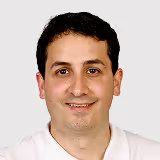
Marcel Kloos
Swiss-licensed dentist and founder of Medschool Experts
Marcel Kloos founded Medschool Experts while studying abroad; since then, over 500 study places have been secured. The Stuttgart-born dentist studied dentistry from 2015 to 2021 in Sofia and holds a Swiss dental licence.
Today he lives in Bern and runs Medschool Experts full-time as its owner.
More articles worth reading
Learning the Local Language During a Medical Degree Abroad
Erasmus+ Exchange Semester in a Medical Degree 2026: How Credit Recognition Works
Student Housing for Medical Students in Europe 2026: Dorms, Flats and What a Room Costs
Ahmad
Sabrina
Rami
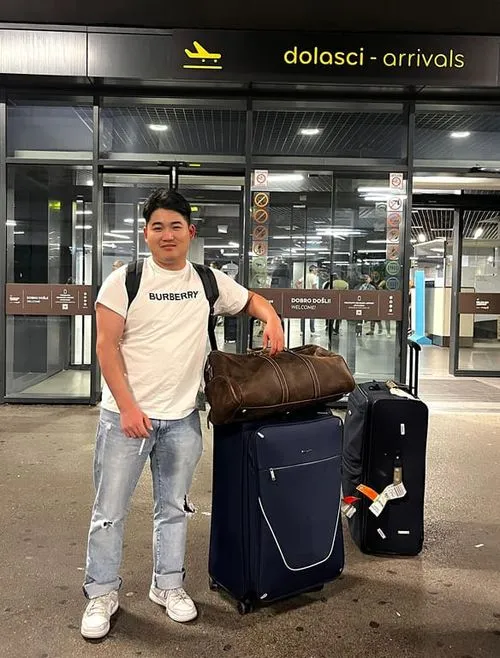
Noah
500+ students placed.
Now it's your turn!
No daydreaming, no empty promises. Just a clear plan — for the start of your medical degree.
40 minutes, no obligation