Study Medicine in Nicosia and Zurich
University of Nicosia · Klinik Hirslanden Zurich · Cyprus & Switzerland
A distinctive route into medicine: four years of English-taught medical studies in Nicosia, followed by the two clinical years at Klinik Hirslanden in Zurich.
At a glance
The key facts about this university at a glance.
Programmes
Medicine
Tuition fees
24,000 EUR (approx. 22,300 CHF) per year; in years 5 and 6 an additional Swiss clinical surcharge of 3,000 EUR (approx. 2,800 CHF) per year
Duration
6 years (4 years in Nicosia, 2 years in Zurich)
Language of instruction
English (years 1 to 4); clinical years in Zurich taught in German
Admission process
No entrance test; Medschool Experts handles placement without an entrance test (selection via an online interview)
Intake
September (autumn semester)
Recognition
Automatically recognised in the EU and Switzerland · Bologna/ECTS · state-accredited
Living costs
approx. 600 EUR (560 CHF) per month in Nicosia, approx. 2,000 EUR (1,850 CHF) per month in Zurich
Total students
14000
How Safe Is This Study Location?
Based on assessments from residents and visitors collected by Numbeo over the past five years.
68.0
100
6 years (4 years in Nicosia, 2 years in Zurich)
24000
1300
Climate in Varna
In Varna, daytime highs reach 20°C and above from May to September. It gets warmest in August, averaging 28°C.
✓ Placement without a grade cut-off — we place you regardless of your school-leaving grades. We go through the specific requirements together.
Get free advice →Where this university is
Drag the map to place the university in Europe — and to judge how far it is from home.
Why study medicine here?
A unique combination: medical studies in Cyprus, clinical training in Switzerland. The University of Nicosia Medical School is the oldest and largest medical school in Cyprus. Its six-year MD programme is accredited in line with the standards of the World Federation for Medical Education and is taught entirely in English. What makes this location special is the combination: you spend the first four years studying in Nicosia, then complete clinical years five and six at Klinik Hirslanden in Zurich and its selected partner hospitals.
The partnership between the Hirslanden Group and the University of Nicosia has been in place since spring 2022. Hirslanden is Switzerland’s largest private hospital group, and Klinik Hirslanden Zurich is regularly listed among the country’s top five hospitals in the World’s Best Hospitals ranking. For your clinical training, you have the entire Hirslanden network, state-of-the-art surgical technology and experienced hospital doctors at your disposal. Examinations and rotations take place directly at the clinical site.
You graduate with an MD from the University of Nicosia Medical School, which is recognised in Switzerland, throughout the EU and in North America. That is what makes this route so appealing, especially if you plan to practise in Switzerland: you start without an aptitude test, complete your practical training within the Swiss healthcare system and, during your clinical years, already build the contacts that will later be decisive when applying for your first residency position.
Dean and professors
Prof. Dr Adonis Ioannides has led the University of Nicosia Medical School as Dean since 2022 and was confirmed for a further term in November 2025. He graduated with honours from the University of Manchester and earned his PhD in Developmental Biology at University College London.
- Prof. Dr Aleksandar Jovanovic – specialist in clinical pharmacology; heads the faculty’s Basic and Clinical Sciences department; previously at Mayo Clinic and the University of Dundee.
- Prof. Dr Andreas Charalambous – neuroscientist; as Executive Vice President of UNIC Health, he oversees all of the university’s health sciences.
- Prof. Dr Zoi Dorothea Pana – Professor of Paediatric Epidemiology and Associate Dean for Research; previously at Johns Hopkins University.
- A unique route: study in Cyprus, clinical training in Switzerland
- Programme: Medicine (MD, six years)
- Structure: years 1 to 4 in Nicosia, years 5 and 6 at Klinik Hirslanden Zurich
- Language of instruction: English; clinical years in Zurich taught in German
- Standard duration: 6 years
- Requirement: Matura, vocational baccalaureate with Passerelle, Abitur or an equivalent qualification. Check in a free study consultation whether you meet the requirements for placement at this or another university through Medschool Experts.
Programmes and languages of instruction
Structure, duration, language of instruction and degree — for every programme at this university.
- Medicine (MD) with clinical years in Zurich: six years, taught in English, leading to an MD from the University of Nicosia Medical School; years 1 to 4 in Nicosia, years 5 and 6 at Klinik Hirslanden Zurich and its partner hospitals.
Study conditions and campus life
The MD programme lasts six years and comprises 360 ECTS. Years one to three focus on the medical foundations, with regular patient-care placements from the second year onwards. The fourth year is a transition year, with a research project and first rotations in internal medicine, surgery and general practice. You spend these four years in Nicosia, and teaching is in English.
Years five and six are almost entirely clinical. If you have chosen the Zurich option, you complete them at Klinik Hirslanden Zurich and its partner hospitals: in the fifth year, you rotate through the clinical specialties from cardiology to paediatrics and psychiatry; in the sixth year, you take on increasing responsibility in internal medicine, surgery, emergency medicine and general practice. The programme concludes with a six-week elective placement. Examinations take place at the clinical site.
So that you can work with patients in Zurich from day one, the university offers language courses for the respective clinical sites from the first year onwards.
Admission and entrance exam
To be admitted, you need a general higher-education entrance qualification. Accepted qualifications include the International Baccalaureate, the Swiss Matura (including the vocational baccalaureate with Passerelle), the Austrian Matura and the German Abitur, as well as equivalent qualifications. You will also need proof of English at B2 level or above, for example IELTS 6.5 or an equivalent test. There is no entrance test: the university decides on the basis of your documents and an online interview focusing on your motivation and your understanding of the medical profession. Aptitude test scores play no role.
Places in Zurich are allocated for the clinical years. Good German skills are required, as clinical training in Zurich takes place in German. If you are interested in the Zurich option, please discuss it with us when you apply.
Whether we can secure you a place at this location is something we assess individually. In a free consultation, we look at your profile, your budget and your goals, and tell you clearly whether the Nicosia and Zurich combination is right for you – or whether one of our 25+ other partner locations would be a better fit.
NC-freie Medizinstudienplätze im In- und Ausland
- Passende Uni-Auswahl & sichere Vermittlung
- NC-freier Studienplatz im Ausland mit Anerkennung in Deutschland
- Betreuung bei Studienstart, Vorbereitung & Wohnungssuche
- Unterstützung beim Wechsel nach Deutschland
- Begleitung bis zum Berufseinstieg in DE oder CH
Preparing properly with Medschool Experts
We take care of the entire application process and submit everything on time. We prepare you specifically for the online interview and the required proof of English. Before you apply, we discuss with you whether the Zurich option suits your profile, and we support you through the allocation of your clinical site. In Nicosia, we help you find accommodation and support you with enrolment and dealing with the authorities. Our office is in Bern, and you are welcome to meet us in person at any time – together with your parents, too. We remain your point of contact after your studies begin.
Tuition fees and living costs
Tuition fees are 24,000 EUR per year, equivalent to around 22,300 CHF, payable per semester. During the two clinical years in Zurich, a clinical surcharge of 3,000 EUR (approx. 2,800 CHF) per year is added, along with higher professional liability insurance of around 600 to 1,250 EUR (approx. 560 to 1,160 CHF) per year. One-off costs include an application fee of 60 EUR (approx. 55 CHF), as well as an administration fee and a place reservation fee, both of which are credited against your first semester’s fees. Over six years, tuition fees add up to 150,000 EUR, around 139,500 CHF.
For living costs in Nicosia, you should budget around 600 EUR (approx. 560 CHF) per month; accommodation near campus costs about 470 to 560 EUR (approx. 440 to 520 CHF). Zurich is considerably more expensive, and around 2,000 EUR (approx. 1,850 CHF) per month is realistic. If you can live with family in the Zurich area during the clinical years, you can save a great deal here. The faculty awards need-based scholarships covering up to 20 per cent of tuition fees. All CHF amounts are converted at the September 2026 exchange rate and are for guidance only; the university invoices in euros.
Recognition and career prospects
Cyprus is a member of the European Union, so the MD from the University of Nicosia Medical School falls under the Professional Qualifications Directive 2005/36/EC. Switzerland applies this directive through its Agreement on the Free Movement of Persons with the EU. In Switzerland, the degree is recognised by the competent federal authority, without an equivalence assessment or an additional examination. Across the EU, it is likewise recognised automatically; licensing depends on your target country.
If you plan to practise in Switzerland, the Zurich combination is attractive for a second reason too: you will already have spent your clinical years within the Swiss healthcare system and will know the processes, the documentation and the language of everyday hospital life. This makes the transition into a residency position and specialist training – regulated by the Swiss Institute for Medical Education (SIWF) – easier than after a degree completed entirely abroad.
Our founder has been through the Swiss recognition process personally and is a federally recognised dentist in Switzerland. We support you with the transition into practice in Switzerland, the EU or your chosen target country.
Alumni now practising internationally
Former students of this university who, according to publicly available sources, now work as doctors or dentists internationally. Anonymised overview — not an indication of any cooperation with Medschool Experts.
The city as a place to study
Your studies begin in Nicosia, the capital of Cyprus, in the island’s interior. The climate is Mediterranean and sunny: around 11 °C in January and almost 30 °C in July and August. Larnaca International Airport is about 45 kilometres away, with direct flights to Zurich and many other European cities. The sea is less than an hour away, and the beaches of Larnaca and Ayia Napa are popular weekend destinations. English is widely spoken in everyday life, and the university welcomes students from around 100 countries.
After four years, you move to Zurich. Klinik Hirslanden is located in the Witikon district, just a few minutes from Lake Zurich. Zurich combines one of the highest qualities of life in the world with short distances: the airport is 15 minutes away, the Alps an hour, and in summer the lake invites you for a swim straight after your shift. If you have ties to Switzerland, this means family, friends and your future professional network are within easy reach again during the clinical years.
- Nicosia: capital of Cyprus; university city with a high proportion of international students; sunny Mediterranean climate
- Zurich: Switzerland’s largest city; one of the highest qualities of life in the world; Klinik Hirslanden a few minutes from Lake Zurich
- Countries: Cyprus and Switzerland
- Living costs: approx. 600 EUR (560 CHF) per month in Nicosia, approx. 2,000 EUR (1,850 CHF) per month in Zurich
- Getting there: direct flights Larnaca–Zurich; Zurich Airport 15 minutes from the hospital
About the author
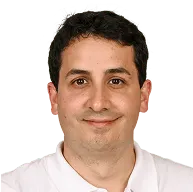
Marcel Kloos
Federally recognised dentist, founder and owner of Medschool Experts
Marcel Kloos founded the company while still studying abroad himself; since then more than 500 study places have been arranged. Originally from Stuttgart, he studied dentistry in Sofia from 2015 to 2021 and is a federally recognised dentist.
He now lives in Bern and runs the company full-time as its owner. He visits the partner universities in person on a regular basis.
Other universities in this country
Compare the universities in the same country — programmes, fees and language of instruction side by side.
Student story
Videos about this university
Campus tour, first-hand accounts from students on the ground and answers to the most common questions — to watch rather than read.
Our curated universities
Our curated Top 20 — selected from the world's largest choice of universities with no entrance-exam restrictions for medicine, dentistry, pharmacy and veterinary medicine. We recommend each of these particularly, based on years of experience.
Frequently asked questions about this university
How exactly does the Nicosia and Zurich combination work?
You study for the first four years at the University of Nicosia Medical School, entirely in English. For years five and six – the clinical years – you move to Klinik Hirslanden in Zurich and its selected partner hospitals, where rotations and examinations take place. Your MD degree is awarded by the University of Nicosia.
Why is this route so attractive if I want to practise in Switzerland?
Because you start without an aptitude test, your school-leaving qualification is enough for admission, and you complete your practical training in Switzerland. Two years in everyday Swiss hospital life mean contacts with senior and consultant physicians, familiarity with the processes and a degree that is recognised in Switzerland. Many doors to your first residency position open while you are still studying.
Do I need an aptitude test or top grades?
No. Aptitude test scores play no role. You need a general higher-education entrance qualification such as the Matura, the vocational baccalaureate with Passerelle or the Abitur, proof of English at B2 level or above, and a convincing online interview. There is no entrance test.
How much does the programme cost in total?
24,000 EUR (approx. 22,300 CHF) per year, plus a clinical surcharge of 3,000 EUR (approx. 2,800 CHF) in years five and six. Over six years, that amounts to 150,000 EUR in tuition fees, around 139,500 CHF, plus professional liability insurance, the application fee and living costs. It is a substantial budget, so it is worth working through the numbers carefully beforehand. If you can live with family in the Zurich area, however, you will save a large share of your living costs during the clinical years.
When and how do I pay the tuition fees?
Per semester – so twice a year – in euros. The university also awards need-based scholarships that can cover up to 20 per cent of tuition fees.
Do I need to speak German for Zurich?
Yes. The clinical years in Zurich are taught in German – after all, you will be working with Swiss patients. If German is your first language, this will not be an issue. The university offers language courses for the clinical sites from the first year onwards.
Is the Zurich option guaranteed?
Clinical sites are allocated by the university. Students with a strong command of German are best placed for Zurich. We discuss this with you as early as the application stage and support you through the allocation process.
Is the degree recognised in Switzerland?
Yes. The MD from the University of Nicosia falls under EU Directive 2005/36/EC, which Switzerland applies through the Agreement on the Free Movement of Persons. The competent federal authority recognises the diploma without an equivalence assessment or additional examination. The degree is also automatically recognised across the EU.
What happens after graduation?
Once your degree has been recognised, you start specialist training as a resident doctor – in Switzerland, this is regulated by the SIWF. If you have spent your clinical years in Zurich, you will already have a network and experience of the Swiss system. Positions are also open to you throughout the EU; licensing depends on your target country.
What is life like in Nicosia?
Sunny, international and relaxed. Nicosia lies inland, and the sea is less than an hour away. English is spoken everywhere, and the university has students from around 100 countries. Accommodation near campus costs about 470 to 560 EUR (approx. 440 to 520 CHF) per month.
How do I travel between Cyprus and Switzerland?
There are direct flights from Larnaca Airport to Zurich, with a flight time of around three and a half hours. Larnaca also offers direct connections to many other European cities.
Is financial support available for this programme?
Depending on your home country, state student finance may be available, as Cyprus is an EU member state. However, such schemes often cover tuition fees only in part, and with fees of 24,000 EUR per year there is usually a gap to be closed through student loans, education funds or family support. Applicants from Switzerland can check the cantonal scholarship rules.
Who is Nicosia with Zurich right for?
For applicants who want to become doctors in Switzerland or elsewhere in the German-speaking world, have the budget for a private university and value clinical training in a Swiss hospital. If you would prefer to study at a lower cost, Foča or Varna – two of our most popular locations – offer an alternative with significantly lower fees. We will work out which route suits you best in a free consultation.
Ahmad
Sabrina
Rami
Noah
500+ students placed.
Now it's your turn!
No daydreaming, no empty promises. Just a clear plan — for the start of your medical degree.
40 minutes, no obligation