Study Medicine in Szczecin (Stettin)
Pomeranian Medical University · Poland
English-taught medicine and dentistry at Pomeranian Medical University — the closest medical university to Germany, around two hours from Berlin.
At a glance
The key facts about this university at a glance.
Programmes
Medicine, Dentistry
Tuition fees
10,000–14,500 EUR per academic year
Duration
6 years; Dentistry 5 years
Language of instruction
English
Admission process
Intake
October (autumn semester)
Recognition
Automatically recognised across the EU · Bologna/ECTS · state-accredited
Living costs
approx. 500 to 800 EUR per month
Total students
4500
How Safe Is This Study Location?
Based on assessments from residents and visitors collected by Numbeo over the past five years.
70.0
150
6 years; Dentistry 5 years
14500
650
Climate in Varna
In Varna, daytime highs reach 20°C and above from May to September. It gets warmest in August, averaging 28°C.
✓ Placement without a grade cut-off — we place you regardless of your school-leaving grades. We go through the specific requirements together.
Get free advice →Where this university is
Drag the map to place the university in Europe — and to judge how far it is from home.
Why study medicine here?
Pomeranian Medical University (PUM) in Szczecin was founded in 1948 and is one of Poland's established state medical universities. Its English-taught programme is among the oldest in the country — PUM has been training international students in Medicine since the mid-1990s, alongside a five-year English-taught Dentistry programme. Practical training takes place at the university's two affiliated teaching hospitals.
For students based in northwestern Europe, this location offers outstanding connectivity: Szczecin is about 15 kilometres from the German border and just two hours by train from Berlin, with excellent onward connections to the rest of Europe.
Dean and professors
The Faculty of Medicine and Dentistry at Pomeranian Medical University in Szczecin (PUM) is led by Prof. Dr. hab. med. Edyta Paczkowska as Dean. The specialist in haematology and internal medicine works at the Department of Haematology with Bone Marrow Transplantation at PUM's University Hospital No. 1.
- Prof. Dr. hab. med. Bogusław Machaliński — stem-cell researcher and specialist in haematology and transplant medicine, currently serves as Rector of PUM; he was himself Dean of the Faculty of Medicine from 2005 to 2012 and has authored more than 220 scientific publications.
- Prof. Dr. hab. med. Jerzy Samochowiec — psychiatrist specialising in addiction genetics and pharmacogenetics, Vice-Rector for Science at PUM; he served as President of the Polish Psychiatric Association from 2019 to 2022 and is editor-in-chief of the journal "Archives of Psychiatry and Psychotherapy," with more than 300 publications.
- Prof. Dr. hab. med. Aneta Cymbaluk-Płoska — specialist in gynaecology and gynaecological oncology, Vice-Rector for Teaching at PUM since 2024 and head of the Department of Reconstructive Gynaecology and Oncology since 2022; she is a member of Poland's National Bioethics Committee.
- Programmes: Medicine
- Language of instruction: English
- Standard duration: 6 years
- Start of studies: September
- Requirement: General higher-education entrance qualification. Check in a free study consultation whether you meet the requirements for placement at this university through Medschool Experts.
Programmes and languages of instruction
Structure, duration, language of instruction and degree — for every programme at this university.
- Medicine: The Medicine programme leads to a medical degree. The pre-clinical phase establishes the scientific foundations; the clinical phase adds patient-facing work.
Study conditions and campus life
Medicine takes six years. The first two years focus on the pre-clinical foundations: anatomy with dissection course, physiology, biochemistry and histology. Alongside this, you learn Polish for later patient contact — a compulsory subject at all Polish medical faculties. From the third year, clinical subjects take centre stage, each with placements at PUM's university hospitals. The final year of study is largely practical, comparable to the German Praktisches Jahr (practical year). Dentistry follows the same pattern over five years.
Admission and entrance exam
The basic requirement for placement at this location is a general higher-education entrance qualification. When placed through Medschool Experts, there is no separate entrance test. Get in touch to find out whether we can place you at this university, and book a free study consultation.
NC-freie Medizinstudienplätze im In- und Ausland
- Passende Uni-Auswahl & sichere Vermittlung
- NC-freier Studienplatz im Ausland mit Anerkennung in Deutschland
- Betreuung bei Studienstart, Vorbereitung & Wohnungssuche
- Unterstützung beim Wechsel nach Deutschland
- Begleitung bis zum Berufseinstieg in DE oder CH
Preparing properly with Medschool Experts
Medschool Experts supports you from application through to the start of your studies in Szczecin. After that, we remain your point of contact for clinical electives, the practical year, and any further steps in your medical career — whether that means continuing in Poland, returning to your home country, or pursuing opportunities elsewhere in Europe.
Tuition fees and living costs
Tuition fees are available on request — contact us for a current fee schedule.
Additional one-off costs include the application fee, visa, health insurance, travel, and usually a deposit for accommodation. Contact us for current living cost estimates.
Recognition and career prospects
Poland has been a member of the European Union since 2004, so Pomeranian Medical University degrees fall under the Professional Qualifications Directive 2005/36/EC. Within the EU and EEA, both Medicine and Dentistry degrees are automatically recognised; neither an equivalence assessment nor a knowledge test is required.
Outside the EU, recognition requirements vary by country. For example, in Switzerland MEBEKO is the responsible authority; other countries have their own procedures. Medschool Experts supports you through the recognition process in your target country.
Alumni now practising internationally
Former students of this university who, according to publicly available sources, now work as doctors or dentists internationally. Anonymised overview — not an indication of any cooperation with Medschool Experts.
The city as a place to study
Szczecin sits at the heart of northwestern Europe, about 130 kilometres from Berlin and 15 kilometres from the German border — with direct train connections to the German capital in under two hours, and excellent onward links to the rest of Europe. Szczecin-Goleniów Airport (SZZ) lies about 40 kilometres north of the city, and Berlin Brandenburg Airport (BER) serves as a nearby hub for longer-haul flights.
The climate is mild: the Baltic Sea moderates temperatures, with a July average around 19 degrees and softer winters than further inland. The Baltic coast — including beaches near Międzyzdroje and Świnoujście — is reachable in under two hours.
Rents in Szczecin are low by central European standards, and the city is compact and safe. A growing international student community has made settling in straightforward, and the city offers a lively café and cultural scene to match its manageable size.
- City: Batumi
- Country: Georgia
- Living costs: approx. 350 to 600 EUR per month
- Clinical language: Georgian
- Entry: Student visa required
About the author

Marcel Kloos
Federally recognised dentist, founder and owner of Medschool Experts
Marcel Kloos founded the company while still studying abroad himself; since then more than 500 study places have been arranged. Originally from Stuttgart, he studied dentistry in Sofia from 2015 to 2021 and is a federally recognised dentist.
He now lives in Bern and runs the company full-time as its owner. He visits the partner universities in person on a regular basis.
Other universities in this country
Compare the universities in the same country — programmes, fees and language of instruction side by side.
Student story
Videos about this university
Campus tour, first-hand accounts from students on the ground and answers to the most common questions — to watch rather than read.
Our curated universities
Our curated Top 20 — selected from the world's largest choice of universities with no entrance-exam restrictions for medicine, dentistry, pharmacy and veterinary medicine. We recommend each of these particularly, based on years of experience.
Frequently asked questions about this university
What are the entry requirements for Pomeranian Medical University in Szczecin in Stettin?
You need a general higher-education entrance qualification (A-levels or equivalent). There is no numerus clausus, so your school-leaving grade does not determine your place. You will also need a sufficient command of English and a student visa.
How do I apply through Medschool Experts?
Medschool Experts handles placement at this location without a grade-based admission cap. Whether we can place you with your profile is something we clarify in a free, no-obligation consultation — where we also discuss which university is the best fit for you.
What does it cost to study at Pomeranian Medical University in Szczecin?
The tuition fee is 10,000–14,500 EUR per academic year. Additional costs include the application fee, visa, health insurance, travel, and accommodation. Always ask the International Office to confirm every figure in writing — figures quoted by third-party portals can vary significantly.
How much money do I need per month in Stettin?
Budget approx. 500 to 800 EUR per month for living costs. This is well below Western European levels. The exact amount depends mainly on whether you live in student accommodation or privately.
How is the programme structured and how long does it take?
The programme lasts 6 years; Dentistry 5 years. First comes the pre-clinical phase with the theoretical foundations, then the clinical phase with examination courses and placements at affiliated hospitals. The final year is primarily practical in focus.
Is the degree recognised in the EU?
As Poland is an EU member state, medical degrees are automatically recognised across the EU under the Professional Qualifications Directive, provided graduation requirements are met. For non-EU countries you wish to practise in, confirm requirements separately.
Will I receive a transcript of records?
Yes. Your performance is recorded in a transcript showing subjects, examinations, and grades. This is exactly the document the authorities need later for the equivalence assessment. Keep all semester certificates and grade reports safely — they are difficult to obtain retrospectively.
Can I transfer to a university in my home country during my studies?
There is no automatic transfer route. A transfer to a domestic faculty involves an individual credit-recognition process and depends on available places in higher semesters. Plan your studies as a complete path to graduation.
How does Medschool Experts support you on the ground?
We organise the application and all documents, support you through enrolment, accommodation, and administrative requirements, and remain your contact after your studies begin. We also tell you upfront where the weaknesses of this particular location lie.
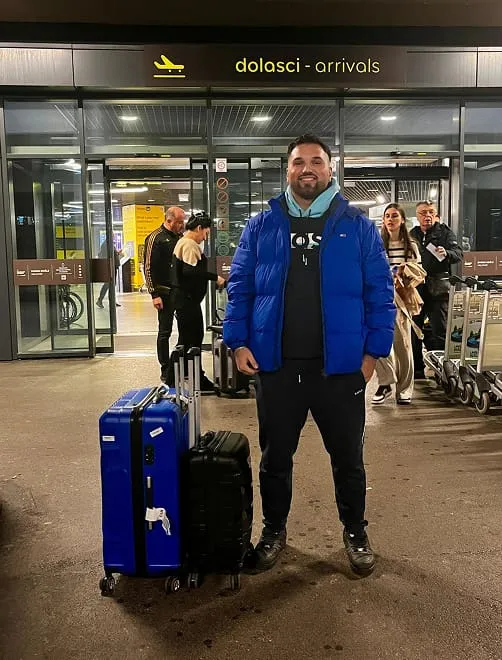
Ahmad

Sabrina
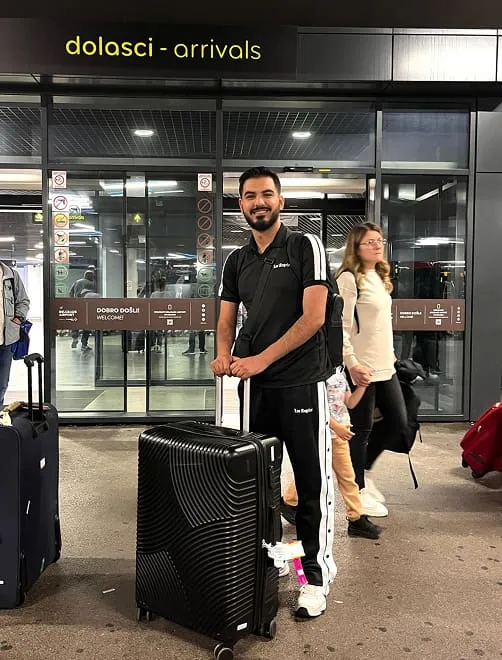
Rami
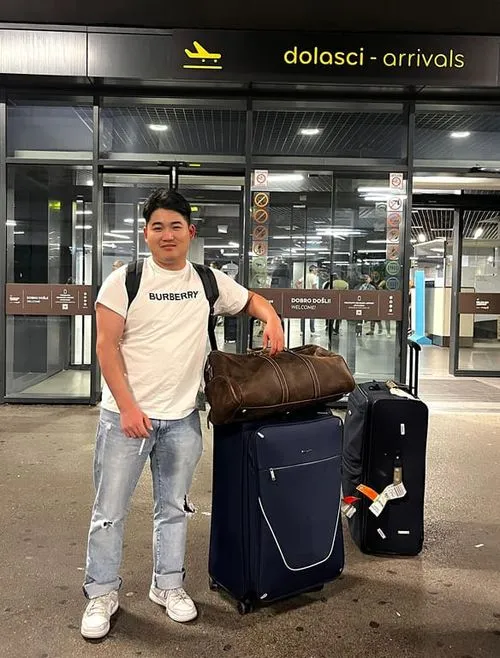
Noah
500+ students placed.
Now it's your turn!
No daydreaming, no empty promises. Just a clear plan — for the start of your medical degree.
40 minutes, no obligation