AI Physician Licensure: AMA Says AI Can Support Doctors but Never Be One
11.11.2026

Short answer
On 9 November 2026 the AMA ruled that AI cannot hold a medical licence, despite 1,450+ FDA-authorised AI devices. What it means for future doctors.
What did the AMA decide about AI physician licensure in November 2026?
Short answer
On 9 November 2026, the American Medical Association House of Delegates ruled that artificial intelligence cannot be granted a physician licence, a professional title or certification to practise medicine. AI tools may support care, but only inside physician-led teams and under the direction of the treating doctor. A licence stays tied to a human being.
The American Medical Association adopted its new AI policy on 9 November 2026, the final day of its Interim Meeting in Orlando, Florida. The core rule is simple: software may help with clinical work, but it may not hold a medical licence, use a physician title or be certified to practise. Responsibility for the patient stays with a licensed doctor.
The policy goes further than a statement of principle. Clinical AI used for diagnosis, prescribing or care management should come with transparent, auditable evidence of safety and effectiveness. It should also be subject to proper regulation, documentation and liability rules. The AMA wants AI tools built into physician-led teams and used under the direction of the treating physician, not as stand-alone decision makers.
Two further points round out the package. The AMA will push for safeguards that stop AI developers from using patients' clinical data for proprietary or research purposes without explicit authorisation. And it opposes the use of AI to create sexual or other exploitative material involving minors, asking lawmakers to act on that threat.
AMA President Willie Underwood III, MD, summed up the idea in the association's news release of 10 November 2026: patients "deserve to know who is responsible for their care." In the same statement he said physicians "need the authority, oversight and liability protections to make independent decisions" when AI is part of the care team.
Why now? The tools are already in hospitals. By the end of 2025, the US Food and Drug Administration had authorised more than 1,450 AI-enabled medical devices. Each of those products went through a device pathway. None of them went through medical school.
Why does the AMA separate device authorisation from medical licensure?
The AMA separates the two because they answer different questions. FDA authorisation in the United States says a product is safe and effective for a defined use. A medical licence says a person has the training, judgement and accountability to treat patients. The AMA's 2026 policy calls for model legislation that keeps these two systems strictly apart.
Under the new policy, the AMA will promote model state legislation along two lines. First, authorising a medical device must never be treated as permission to practise medicine. Second, non-human entities may not be presented under titles reserved for physicians. A chatbot cannot call itself a doctor. A triage app cannot sign as one.
This matters because US licensing law is made at state level. Each state medical board decides who may practise and under which title. A model bill gives state medical societies a ready-made text they can bring to their legislatures.
The title question is not a side issue. Patients read "Dr." as a promise of training, supervision and accountability. If software could borrow that word, the promise would quietly lose its meaning. The House of Delegates chose to protect it before anyone tested the boundary in court.
Who is liable when a clinical AI tool harms a patient in the US?
Under the AMA's November 2026 policy, a US physician who uses a clinical AI product as intended and exercises sound clinical judgement should be protected from liability if the tool still harms a patient. When the harm comes from a defective product, responsibility should sit with the vendor, manufacturer or distributor, not with the doctor at the bedside.
The AMA wants federal and state law to reflect that split. It also asks lawmakers to require AI companies to carry adequate liability insurance and to disclose the limitations and performance data of their products. Contract terms that shift responsibility for product failures onto physicians or health systems should be barred.
One clause targets employers. When a hospital, health system, insurer or other organisation mandates a specific AI product, that organisation and the vendor should share responsibility for patient harm the product causes. In other words, whoever makes the decision to deploy a tool should carry part of the risk.
This builds on work from October 2026, when the AMA released a framework that aligns liability with each party's authority and ability to prevent or reduce harm. The November vote builds on that framework and turns its logic into concrete demands on lawmakers.
For a young doctor the logic is easy to follow. You are accountable for your judgement. You are not the insurer for someone else's software.
Can a physician in the US refuse to use an AI tool?
Yes, that is the AMA's position. Its November 2026 policy supports a legal framework for physician oversight of AI clinical decisions that protects a doctor's independent judgement. A US physician who declines to use an AI tool, or who decides not to follow its recommendation, should be shielded from liability for that choice.
This is the other side of the licensure rule. If only a licensed human can be responsible for care, that human also needs the freedom to say no. A recommendation from an algorithm is input, comparable to a lab value or a colleague's opinion. The treating physician weighs it against the patient in front of them.
In practice this protects the clinical conversation. A doctor who sees that a model's suggestion does not fit an elderly patient with five medications should be able to act on that judgement without fearing that the software's output will later be used against them.
The AMA cannot write these protections into law itself. It can only advocate for them. Whether and how fast state legislatures and Congress follow is still open.
How do other countries handle AI and medical licensure?
Other regulators reach a similar result by different routes. In the United Kingdom, Australia and the European Union, the licence to practise remains personal and human, while AI is regulated as a product or tool. Doctors in all three keep full professional responsibility for decisions they make with AI support, as of 2026.
In the United Kingdom, the General Medical Council states that doctors are responsible for the decisions they make when using AI. Its professional standards, set out in Good medical practice 2024, apply unchanged. Paragraph 73 requires doctors to report adverse incidents involving medical devices, which includes software and digital tools.
Australia's Ahpra published guidance for health practitioners on AI in August 2024. Practitioners remain responsible for safe, quality care whatever technology they use, and they must apply human judgement to AI output. Approval of a tool by the Therapeutic Goods Administration does not change that responsibility. Patients should be told when AI is used, and AI scribing generally requires informed consent.
The European Union regulates the product side. Under the EU AI Act, AI systems embedded in medical devices count as high-risk. The Digital Omnibus on AI, which entered into force on 27 July 2026, moved the start of the high-risk obligations for these products to 2 August 2028. The existing medical device rules continue to apply in the meantime.
| Country or region | Who holds the licence | How AI is treated | Key date |
|---|---|---|---|
| United States | Human physicians only, per AMA policy | Tool inside physician-led teams; device authorisation kept separate from licensure | 9 November 2026 |
| United Kingdom | Registered doctors | Doctors responsible for decisions made with AI; incidents with software must be reported | Good medical practice 2024 |
| Australia | Registered practitioners | Human judgement on AI output; tool approval does not shift responsibility | 22 August 2024 |
| European Union | Licensed doctors under national law | AI in medical devices classed as high-risk under the AI Act | Obligations from 2 August 2028 |
The pattern is consistent. Nowhere does a regulator treat software as a colleague with its own licence. The real differences lie in liability and in how quickly product rules arrive.
What does the AMA decision mean for medical students and applicants?
For students, the November 2026 decision confirms that a medical degree and a licence remain the only route to practising medicine in the United States, and the same holds in Europe, the UK and Australia. AI changes how doctors work. It does not create a shortcut around the degree, the licensing exams or professional accountability.
That has a practical side. Future doctors will be expected to understand AI well enough to question it. The AMA's policy assumes a physician who can judge when a tool's output fits the patient and when it does not. That skill comes from clinical training, not from the software. Our overview of what US medical schools now want students to learn about AI shows how teaching is already shifting.
The Interim Meeting also looked at the student side directly. Delegates had resolutions on the agenda about the use of AI in developing assessments during medical education and about transparency in AI-assisted admissions. Where medical schools use algorithms, applicants increasingly want to know how.
For anyone weighing a medical degree abroad, the message is reassuring. A degree from a state-accredited university in Europe leads to a personal, human licence, exactly the kind the AMA wants to protect. English-taught programmes in medicine or dentistry at our partner universities in Europe start from €1,750 per semester. You can compare programmes and cities in the university finder of Medschool Experts.
{{cta}}Which route suits you depends on your country of origin, your school qualifications and where you want to work later. Marcel or another experienced consultant on our team looks at your situation individually and free of charge. A place at our partner universities is independent of your high school diploma grades.
Will AI replace doctors before today's students graduate?
No. As of November 2026, no major medical regulator in the United States, the United Kingdom, the European Union or Australia allows AI to hold a licence or practise on its own. The AMA's new policy makes that boundary explicit for the US. A student starting medicine in 2026 will graduate into a profession where AI is a tool and the physician is accountable.
The work itself will change. Documentation, image pre-screening and drafting of letters are already being handed to software in many hospitals. That frees time, and it shifts the weight of the job towards talking to patients, weighing uncertainty and taking responsibility for a decision.
Those are the parts of medicine that a licence exists to protect. The AMA vote in Orlando did not slow down AI. It decided who answers for it. For students who want to understand why doctors are still needed in the age of AI, that is the central point.
The demand side supports the same conclusion. Patients still want a named person who explains a diagnosis, signs a prescription and stands behind the result. Software can draft. It cannot be held to account. That gap is where the next generation of physicians will work, and it will not close in the six years a medical degree takes.
The author's view
In my view, the AMA got this one right. I started dental medicine at the Medical University of Sofia in 2015, at 24, in an English-language programme, and graduated with the class of 2021. My degree is federally recognised in Switzerland. Today I am the founder and owner of Medschool Experts, and I think the question behind this vote matters to every applicant: will a doctor still be needed in ten years?
The Orlando decision answers that better than any reassurance from me. A licence is a promise that a trained person stands behind a decision. Software can be brilliant at pattern recognition, but it cannot sign that promise. What I would add for students is this: learn the tools early and question them often. The doctors who understand AI will lead the teams that use it.
Summary
- On 9 November 2026, the AMA House of Delegates ruled that AI cannot hold a physician licence, a professional title or certification to practise medicine.
- AI tools should work inside physician-led teams, under the direction of the treating physician.
- Model legislation is meant to keep device authorisation separate from professional licensure.
- Liability for defective AI should fall on vendors, manufacturers or distributors, shared with organisations that mandate a tool.
- Physicians who decline an AI tool or do not follow its recommendation should be protected.
- The UK, Australia and the EU also keep the licence human and regulate AI as a product.
Conclusion
The AMA decision draws a line that regulators elsewhere already follow in practice. Software can be authorised, audited and insured. Only a person can be licensed to practise medicine. For students, that makes a medical degree worth exactly as much in the age of AI as it was before, and probably more.
If you want to find out which medical school abroad fits your plans, book a free consultation with Medschool Experts.
Frequently asked questions
Can AI be licensed as a doctor in the United States?
No. On 9 November 2026, the American Medical Association adopted policy that AI cannot receive physician licensure, professional titles or certification to practise medicine. Licensing in the US is decided by state medical boards, and the AMA will promote model legislation so that authorising a medical device is never treated as permission to practise medicine.
What did AMA President Willie Underwood III say about AI?
In a news release on 10 November 2026, AMA President Willie Underwood III, MD, said patients deserve to know who is responsible for their care. He added that physicians need the authority, oversight and liability protections to make independent decisions when AI is part of the care team.
Who pays when an AI tool harms a patient?
Under the AMA's 2026 policy, a physician who uses a clinical AI tool as intended and with sound judgement should not be liable. Responsibility for defective products should lie with vendors, manufacturers or distributors. If a hospital or insurer mandates a specific AI product, that organisation should share liability with the vendor.
How many AI-enabled medical devices has the FDA authorised?
By the end of 2025, the US Food and Drug Administration had authorised more than 1,450 AI-enabled medical devices. Each of these products went through a device pathway, which checks safety and effectiveness for a defined use. Under the AMA's position, none of these authorisations gives a product the right to practise medicine.
Do UK and Australian doctors stay responsible when they use AI?
Yes. The UK General Medical Council states that doctors are responsible for the decisions they make when using AI, under Good medical practice 2024. In Australia, Ahpra guidance from August 2024 says practitioners remain responsible for safe care and must apply human judgement to AI output, whether or not the tool is approved.
Is it still worth studying medicine abroad in the age of AI?
Yes. In 2026, regulators in the US, the UK, the EU and Australia all tie the right to practise medicine to a licensed person. A degree from a state-accredited European university leads to that kind of licence. A free consultation with our team helps you find the programme in medicine or dentistry that fits your goals.
What students say about Medschool Experts
Over 500 placements at 25+ partner universities across 10+ countries. See how our students experienced their path into medical school abroad in our student stories.
About the author
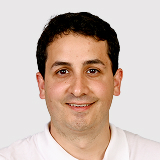
Marcel Kloos
Founder and owner of Medschool Experts, federally recognised dentist
Marcel Kloos is the founder and owner of Medschool Experts, a placement agency for medicine, dentistry, veterinary medicine and pharmacy degrees abroad. Since 2021 the team has secured more than 500 study places at 25+ partner universities in Europe and worldwide.
Study medicine abroad: Marcel's own path
Born in Stuttgart, Marcel started his degree late: at 24 he enrolled at the Medical University of Sofia, Faculty of Dental Medicine, and graduated in 2021 from the English-language programme. He went through the same steps his clients face today — nostrification of school certificates, entrance interviews, finding a flat in Sofia and later the recognition of a foreign degree. He is a federally recognised dentist.
What Marcel does at Medschool Experts
Today Marcel lives in Bern and runs Medschool Experts full-time. He visits every partner university in person, negotiates placement agreements directly with faculties and deans, and leads the free consultations in which applicants learn at which university they can start next semester. His YouTube channel on studying medicine abroad has helped thousands of applicants compare universities, costs and recognition.
Topics Marcel writes about
- Study medicine abroad independent of your high school diploma grades: universities, costs and admission
- Study dentistry, veterinary medicine or pharmacy in Europe in English
- Tuition fees and living costs at medical schools in Europe and worldwide
- Recognition of foreign medical degrees in the EU, Switzerland, the UK and the US
- Transferring between medical schools and returning home into a higher semester
All articles by Marcel Kloos are based on first-hand visits to the universities and conversations with current students. Book a free consultation to discuss your own path.
More articles worth reading
Medical School Tuition Statistics 2026: Median Fees in 38 Countries
Oldest Universities Where You Can Study Medicine: Founding Dates from 1088
English-Taught Medical Schools 2026: 455 Programmes in 49 Countries
Ahmad

Sabrina
Rami

Noah
500+ students placed.
Now it's your turn!
No daydreaming, no empty promises. Just a clear plan — for the start of your medical degree.
40 minutes, no obligation