Arriving in Bulgaria: Housing, Insurance, Flights and Driving Licence
17.09.2026

Finding a place to live
The approach that works looks like this: for the first few weeks, rent a furnished flat on a short-term basis in a small group, then take your time looking around once you are there. Because students graduate every year, shared rooms and flats regularly become available and are passed on within the student community. That is the best route: no agency fee and already tried out by others.
University halls of residence are the cheapest option at around 70 euros a month. Private flats near the university cost between 400 and 600 euros depending on the city and location.
A great deal is decided at exactly this point: anyone who knows nobody locally either rents from abroad at too high a price or ends up with an agent. Our contact in Bulgaria hears about available flats before they are advertised and will view them on your behalf if you wish.
Bulgarian tenancy law in brief
Tenancies are governed by the Bulgarian Obligations and Contracts Act, regardless of whether the tenant is a local or a foreign national. A tenancy agreement can be concluded orally or in writing and does not have to be notarised. Even so, a written, bilingual contract in English and your own language is advisable.
- Furnished is the norm. Even so, never sign without a viewing. Photos and videos are often deceptive; plastic furniture looks like wood in pictures.
- Minimum tenancy term: lettings to foreign nationals are usually for at least one year. Moving out earlier is possible but as a rule costs you the deposit.
- Agency commission: 50 to 100 percent of one month's basic rent is customary.
- Meet the landlord in person. Meeting face to face builds trust and saves a great deal of discussion later.
- Check the utilities: set out gas, water and electricity specifically in the contract.
Signing a contract in Bulgarian without having understood it is one of the most expensive mistakes of the first semester. Have our team read it through beforehand; it costs you ten minutes and, in case of doubt, saves your deposit.
Which study location and which type of accommodation suit your situation is something we clarify in a free consultation.
Insurance
Bulgaria is an EU member state. Students from Germany can keep their statutory health insurance and, with the European Health Insurance Card, receive medically necessary treatment. Even so, additional private international health insurance is advisable, among other things for repatriation and optional treatments.
Personal liability insurance belongs in every student budget, as does accident insurance depending on your circumstances. Both are inexpensive and save a lot of trouble if something happens.
Being insured is one thing; finding the right address when you fall ill is another. A Bulgarian-speaking doctor is available to our students as a permanent point of contact. She will judge whether a state clinic is sufficient or a private centre makes more sense, and if in doubt speaks to the staff directly.
{{cta}}
Flying cheaply
Direct flights between Germany and Bulgaria are offered by Eurowings, Lufthansa, Bulgaria Air and Wizz Air among others, from Berlin, Munich, Frankfurt, Düsseldorf, Cologne, Hamburg and Stuttgart to Sofia, Varna or Burgas. Flight time is two to three hours. Connections via Vienna, Istanbul or Warsaw are often cheaper but take longer.
Skyscanner, Kayak and Google Flights are all worth using for the search, each with price alerts and flexible date windows. If you often fly with the same airline, check whether its discount programme pays off: membership costs a fixed annual fee and usually becomes worthwhile from about four to five flights a year.
A practical trick: taking your driving test in Bulgaria
The Bulgarian driving licence is an EU licence and is therefore valid throughout the EU as well as in Iceland, Liechtenstein, Norway and Switzerland. The cost is well below the German level: a complete course with theory, practical lessons and both tests has recently cost a fraction of what is usual in Germany. Theory lessons are not compulsory in Bulgaria, so you can learn the theory yourself and go straight to the test. Several driving schools offer tuition in English.
The legal framework matters here: foreign nationals may take a driving test in Bulgaria, but Germany only recognises the licence under certain conditions. Anyone properly enrolled in Bulgaria and normally resident there will usually meet that condition. Clarify your individual case with your licensing authority before you invest any money. Our contacts in Bulgaria can tell you which driving school teaches in English and how the process works locally.
Cyrillic in a few days
The Cyrillic alphabet looks bigger than it is. This order gets you there quickly:
- Copy out the letters repeatedly until they stick.
- Translate words back and forth between Cyrillic and Latin script.
- Read short texts aloud, for example street signs or menus.
- Write your own sentences and have them corrected.
- Practise playfully, for example with crosswords or a home-made bingo using Cyrillic letters.
After about a week you will read street names and shop signs fluently. That noticeably changes everyday life. For anything beyond that – letters from the authorities, tenancy agreements or conversations with doctors – someone on our team who speaks Bulgarian is available.
Important emergency contacts
| Service | Number |
|---|---|
| Europe-wide emergency number (police, fire service, ambulance) | 112 |
| Central card-blocking hotline | +49 116 116 |
| German Federal Foreign Office, citizens' service | +49 30 5000 2000 |
| German Embassy Sofia | +359 2 91 83 80 |
| Poison emergency line, 24 hours | +49 30 19240 |
These numbers belong in your phone before anything happens. Just as important, though, is having someone locally you can reach: a Bulgarian-speaking doctor as your medical contact, a member of our staff for authorities and everyday matters, and a direct line to the cultural attaché at the German Embassy in Sofia, who works actively together with the Medschool Experts team for the wellbeing of German students in Bulgaria.
Do I need to register locally?
As an EU citizen staying for a longer period, you register with the responsible migration authority and receive a residence certificate. The university will usually help with this. All forms and conversations run in Bulgarian, however, and the administrative steps are rarely self-explanatory for newcomers. Our staff member on the ground will accompany you through the registration and translate whenever things get stuck.
How do I open a bank account?
Since the introduction of the euro in 2026, payments run in euros. A German account is enough for many purposes; a local account makes rent and utilities easier. To open one you need identification, proof of enrolment and usually a local address. In practice it often falls down on language, opening hours and documents nobody mentioned in advance. Our contacts in Bulgaria know the banks and will come to the appointment with you if needed. We support you with this.
The author's view
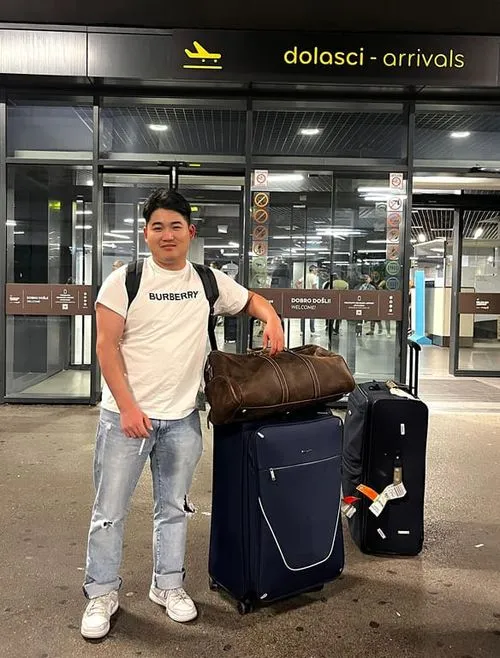
I arrived in Sofia exactly like this in 2015: with two suitcases, a temporary flat and a to-do list. In hindsight that was precisely the right way to do it. The biggest mistake I see again and again is signing a long-term lease from abroad, before you know the city. Two to three weeks on the ground are enough to understand which districts suit the university – and to find, through the community, a flat that generations of students have already lived in.
What I had underestimated: how quickly organising turns into ordinary life. After six weeks none of it was a question any more, and from then on it was only about the degree. That is exactly the feeling I would wish for anyone starting now.
Conclusion
Whatever your situation, you don't have to figure out the best path alone. At Medschool Experts, we work with the largest network of official partner universities, and we individually assess the highest possible year of entry for every student. In many cases, entry is even possible in the final two years of medical studies. Book a free consultation with our team and let's map out your personal path together.
Frequently asked questions about starting out in Bulgaria
How do I find a flat as a first-year student in Bulgaria?
Best in two steps: rent a furnished flat short-term for the first few weeks, often together with other first-year students, and then take your time looking on the ground. Every year flats and rooms in shared flats are passed on by graduating students within the community, with no agency fee and already tried out by others. That is exactly where local support pays off: our contact in Bulgaria hears about available flats before they are publicly advertised and will look at listings on your behalf if you wish.
What does a flat in Sofia or Plovdiv cost?
A university hall of residence is the cheapest option at around 70 euros a month. Private flats near the university cost between 400 and 600 euros depending on the city and location. Through an agent, commission of 50 to 100 percent of one month's basic rent is usually added. Whether a price is realistic or whether you are being charged a foreigner's premium is hard to judge from abroad. Our team on the ground will assess that for you.
Is the EHIC enough or do I need international health insurance?
The European Health Insurance Card covers acutely necessary treatment within the public health system. For private clinics, dental treatment and any repatriation, additional international health insurance is advisable, and the annual premiums for it are manageable. If something happens and you do not know where to turn: a Bulgarian-speaking doctor from our network is directly available to our students and will tell you which clinic is the right address.
Do I have to register in Bulgaria?
Yes. EU citizens staying in the country for longer than three months register with the responsible migration authority and receive a residence certificate. The universities usually accompany this step at the start of the semester. Forms and conversations run in Bulgarian, however. Our staff member on the ground will come to the appointment with you if needed and translate.
How do I travel cheaply to Germany and back?
There are direct connections from Sofia, Plovdiv and Varna to many German airports. Booking early and outside peak holiday periods often costs less per leg than a train journey within Germany. Semester breaks and examination dates are fixed well in advance, so this can be planned. We know these dates from our ongoing support work and will tell you in good time when it makes sense to book.
Can I take my driving test in Bulgaria?
Yes. Anyone normally resident there can take the driving test locally. It is an EU driving licence, valid throughout Europe. The cost is well below the German level, which for many students is one of the most practical side benefits of studying abroad. Our local contacts can tell you which driving school teaches in English and exactly how the process works.
Do I need a Bulgarian bank account?
Not necessarily. Since the introduction of the euro in 2026, all payments run in euros and there is no longer any exchange rate risk. For rent, utilities and daily life a local account is nevertheless often more practical. Opening one usually falls down not on money but on language and documentation. Our staff member in Sofia will come with you to the appointment if you wish.
Do I need to be able to read Cyrillic?
You will learn the alphabet in a few days, and it helps enormously in daily life: street signs, pharmacies, public offices. The degree itself is taught in English; Bulgarian is a compulsory subject in the first years of the course and is taught by the university. And if language does become an obstacle in everyday life, someone on our team who speaks Bulgarian is available.
Who helps me if something really goes wrong on the ground?
Anyone studying abroad depends on reliable points of contact. That is not a sign of dependence but simply the reality of a foreign country with a foreign language and unfamiliar authorities. That is why we have built a permanent network in Bulgaria: a Bulgarian-speaking doctor as a medical contact, our own staff member for authorities, housing and everyday matters, and a direct line to the cultural attaché at the German Embassy in Sofia, who works actively together with the Medschool Experts team for the wellbeing of German students in Bulgaria. You are never left to manage on your own.
What students say about Medschool Experts
Over 500 placements at more than 25 partner universities across 10+ countries. Read independent student reviews on Trustpilot.
About the author
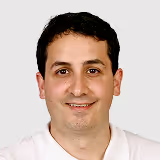
Marcel Kloos
Swiss-licensed dentist and founder of Medschool Experts
Marcel Kloos founded Medschool Experts while studying abroad; since then, over 500 study places have been secured. The Stuttgart-born dentist studied dentistry from 2015 to 2021 in Sofia and holds a Swiss dental licence.
Today he lives in Bern and runs Medschool Experts full-time as its owner.
More articles worth reading
Health Insurance for International Medical Students in Europe 2026
Scholarships and Funding for Medical Studies in Europe 2026
Medicine, Dentistry, Pharmacy or Veterinary Medicine? Choosing Your Degree Abroad in 2026
Ahmad
Sabrina
Rami
Noah
500+ students placed.
Now it's your turn!
No daydreaming, no empty promises. Just a clear plan — for the start of your medical degree.
40 minutes, no obligation