Sofia as a Place to Study: Life During Medical School
17.09.2026

What kind of city is Sofia?
With around 1.2 million residents, Sofia is Bulgaria's largest city and its economic centre. The cityscape mixes historic government buildings, residential blocks from the socialist era, and modern office architecture. Many national and international companies are based here, thanks to the country's well-regarded education system and labour costs that are low by European standards.
| Feature | Sofia | What it means for your studies |
|---|---|---|
| Location | right at the foot of the Vitosha Mountains | the mountains are a day trip away |
| Transport | metro, bus, tram | short distances between university and clinics |
| Language | Bulgarian, teaching in English | you only need the local language once you reach the clinical years |
| Currency | euro since 1 January 2026 | no more exchange-rate calculations |
| Connections | around two hours by air | a weekend trip home is possible |
How does the Vitosha mountain range fit into everyday student life?
Sofia sits right beside a mountain range that you can see from many points in the city. Two cable cars run up from the city, and once you're up there you can hike, ride, and ski in winter — no travel planning, no weekend trip required.
For me, that was the underrated advantage of this location. Anyone studying medicine or dentistry for six years needs a place where their head can switch off. For me, that was the mountain right outside my front door.
Where do you study in Sofia?
The library is the obvious choice, and it gets boring after a while. I did a large part of my studying in cafés, of which Sofia has plenty, and they're inexpensive compared to German cities.
That's not a minor detail: studying abroad means spending more time outside your own flat than you would at home. A city where you can sit and work for hours without spending much money makes studying easier.
{{cta}}How international is studying in Sofia?
My year group included students from over 40 countries, most of them from EU member states. Teaching took place in groups of no more than ten students per lecturer, in English. The Representation of the European Commission is just a few minutes' walk from campus.
This changes more than just where you live. You spend six years working in an internationally mixed team and come out with confident command of medical English. That's a real advantage for career paths outside Germany later on.
What's student life like?
Sofia has a lively bar and concert scene, plus events organised by the faculties. I wrote a dedicated post about this in 2018, because I kept getting asked about it.
My honest take today: the leisure scene isn't a reason to choose a place to study — it's a question of balance. Six years of medical school is not an Erasmus semester. If you keep up the rhythm of lectures, clinical placements, and two exam sessions a year, you'll still have time for a life outside your studies — and if you don't keep up that rhythm, you'll notice by September at the latest.
What has changed since I studied there?
The most visible change is the currency: Bulgaria introduced the euro on 1 January 2026, at a conversion rate of 1.95583 lev per euro. Since 1 February 2026, the lev is no longer legal tender. That means every price you read in older experience reports needs converting — including my own.
Second, rents in central neighbourhoods have risen over the past few years. Sofia is still cheaper than any comparable German university city, but the gap has narrowed since 2015. If you're putting together a budget, work with current figures — we'll go through them with you in a free consultation.
Author's opinion: the city matters more than you'd think
In consultations, people almost always ask about tuition fees and recognition. Almost no one asks about the city. Yet that's where you'll spend six years of your life.
My take: if you choose where to study based only on price and recognition, you're only making half a decision. This is based on my own six years in Sofia and on conversations with students at our partner universities — I'm not aware of solid data linking the city to study success.
Sofia was the right place for me because I wanted a big city and mountains at the same time. For someone looking for the coast and a smaller setting, Varna is the better choice. Both are valid, and you should know which one you want before you enrol.
Summary
Whether Sofia is the right place for you, or another city fits your life better, is exactly what we can help you figure out. At Medschool Experts, we work with the largest network of official partner universities for medicine, dentistry, pharmacy, nursing, and veterinary medicine, and we individually assess the highest possible year of entry for every student — entry is often possible in the final two years of study. Book a free consultation and let's find the right path together.
Frequently asked questions about Sofia as a place to study
How big is Sofia?
Sofia has around 1.2 million residents, making it Bulgaria's largest city and its economic centre.
How do you get around in Sofia?
By metro, bus, and tram. Distances between residential areas, university buildings, and clinics are manageable; many students get around on foot or by public transport.
Is Sofia safe?
In my experience from six years of studying there, yes — with the usual awareness that makes sense in any big city. I never once felt unsafe in Sofia.
What does it cost to live in Sofia?
The cost of living is well below German levels. We've put together concrete budgets in a separate article in our magazine.
Can you go skiing in Sofia?
Yes. The Vitosha Mountains sit right at the edge of the city, with two cable cars running up. Hiking, horse riding, and skiing are all possible without any travel planning.
Do you need Bulgarian for everyday life?
It helps a lot day to day, but it isn't necessary at first. Bulgarian is a compulsory subject in the early years of the programme, because you'll need it once you reach the clinical stage.
Is there a student scene?
Yes. Sofia has a lively bar and concert scene, plus events organised by the faculties. The real question is how you balance your studies and your free time.
How far is it to Germany?
About two hours by air. Sofia has direct flights from several German airports.
Do you pay in euros in Sofia?
Yes, since 1 January 2026. Bulgaria introduced the euro at a rate of 1.95583 lev; since 1 February 2026, the lev is no longer legal tender.
How international is the student body?
Very. My year group in Sofia included classmates from over 40 countries, and the language of instruction on the international programme is English.
Is Sofia the right place for me?
That depends on what you're looking for: mountains and a big city in one, or perhaps the coast, a smaller city, or an EU location with a different language. We'll go through the options with you in a free consultation.
What students say about Medschool Experts
Over 500 placements at more than 25 partner universities across 10+ countries. Read independent student reviews on Trustpilot.
About the author
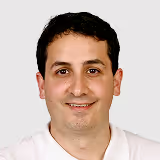
Marcel Kloos
Swiss-licensed dentist and founder of Medschool Experts
Marcel Kloos founded Medschool Experts while studying abroad; since then, over 500 study places have been secured. The Stuttgart-born dentist studied dentistry from 2015 to 2021 in Sofia and holds a Swiss dental licence.
Today he lives in Bern and runs Medschool Experts full-time as its owner.
More articles worth reading
Health Insurance for International Medical Students in Europe 2026
Scholarships and Funding for Medical Studies in Europe 2026
Medicine, Dentistry, Pharmacy or Veterinary Medicine? Choosing Your Degree Abroad in 2026
Ahmad
Sabrina
Rami
Noah
500+ students placed.
Now it's your turn!
No daydreaming, no empty promises. Just a clear plan — for the start of your medical degree.
40 minutes, no obligation