Studying Medicine and Dentistry in Niš (Serbia): Location, Costs and Support
17.09.2026

The faculty
The Faculty of Medicine at the University of Niš is among the most respected training institutions in Serbia and educates doctors, dentists, pharmacists and nursing professionals. The English-language human medicine programme is separately accredited and leads to the title Doctor of Medicine after six years. Dentistry in English is new to the programme — which means Niš now covers both disciplines, something only a few locations outside the EU manage.
The faculty's international visibility is particularly worth noting: it is listed with the UK General Medical Council. For graduates that means a degree recognised beyond the continent. The alumni move accordingly: former students now work at German hospitals in Hof and Flensburg, among others, and in research at Harvard Medical School.
The clinical centre from 2017
The Clinical Centre in Niš opened in December 2017 and is regarded as one of the most modern in the country and the region. Diagnostics, imaging and treatment run at a current technical standard. For students that means clinical teaching takes place in a building that has only been in operation for a few years, with correspondingly modern equipment.
Structure of the degree
The curriculum comprises 360 ECTS over twelve semesters, divided into lectures, practical courses, seminars and clinical practical teaching. In figures: 4.740 active teaching hours, of which 2.235 are theory and 2.505 practice, plus 790 hours of summer placement and clinical practical teaching. The balance is therefore considerably more practice-heavy than many German preclinical semesters.
- Year 1: anatomy, histology and embryology, molecular and human genetics, introduction to clinical practice
- Year 2: physiology, biochemistry, microbiology, immunology, first aid
- Year 3: pathology, pathophysiology, pharmacology, internal medicine propaedeutics, first professional placement
- Year 4: internal medicine, infectious diseases, radiology, psychiatry, dermatology
- Year 5: neurology, paediatrics, gynaecology and obstetrics, surgery, anaesthesiology
- Year 6: ophthalmology, ENT, emergency medicine, general practice, clinical practical teaching and the diploma thesis
The breadth of elective options stands out: from neurosciences through palliative medicine and neonatology to tropical infectious diseases, more than thirty elective courses are available.
Costs and payment terms
| Programme | Fee per academic year | Payment |
|---|---|---|
| Human medicine (English) | 6.000 Euro | quarterly if preferred |
| Dentistry (English) | 7.000 Euro | quarterly if preferred |
The option to pay quarterly matters more in practice than it sounds. Many families cannot raise an annual fee in a single sum, but can manage four instalments spread across the year. That is exactly what causes study plans to fall through elsewhere, even when the substance of the decision was made long ago.
{{cta}}
The city
With around 400,000 inhabitants, Niš is the third-largest city in Serbia and looks back on a history reaching into Roman times. The city has an international airport, a lively food and music scene and a student-shaped centre with short distances. The cost of living is at the lower end of what is possible in Europe. Anyone who lives somewhere for six years will come to appreciate this: Niš is large enough for things to happen, and small enough that you do not get lost.
Our support on site
We have been placing students in Niš for eight years. In that time an established German-speaking student community has grown up — new first-year students meet more senior ones there who have already been through the same examinations and know what matters. That is an advantage you simply cannot buy at a new location.
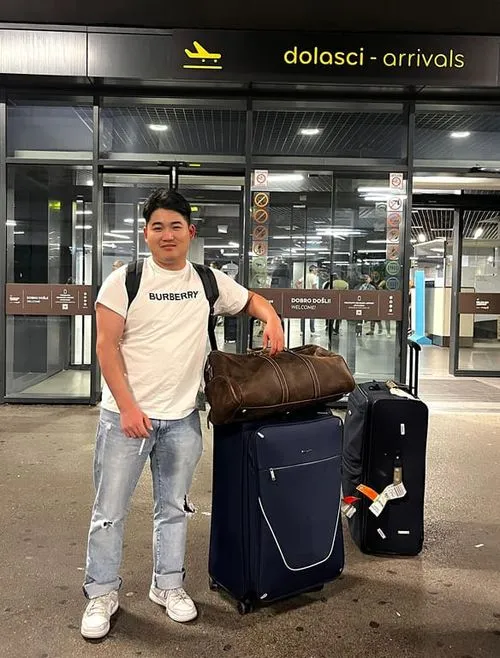
Added to that is our permanent contact person on site. She collects new students from the airport and accompanies their first steps in the city. Anyone who has ever landed alone in a foreign country with two suitcases knows what that is worth.
How you get a place
We deliberately do not publish lists of documents or requirements. They look different at every university and change from one intake to the next — what is true today is no longer true in spring. What stays the same: someone has to look at your case personally.
Send us your school-leaving certificate, any existing academic records and the countries you are considering. We will look at it and tell you at which university in which country we can place you and where we can get you in with a plannable timeline. Niš is one of many possibilities here: through our network of official partner universities we place students in medicine, dentistry, pharmacy, nursing and veterinary medicine — which gives us room to look for the route that suits you.
And if you are already studying and want to transfer, we check the highest possible entry point for you instead of making you start again from scratch — often that means entering in the final two years. Appointments are available via the registration page, and the conversation is free of charge.
Recognition of the degree
On recognition we are open about how things stand: Serbia is not an EU member, so the automatic recognition under Directive 2005/36/EC does not apply. Instead there is an equivalence assessment by the responsible state examination office. At accredited state faculties this is an established procedure, but it is one step more than with an EU degree. As an alternative, transferring later to a university within the EU is also a viable route. What this means specifically for your timeline is something we discuss before any decision.
The author's view
Niš is one of the locations that needs the least explaining when I talk to families. Six thousand Euro a year for human medicine, the option to pay quarterly, and a clinical centre younger than most of the hospitals I did my own clinical rotations in: that is an offer which largely explains itself.
What matters most to me personally, though, is not in the fee table. We have been placing students there for eight years, and in that time something has grown that cannot be planned: a group you grow into. I know myself what it is like to arrive in a foreign country and know nobody. If instead someone is waiting at the airport, and a third-semester student can already tell you how the anatomy vivas run, the first year is a different one.
And since I say the uncomfortable part about every location too: Serbia is not in the EU. The route to the German medical licence (Approbation) here runs through an equivalence assessment. That is feasible and is done regularly, but it is one step more. Anyone who knows this and still wants to come here is making a deliberate decision — and that, to my mind, is exactly the right basis.
Conclusion
Whatever your situation, you don't have to figure out the best path alone. At Medschool Experts, we work with the largest network of official partner universities, and we individually assess the highest possible year of entry for every student. In many cases, entry is even possible in the final two years of medical studies. Book a free consultation with our team and let's map out your personal path together.
Frequently Asked Questions about studying in Niš
What does the degree cost?
Human medicine 6.000 Euro per academic year, dentistry 7.000 Euro per academic year. The fees can be paid quarterly if preferred.
What language is used for teaching?
Entirely English. The programme is separately accredited for this, and teaching staff provide a corresponding declaration before the start of the academic year.
How long does the degree take?
Six years, or twelve semesters, with 360 ECTS. The title is Doctor of Medicine.
What do I need in order to get a place?
That depends on your school-leaving certificate, your background so far and the university in question, and it is not the same in every intake — which is why we do not publish a general list. Send us your profile and we will tell you at which university in which country we can place you and where we can get you in with a plannable timeline.
Is the degree recognised in Germany?
Serbia is not an EU member, so automatic recognition does not apply. Instead there is an equivalence assessment by the responsible state examination office. At accredited state faculties this is an established procedure. What it means for your planning is something we discuss openly in advance.
Is there support on site?
Yes. We have a permanent contact person in Niš who collects students from the airport and helps them settle in.
How large is the German-speaking group?
It has grown over eight years of placements. New students meet more senior ones there who have already been through the same examinations.
Can I transfer from a degree I have already started?
Often yes — the real question is how far up you can enter. That is exactly what we check for you, aiming for the highest possible entry point, often in the final two years. Send us your academic records so far and we will tell you what is realistic.
How do I get there?
Niš has an international airport with connections to Central Europe. Belgrade is also easy to reach.
What students say about Medschool Experts
Over 500 placements at more than 25 partner universities across 10+ countries. Read independent student reviews on Trustpilot.
About the author
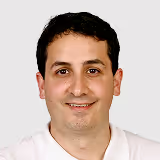
Marcel Kloos
Swiss-licensed dentist and founder of Medschool Experts
Marcel Kloos founded Medschool Experts while studying abroad; since then, over 500 study places have been secured. The Stuttgart-born dentist studied dentistry from 2015 to 2021 in Sofia and holds a Swiss dental licence.
Today he lives in Bern and runs Medschool Experts full-time as its owner.
More articles worth reading
Health Insurance for International Medical Students in Europe 2026
Scholarships and Funding for Medical Studies in Europe 2026
Medicine, Dentistry, Pharmacy or Veterinary Medicine? Choosing Your Degree Abroad in 2026
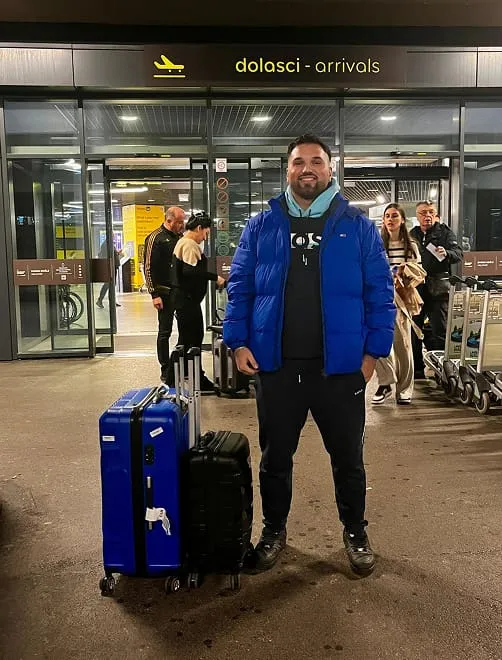
Ahmad
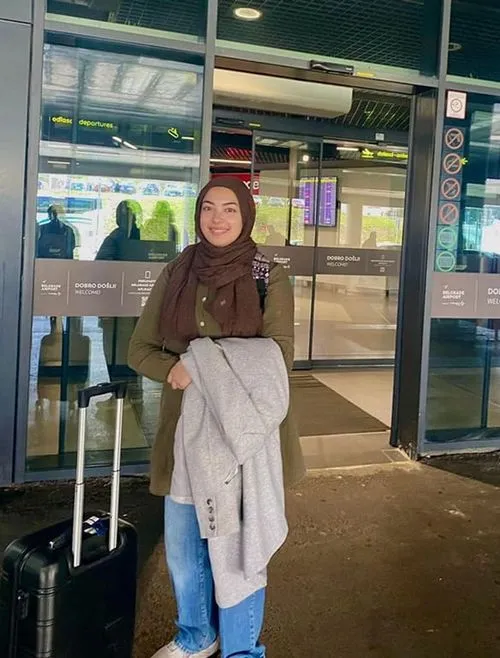
Sabrina
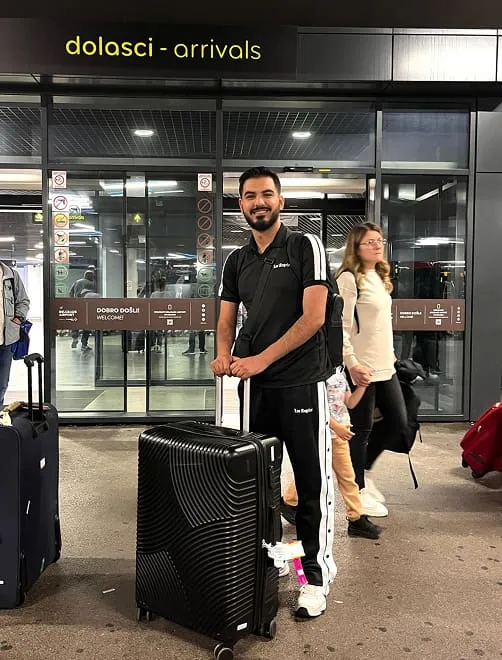
Rami
Noah
500+ students placed.
Now it's your turn!
No daydreaming, no empty promises. Just a clear plan — for the start of your medical degree.
40 minutes, no obligation