Medical Degree Recognition: UK and Pakistan
12.10.2026

Short answer
For British Pakistanis studying medicine in Europe: how a foreign degree is licensed in the UK through the GMC and PLAB, and in Pakistan through PMDC.
Since Brexit, the UK no longer treats a medical or dental degree from an EU country as something it has to accept on trust. Before 2021, EU-trained doctors could often register with the GMC through a lighter, largely paperwork-based route under EU mutual recognition rules. That route closed. A degree from a European university is now assessed the same way as a degree from anywhere else outside the UK, which means an actual licensing exam stands between graduation and practising as a doctor in the NHS.
{{cta}}How the GMC licenses graduates from European universities
Doctors who trained in the EU, EEA or Switzerland now apply for GMC registration through the standard international route. In practice, for most graduates that means PLAB, the Professional and Linguistic Assessments Board test, sat in two parts. PLAB 1 is a written exam covering clinical knowledge and decision making. PLAB 2 is an objective structured clinical exam, a series of simulated patient scenarios assessed in person at a GMC testing centre in Manchester. Both parts are now set to the same content standard as the UK Medical Licensing Assessment, the MLA, which the GMC introduced to make sure every doctor joining the register, home-trained or overseas-trained, is measured against one national benchmark.
The English requirement most people underestimate
Alongside PLAB, the GMC asks for evidence of English language proficiency, usually an IELTS academic score or the OET, the Occupational English Test built specifically for healthcare settings. For someone who grew up and went to school in the UK before studying medicine abroad, this is normally straightforward, but it is still a formal requirement that has to be met on paper, not assumed from a UK upbringing alone.
What passing PLAB actually gives you
Passing PLAB 1 and 2 grants full GMC registration with a licence to practise. It does not, on its own, guarantee a place on the two-year Foundation Programme that UK medical school graduates enter automatically. Foundation Programme places are allocated through a separate, competitive application process, and PLAB graduates typically compete for posts through the international route or apply directly for jobs below or at that level once registered. It is a genuinely workable path, used every year by thousands of overseas-trained doctors, but it takes planning rather than assuming the degree alone opens the door.
The dental equivalent: the ORE
For dentistry, the parallel body is the GDC, the General Dental Council, and the parallel exam is the ORE, the Overseas Registration Examination. It is structured in two parts, a written knowledge test and a practical clinical assessment, and a European dental degree needs to go through it just as a degree from outside Europe would. The GDC has been reworking how the ORE is delivered and who runs it, so it is worth checking the current sitting dates and format closer to the time rather than relying on older guidance.
Getting a European degree recognised by PMDC in Pakistan
On the Pakistani side, the regulator is the Pakistan Medical and Dental Council, PMDC. The body went through a turbulent few years in the early 2020s, when it was dissolved and replaced by the Pakistan Medical Commission before being reconstituted as the PMDC again after a Supreme Court ruling. It has since been through a further round of internal restructuring aimed at modernising how it processes applications, so the name to know for 2026 is PMDC, though it is worth double-checking its current structure at the point you actually apply, since Pakistani health regulation has changed shape more than once in recent memory.
The NEB and NRE exam ladder
Foreign-qualified graduates, including those trained in Europe, generally sit two sets of exams. The first is the NEB, the National Equivalence Board exam, which checks that a degree earned abroad meets Pakistani standards. Depending on the graduate's country of study and the recognition status of the specific university, some candidates move straight to the second stage while others must clear NEB first. The second stage is the NRE, the National Registration Examination, which is the actual licensing exam and is run in two parts, NRE-I and NRE-II, held several times a year.
Does the university need to be on PMDC's list?
Yes, broadly. PMDC maintains a register of recognised foreign medical and dental institutions, and where a university sits on that list affects how a graduate's application is processed. This is one of the more fluid parts of the system, since PMDC has revised its recognition criteria and its list of accepted institutions more than once in the past few years, so it is genuinely worth checking a specific university's current standing before treating recognition as a given.
The house job question, and why it is worth checking each time
Traditionally, foreign graduates were expected to complete a house job, a supervised clinical internship, as part of qualifying for full PMDC registration. PMDC has introduced new rules around provisional registration for foreign graduates in the past couple of years, and reporting on exactly how the internship requirement now applies has been mixed and, at times, contradictory. Anyone seriously planning this route should treat the house job question as something to confirm directly with PMDC closer to the time, rather than something settled once and for all.
You do not need a Pakistani passport for any of this
One detail that surprises a lot of second and third generation British Pakistanis: PMDC's process does not require Pakistani citizenship. A UK citizen with no Pakistani passport at all can sit NEB and NRE and register to practise in Pakistan, provided the degree and exams are in order. Dual heritage without dual nationality is not a barrier here.
Two systems, one degree, no rush to decide
None of this needs deciding now. A medical or dental degree from a European university can be worked through the GMC's PLAB route to practise in the UK, and separately through PMDC's NEB and NRE exams if Pakistan ever becomes relevant, whether that is a return for family reasons, a career opportunity, or simply keeping the option alive for a future that is hard to predict from where you're sitting today.
If you would like to talk through what this could look like for your own situation, degree choice and timeline, we offer a free individual consultation. You can book one at /contact, no obligation, just a straight conversation about the options actually open to you.
What students say about Medschool Experts
أكثر من 500 طالب حصلوا على مقاعدهم في أكثر من 25 جامعة شريكة في أكثر من 10 دول. تعرّف في قصص طلابنا على تجاربهم في طريقهم إلى دراسة الطب في الخارج.
About the author
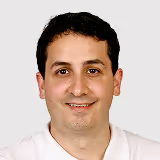
مارسيل كلوس
طبيب أسنان معترف به في سويسرا ومؤسس Medschool Experts
أسّس مارسيل كلوس Medschool Experts خلال دراسته في الخارج، ومنذ ذلك الحين تم تأمين أكثر من 500 مقعد دراسي. وُلد في شتوتغارت، ودرس طب الأسنان في صوفيا من 2015 إلى 2021، وهو طبيب أسنان معترف به في سويسرا.
يعيش اليوم في برن ويدير Medschool Experts بدوام كامل بصفته مالكها.
More articles worth reading
الانتقال من جامعة تشارلز، كلية الطب في بلزن: أين تواصل دراسة الطب أو طب الأسنان في 2026
الانتقال من كلية الطب الأولى في جامعة تشارلز: أين تواصل دراسة الطب أو طب الأسنان في 2026
الانتقال من جامعة مالطا: أين تكمل دراسة الطب في 2026

أحمد

صابرينا

رامي

نوح
أكثر من 500 طالب حصلوا على مقاعدهم.
الآن دورك!
لا أحلام بلا خطة، ولا وعود فارغة. فقط خطة واضحة لبدء دراستك للطب — من القبول إلى تأشيرة الدراسة وتصريح الإقامة. نحن خبراء في التأشيرات للطلاب من العالم العربي.
40 دقيقة، مجانًا ودون أي التزام — بالعربية أو الفرنسية أو الإنجليزية أو الألمانية