New medical school in Virginia: what Mary Washington's plan means for students abroad
24.11.2026

Short answer
Mary Washington's new medical school in Virginia targets primary care as the state faces a 4,000-doctor shortage by 2030. What it means for students abroad.
What is the new medical school in Virginia planned by Mary Washington in 2026?
The new medical school in Virginia is the Mary Washington College of Medicine, a community-based school the University of Mary Washington and Mary Washington Healthcare are developing in the Fredericksburg region. The university's Board of Visitors passed the founding resolution on 20 November 2026, and the college would be the university's fourth college.
The resolution asks for approval to award the Doctor of Medicine. That would be the first professional doctorate in the university's history. The board also revised the university's mission statement to add a commitment to community health.
The focus is narrow on purpose. Primary care, maternal health and rural and underserved medicine come first, along with keeping graduates in Virginia. University President Troy Paino said the college "can have a profound and lasting impact." Mary Washington Healthcare brings the hospitals and clinics where students will train.
Why does Virginia need a new medical school by 2030?
Virginia needs more doctors because the state faces an estimated shortage of 4,000 physicians by 2030, including 1,600 primary care physicians. The Fredericksburg area is one of the fastest-growing regions in the Commonwealth, and its rural and underserved communities already lack access to primary care and maternal health services.
Primary care makes up 40% of Virginia's projected gap, on our calculation. That share explains the school's profile. A family doctor or obstetrician in a growing commuter region sees the shortage every day in waiting times.
The national picture looks similar. The US Health Resources and Services Administration projects a shortage of 141,160 full-time physicians across the United States by 2038. In non-metropolitan areas, projected supply covers only 42% of demand. Rural patients feel it first.
When could the Mary Washington College of Medicine in Virginia open?
The Mary Washington College of Medicine in Virginia has no opening date yet. The November 2026 board vote is an early milestone, and the university says several approvals remain before the college can enroll students. Accreditation and implementation are described as a multiyear process.
The Commonwealth of Virginia has put $1.7 million into planning. The money covers governance, legal and regulatory work, accreditation planning, financial and capital review, affiliation agreements and faculty and residency alignment.
Think about the timeline in practice. A US MD takes four years after a bachelor's degree, then residency follows. Even if a first class started in the late 2020s, those graduates would reach Virginia's clinics in the 2030s, on our calculation. The 2030 shortage arrives first.
How many US students apply to medical school compared with first-year seats in 2025?
In 2025, 54,699 people applied to US MD-granting medical schools, 5.3% more than in 2024, and the schools enrolled 23,440 first-year students, the largest class to date. Total enrolment reached 100,723, the first time US medical schools passed the 100,000 mark.
The gap is large. There were about 2.3 applicants for every first-year place, and roughly 31,000 applicants did not start a US MD programme in 2025, on our calculation. Each new school adds a few dozen or a few hundred seats once it is running. It takes many of them to move that number.
For students who want to start now, studying abroad is a practical answer. Europe offers English-language medical degrees that begin straight after high school and are independent of your high school diploma grades, with a clear route back to US residency.
{{cta}}How does new medical school capacity in the USA compare with Canada, Australia and England in 2026?
In 2026, the USA, Canada, Australia and England are all adding medical training capacity, but in measured steps. US schools enrolled 23,440 first-year students in 2025, Canada's newest school opened with 48 students, Australia is funding 50 extra places from 2028, and England added 350 places for 2025-26.
| Country | Recent step | Scale | Focus |
|---|---|---|---|
| USA (Virginia) | Mary Washington College of Medicine approved by the board on 20 November 2026 | $1.7 million in state planning funds, no class size announced. US total of 23,440 first-year seats in 2025 | Primary care, maternal health, rural and underserved medicine |
| Canada (British Columbia) | Simon Fraser University's medical school in Surrey welcomed its first students on 5 August 2026 | 48 students in the first class, rising to 120 per class by 2035 | Primary care |
| Australia | New round of Commonwealth supported medical places, shared by eight universities | 50 additional places from 2028, after an earlier round of 100 primary care places at ten universities | General practice and regional workforce |
| England | 350 extra medical school places for 2025-26, targeted at under-doctored areas | About 7,500 places a year after the 2020 expansion. NHS Long Term Workforce Plan target of 15,000 by 2031 | Areas with too few doctors |
Look at the focus column. Every country is steering new places towards primary care, general practice or regions that struggle to recruit doctors. Australia also reports more than 2,100 commencing GP registrars in 2026, its largest cohort so far, and the UK government announced 2,000 more Medicine Gateway places over three years in April 2026.
Growth takes time. Simon Fraser University needs until 2035 to reach its full class of 120. Our earlier reports on the new medical school in New Orleans and the new medical school in Ontario show the same long lead times in Louisiana and Canada.
Can Americans who study medicine abroad get a US residency in 2027?
Yes. Americans who study medicine abroad can enter US residency through ECFMG certification. In the 2026 Main Residency Match, 2,949 US citizen international medical graduates matched to residency positions, a match rate of 70.0%, the highest for this group in at least five years.
The requirements are clear. Your medical school must be listed in the World Directory of Medical Schools with an ECFMG sponsor note that covers your graduation year. You pass USMLE Step 1 and Step 2 Clinical Knowledge, meet the communication requirement through an ECFMG pathway with a satisfactory OET Medicine score, and complete at least four academic years of medical education, which ECFMG verifies directly with your university.
International graduates as a whole filled 9,682 first-year positions in 2026, about 23.6% of all matched applicants. US hospitals rely on them. Our guide to ECFMG certification and the USMLE in 2026 explains each step, and the overview on studying medicine or dentistry abroad from the USA covers recognition and destinations.
Start early. Students who sit Step 1 during their degree and choose a school with the right directory listing from day one keep every door open.
The author's view
I started dental medicine at the Medical University of Sofia in 2015, in the English-language programme, at the age of 24. I graduated in 2021. So I know what it feels like to look at a system at home with too few places and decide to start somewhere else instead.
The Mary Washington plan is the right idea for Virginia. Primary care and rural medicine are exactly where doctors are missing. For a student who is ready to start in 2027, though, it will come too late.
My team has placed more than 600 students at medical schools abroad. Those who did best chose their university with the US route in mind from the first semester and prepared for the USMLE early.
Summary
- The University of Mary Washington Board of Visitors approved the Mary Washington College of Medicine on 20 November 2026, with Mary Washington Healthcare as partner.
- The new medical school in Virginia will focus on primary care, maternal health and rural and underserved medicine, and seeks authority to award the MD.
- Virginia has provided $1.7 million in planning funds and faces an estimated shortage of 4,000 doctors, including 1,600 in primary care, by 2030.
- Several approvals and a multiyear accreditation process remain, so no first class date exists yet.
- In 2025, 54,699 applicants competed for 23,440 first-year US places, while 2,949 US citizens trained abroad matched to residency in 2026.
Conclusion
Mary Washington's plan is good news for Virginia patients, especially in the fast-growing Fredericksburg region. Its first graduates are still years away, and the national gap between applicants and seats stays wide in the meantime.
If you want to become a doctor without waiting, an English-language degree abroad followed by ECFMG certification is a proven route back to US residency. Browse the largest selection of universities worldwide, then book a free consultation with Marcel or another experienced consultant on our team.
Frequently asked questions
Where will the new medical school in Virginia be located?
The Mary Washington College of Medicine is planned for the Fredericksburg region of Virginia, one of the fastest-growing parts of the Commonwealth. The University of Mary Washington is developing it with Mary Washington Healthcare, the regional health system that will provide clinical training. A specific campus site had not been announced by November 2026.
Is the Mary Washington College of Medicine accredited yet?
No. The Board of Visitors vote on 20 November 2026 is an early milestone. The University of Mary Washington says several approvals remain before the college can enroll students, and accreditation and implementation will take several years. The university has not published a date for the first class or a planned class size.
How big is Virginia's doctor shortage?
Virginia faces an estimated shortage of 4,000 doctors by 2030, including 1,600 primary care physicians. Nationally, the US Health Resources and Services Administration projects a shortage of 141,160 full-time physicians by 2038, with rural and non-metropolitan areas hit hardest. That is why the new Virginia school focuses on primary care and rural medicine.
Can a US citizen with a European medical degree practise medicine in the United States?
Yes. A US citizen who graduates from a medical school abroad needs ECFMG certification: a school listed in the World Directory of Medical Schools with a valid sponsor note, passes in USMLE Step 1 and Step 2 Clinical Knowledge, and a satisfactory OET Medicine score through an ECFMG pathway. In the 2026 Match, 2,949 US citizen international graduates matched, a rate of 70.0%.
How long does it take to become a doctor by studying medicine in Europe compared with the US?
Most European medical degrees last six years and start straight after high school. In the US, students usually complete a four-year bachelor's degree before a four-year MD. On our calculation, a European route can save around two years before residency. Both paths then lead into US residency training once ECFMG certification is complete.
What students say about Medschool Experts
Over 600 placements at 25+ partner universities across 10+ countries. See how our students experienced their path into medical school abroad in our student stories.
About the author
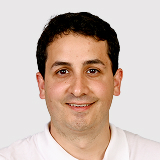
Marcel Kloos
Founder and owner of Medschool Experts, federally recognised dentist
Marcel Kloos is the founder and owner of Medschool Experts, a placement agency for medicine, dentistry, veterinary medicine and pharmacy degrees abroad. Since 2021 the team has secured more than 600 study places at 25+ partner universities in Europe and worldwide.
Study medicine abroad: Marcel's own path
Born in Stuttgart, Marcel started his degree late: at 24 he enrolled at the Medical University of Sofia, Faculty of Dental Medicine, and graduated in 2021 from the English-language programme. He went through the same steps his clients face today — nostrification of school certificates, entrance interviews, finding a flat in Sofia and later the recognition of a foreign degree. He is a federally recognised dentist.
What Marcel does at Medschool Experts
Today Marcel lives in Bern and runs Medschool Experts full-time. He visits every partner university in person, negotiates placement agreements directly with faculties and deans, and leads the free consultations in which applicants learn at which university they can start next semester. His YouTube channel on studying medicine abroad has helped thousands of applicants compare universities, costs and recognition.
Topics Marcel writes about
- Study medicine abroad independent of your high school diploma grades: universities, costs and admission
- Study dentistry, veterinary medicine or pharmacy in Europe in English
- Tuition fees and living costs at medical schools in Europe and worldwide
- Recognition of foreign medical degrees in the EU, Switzerland, the UK and the US
- Transferring between medical schools and returning home into a higher semester
All articles by Marcel Kloos are based on first-hand visits to the universities and conversations with current students. Book a free consultation to discuss your own path.
More articles worth reading
NRE Step 2: PMDC Moves Clinical Exam to December 2026 and January 2027
AI malpractice risk: why doctors who overrule AI face juries
Transfer from RUDN University: 51 Points, Three Attempts and the Paid Repeat
Ahmad
Sabrina
Rami
Noah
600+ students placed.
Now it's your turn!
No daydreaming, no empty promises. Just a clear plan — for the start of your medical degree.
40 minutes, no obligation