Study Medicine or Dentistry Abroad from the USA: Recognition, USMLE and the Best Destinations
23.09.2026

Why So Many Americans Study Medicine Abroad
The US system has three built-in bottlenecks. First, the sheer mismatch between applicants and seats: even after steady expansion, US medical schools admit well under half of those who apply. Second, the path is long. Most students complete a four-year bachelor's degree before they can even start medical school, which pushes the start of residency towards the late twenties. Third, the cost is high. Many US graduates leave medical school with six-figure debt before earning a resident's salary.
Studying abroad addresses all three. English-language programmes in Europe and the Caribbean admit students on a more predictable basis, several European programmes accept students directly after high school or offer a shorter route for graduates, and tuition plus living costs abroad are often a fraction of the US equivalent.
Medicine and Dentistry Face Different Pressures
For Medicine, the main pressure is the number of seats. For Dentistry, it is cost and competition combined: US dental schools are among the most expensive professional programmes in the country. A European dental degree can therefore be a smart first step, especially for students who hold or can obtain an EU passport, or who plan to work partly outside the United States.
How a Foreign Medical Degree Is Recognised in the USA
Recognition in the USA does not work by comparing curricula. It works through certification and exams. Every international medical graduate who wants to enter US residency must be certified by ECFMG, and ECFMG certification rests on three pillars: the right school, the right exams and the right documents.
Pillar 1: The School Must Meet ECFMG's Requirements
The medical school must be listed in the World Directory of Medical Schools with an ECFMG note confirming that its students and graduates are eligible to apply for ECFMG certification. Since 2024, ECFMG additionally requires that the school is accredited by an agency recognised by the World Federation for Medical Education (WFME). This WFME recognition rule is the single most important criterion when you choose a school abroad. It applies to the accrediting body of the country or region, so the question to ask is always: is the school accredited by a WFME-recognised agency, and does it carry the ECFMG note?
Pillar 2: The USMLE Exams
ECFMG certification requires passing USMLE Step 1 and Step 2 Clinical Knowledge. Step 1 has been reported as pass or fail since January 2022, which puts more weight on Step 2 CK scores, clinical experience in the USA and letters of recommendation when residency programmes compare applicants. Step 3 is usually taken during residency. ECFMG also requires a clinical skills and communication component, which is currently fulfilled through its own pathways for applicants.
Pillar 3: The Residency Match and State Licensing
With ECFMG certification, you can apply through ERAS and take part in the National Resident Matching Program. After residency, each state medical board grants the full licence. Several states have introduced additional routes for internationally trained physicians in recent years, so the landscape is widening rather than narrowing.
What Applies to Dentistry
For Dentistry, the US system is different. Graduates of dental programmes outside the USA and Canada usually complete an advanced standing programme of two to three years at a CODA-accredited US dental school and pass the INBDE before they can obtain a state licence. A growing number of states have opened alternative licensing pathways for internationally trained dentists. A European dental degree remains fully usable across the EU, which gives dentists with international plans considerable flexibility.
{{cta}}Which Destination Countries Suit American Students?
Not every country abroad fits a US career equally well. The following destinations are popular with American students because they combine English-language teaching, recognised accreditation and good preparation for the USMLE.
Poland
In Poland, several universities run English-language MD programmes designed specifically for North American students, with USMLE-oriented curricula and clinical rotations that can include placements in the USA. Poland combines EU standards, affordable living costs and a long track record of graduates matching into US residencies.
Hungary and the Czech Republic
Both countries have offered English-language Medicine and Dentistry for decades. Their programmes are six years long, taught to international cohorts and anchored in EU quality standards. Many American graduates from Central Europe successfully take the USMLE during or after their studies.
The Caribbean
Caribbean medical schools follow the US model: a basic science phase on the island, followed by clinical rotations in US hospitals. For students who want to stay as close as possible to the American system, this is a highly targeted route. Here, WFME-recognised accreditation and the ECFMG note are decisive, and they vary between schools.
Ireland
Ireland offers English-language medical programmes with a strong international reputation and an established pathway for North American students. The country is often considered by students who want a European degree with a close cultural connection to the USA.
Other EU Countries
Bulgaria, Romania, Slovakia and further EU countries offer English-language programmes as well. They are particularly interesting for American students with European citizenship, because an EU degree then also opens the door to practising anywhere in the European Union.
{{callout}}Practical Tips for American Students
Check Accreditation Before Anything Else
Before you compare cities, rankings or campus life, confirm the WFME-recognised accreditation and the ECFMG note. Everything else comes second.
Start USMLE Preparation Early
Programmes with USMLE-oriented curricula make a real difference. Students who integrate Step 1 preparation into their preclinical years arrive at the exam far better prepared than those who start from scratch after graduation.
Plan US Clinical Experience
Residency programmes value hands-on clinical experience in the USA. Look for programmes that allow electives or rotations in US hospitals, and plan them for your final years.
Think About Financing
Some programmes abroad are eligible for US federal Direct Loans, while others are not. This can make a major difference to your financial planning, so it deserves attention before you decide.
Consider the Route for Graduates
If you already hold a bachelor's degree in a life science, some European programmes may credit part of your prior studies. This can shorten your path considerably.
How We Help You Find the Right Programme
Choosing the right school abroad is the decision that determines whether your path back to the USA is smooth. We offer solutions for exactly this. Contact us and we check individually which of our 25+ partner universities fits you, your goals and the US recognition rules. Marcel or another experienced consultant on our team will look at your background, your budget and your career plans and give you a clear recommendation.
The Author's View
When I talk to American families, the first question is almost always the same: will this degree really count back home? It is the right question to ask, and the good news is that the answer is clear. The US system is transparent. It tells you exactly what it needs: the right accreditation, the ECFMG note, and passing scores on the USMLE. Once those boxes are ticked, the path is open.
What I see in consultations is that American students often underestimate how early the key decisions are made. The choice of school decides your eligibility. The curriculum decides how well prepared you are for Step 1. The clinical years decide whether you can show US experience on your residency application. None of this is complicated, but all of it needs to be planned from the start.
I also see how much students grow during these years. Living in another country, learning to communicate with patients in a new setting and working alongside classmates from dozens of nations builds a kind of confidence that residency programme directors notice. Many of the American graduates we have supported describe their time abroad as the best preparation for the pressure of residency, precisely because they had to be independent early.
Studying abroad is a genuine opportunity for American students. It shortens the path, reduces the financial burden and adds international experience that residency programmes value. If you are serious about becoming a doctor, book a consultation and let us look at your options together.
Conclusion
- In 2025, 54,699 people applied to US medical schools and 23,440 enrolled, so more than half of all applicants did not start that year.
- A foreign medical degree counts in the USA through ECFMG certification, which requires a school listed in the World Directory with an ECFMG note, accreditation by a WFME-recognised agency, and passing USMLE Step 1 and Step 2 CK.
- Poland, Hungary, the Czech Republic, Ireland and the Caribbean are popular destinations for American students.
- Dentistry graduates usually complete an advanced standing programme at a CODA-accredited US dental school, while the EU degree remains valid across Europe.
Thousands of American doctors have trained abroad, passed the USMLE and built successful careers back home. With the right school and early preparation, your path can be just as clear. Book your free consultation and take the first step towards your medical career.
Frequently Asked Questions
Can I practise medicine in the USA with a degree from Europe?
Yes. Graduates of European medical schools can obtain ECFMG certification, match into US residency programmes and receive a state licence. The school must be listed in the World Directory with an ECFMG note and be accredited by a WFME-recognised agency, and you must pass USMLE Step 1 and Step 2 CK.
What does WFME recognition mean for my choice of school?
Since 2024, ECFMG only certifies graduates of schools accredited by an agency that the World Federation for Medical Education has recognised. This makes WFME recognition a key filter when you compare programmes abroad.
Can I start medical school in Europe directly after high school?
Yes. Most European programmes are six-year degrees that accept students directly after high school. This can save several years compared with the US route of a bachelor's degree followed by four years of medical school.
Is it harder for international graduates to match into residency?
International graduates match into US residency every year, especially in primary care fields such as internal medicine, family medicine and paediatrics. Strong USMLE results, US clinical experience and good letters of recommendation improve your chances considerably.
Can I study Dentistry abroad and later work in the USA?
Yes, but usually with an additional step. Most states require graduates of dental schools outside the USA and Canada to complete an advanced standing programme at a CODA-accredited dental school and pass the INBDE. Some states offer alternative routes.
When should I take USMLE Step 1 if I study abroad?
Most students abroad sit Step 1 after completing the preclinical sciences, usually around the end of the second or third year, depending on the curriculum. Programmes designed for North American students often build this timing into their schedule, so you can prepare alongside your coursework instead of adding a separate year.
Will I need to speak the local language?
Teaching in English-language programmes is fully in English. For clinical years, basic knowledge of the local language helps with patient contact, and many universities offer language courses. For students who plan US rotations in their final years, English remains the main working language.
Which university abroad is right for me?
That depends on your academic background, budget and career goals. Contact us and we check individually which of our 25+ partner universities fits you.
What students say about Medschool Experts
Over 500 placements at more than 25 partner universities across 10+ countries. Read independent student reviews on Trustpilot.
About the author
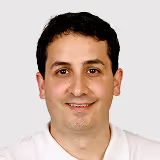
Marcel Kloos
Swiss-licensed dentist and founder of Medschool Experts
Marcel Kloos founded Medschool Experts while studying abroad; since then, over 500 study places have been secured. The Stuttgart-born dentist studied dentistry from 2015 to 2021 in Sofia and holds a Swiss dental licence.
Today he lives in Bern and runs Medschool Experts full-time as its owner.
More articles worth reading
Study Medicine or Dentistry Abroad from Brazil: Revalida, EU Passports and the Best Destinations
Study Medicine or Dentistry Abroad from the Gulf States: Licensing in Saudi Arabia, the UAE, Kuwait, Qatar, Oman and Bahrain
Study Medicine or Dentistry Abroad from Nigeria: MDCN Assessment Exam, Recognition and the Best Destinations
Ahmad
Sabrina
Rami
Noah
500+ students placed.
Now it's your turn!
No daydreaming, no empty promises. Just a clear plan — for the start of your medical degree.
40 minutes, no obligation