Studying Medicine Abroad: How We Find Your Place
17.09.2026

Why you will not find a checklist here
We used to publish one. We took it down, and the reason is simple: a general list of requirements is wrong for almost everybody who reads it.
What a university expects differs from country to country, from faculty to faculty, and from one intake to the next. It also differs by subject — medicine, dentistry, pharmacy, nursing and veterinary medicine are not handled the same way — and by what you bring with you. Someone with a strong science record and someone with two semesters of biology already behind them are two entirely different cases, even at the same university.
A list that is one intake out of date does not just fail to help. It sends people to the wrong place, and losing a year to that is the most expensive mistake in this whole process.
What we do instead
Send us your profile. That means your school-leaving certificate, any study or training records you already have, and the countries you would seriously consider. Nothing needs to be certified, translated, or perfect at this stage — photos of your documents are enough to get started.
We look at it and come back with something concrete: at which university, in which country, we can place you — and where we can do so dependably rather than hopefully. That answer is worth more than any checklist, because it is about you rather than about a generic applicant.
We work with the largest network of official partner universities we know of, covering medicine, dentistry, pharmacy, nursing and veterinary medicine. That breadth is the whole point: if one location is not a realistic fit for your profile, there is almost always another one that is, and we can tell you which before you have invested a single week in the wrong direction.
If you have already studied — medicine elsewhere, a related subject, or a health-care training — say so early. In those cases we look for the highest possible entry point rather than starting you at year one, which in many cases means entering in one of the last two years of study.
{{cta}}
What actually decides whether a location fits you
Once the question of where you can get in is answered, the more interesting one begins: where do you actually want to spend the next five or six years? These are the things worth thinking about, and they are all things you can weigh up yourself.
- The language of instruction. English is the most common option abroad, but there are locations teaching in German, and others where the programme runs in the national language. Whichever it is, the clinical years will involve patients who speak the local language — that is worth planning for rather than discovering.
- Tuition fees and living costs together. A cheaper fee in an expensive city can end up costing more than the reverse. Look at the six-year total, not the annual figure.
- How the curriculum is built. Group sizes, how early you touch a patient, how much practical time is written into the programme rather than left to chance.
- The city itself. Size, flight connections home, whether there is an established community of students from your country. Six years is a long time to be somewhere that does not suit you.
- Recognition of the degree. Within the EU, medical degrees are recognised automatically under Directive 2005/36/EC. That is what makes a degree from abroad a full equivalent rather than a compromise.
We go through all of this with you, in plain terms and without a sales pitch. Read our overview of tuition fees in Europe if you want to start forming a picture beforehand.
Financing runs in parallel, and it should start early
This is the one part of the process where dates genuinely matter, so it is worth saying clearly: financing takes longer than people expect.
Auslands-BAföG, the German state support for studying abroad, is available for EU locations, and decisions typically take three to four months. Education funds and student loans have their own processing times. None of this depends on having a place yet, so there is no reason to wait — running the financing track in parallel is what keeps an offer from arriving at a moment when you cannot act on it.
Most students end up combining sources rather than relying on one. Our article on financing medical school abroad goes through the options in detail, and we are happy to work through your specific case with you.
What you can bring to the first conversation
Nothing formal. It helps if you have thought about four things, and none of them require paperwork:
- What you have studied or trained in so far, if anything
- Which subject you actually want — medicine, dentistry, pharmacy, nursing or veterinary medicine
- Which countries are genuinely on your list, and which are not
- What your budget realistically allows over the full length of the programme
With those four answers we can usually tell you a great deal in a single conversation. Everything after that — the paperwork, the formalities, the coordination with the university — is our job, not yours.
The things that really cost people a year
- Deciding late. Not because of any deadline, but because the good options fill up and the calm decisions are made early.
- Fixing on one country before knowing where you fit. People fall in love with a city and only then ask whether it is realistic. It works far better the other way around.
- Leaving financing until after the offer. Decisions take months, and an offer you cannot fund is not an offer.
- Choosing on price alone. The cheapest fee is rarely the cheapest programme once living costs and six years are counted.
- Doing it alone. Not because it is impossible, but because a single wrong assumption costs a full academic year — and a conversation costs nothing.
Once you have your place
From that point the practical side takes over: somewhere to live, insurance, flights, and the small business of settling into a new country. We stay involved through that phase, and we handle the formalities with the university so you can concentrate on arriving. Our guide to arriving in Bulgaria gives a good sense of what those first weeks look like at one of our locations.
If you want to know where you stand, the fastest route is simply to ask: book a free consultation and we will tell you honestly what your options are.
The author’s view
When I went to Sofia, I spent weeks trying to assemble a picture out of forum posts and half-current pages, and most of what I found turned out not to apply to me. That is the part I remember most clearly — not the difficulty, but the sheer wasted effort of researching the wrong things.
What I have learned since, on the other side of the desk: almost nobody fails because of their grades. People lose time because they fix on one country too early, because they start thinking about money too late, or because they never asked anyone who actually knew where they would be taken.
So my honest advice is unglamorous. Do not build a checklist. Write down what you have done so far, what you want to study, and which countries you would go to — and then ask. Half an hour of conversation replaces weeks of reading, and at the end of it you know something real instead of something general.
Conclusion
Whatever your situation, you don't have to figure out the best path alone. At Medschool Experts, we work with the largest network of official partner universities, and we individually assess the highest possible year of entry for every student. In many cases, entry is even possible in the final two years of medical studies. Book a free consultation with our team and let's map out your personal path together.
Frequently Asked Questions
What do you need from me to get started?
Your school-leaving certificate, any study or training records you already have, and the countries you would consider. Photos are fine — nothing needs to be certified or translated at this stage. From that we can tell you where we can place you.
Why don't you publish a list of requirements?
Because it would be wrong for most people who read it. Requirements differ by country, by university, by subject and by intake, and a list that is one year old sends people in the wrong direction. An individual assessment costs you nothing and is accurate.
What school-leaving average do I need?
At our partner universities there is no numerus clausus, so a grade threshold does not decide your place the way it does at home. What matters is your profile as a whole — send it to us and we will tell you where you stand.
Which subjects can you place students in?
Medicine, dentistry, pharmacy, nursing and veterinary medicine, across the largest network of official partner universities we know of. If one country is not the right fit for your profile, we will usually have another that is.
I have already studied — can I enter at a higher level?
Often, yes. Tell us what you have completed and we will look for the highest possible entry point rather than starting you over; in many cases that means entering in one of the last two years of study. What is realistic depends on your record, so let us look at it.
Do I need a language certificate?
That depends entirely on the location and the programme. Rather than guess, tell us which languages you speak and how well — it is one of the first things we factor into our recommendation.
How early should I get in touch?
Earlier than most people do. Not because of any single date, but because financing decisions take three to four months and the calmest choices are always the ones made with time to spare.
What does the consultation cost?
Nothing. You send us your profile, we assess it and tell you where we can place you. Whether you take that further is entirely up to you.
What students say about Medschool Experts
Over 500 placements at more than 25 partner universities across 10+ countries. Read independent student reviews on Trustpilot.
About the author
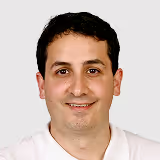
Marcel Kloos
Swiss-licensed dentist and founder of Medschool Experts
Marcel Kloos founded Medschool Experts while studying abroad; since then, over 500 study places have been secured. The Stuttgart-born dentist studied dentistry from 2015 to 2021 in Sofia and holds a Swiss dental licence.
Today he lives in Bern and runs Medschool Experts full-time as its owner.
More articles worth reading
Health Insurance for International Medical Students in Europe 2026
Scholarships and Funding for Medical Studies in Europe 2026
Medicine, Dentistry, Pharmacy or Veterinary Medicine? Choosing Your Degree Abroad in 2026
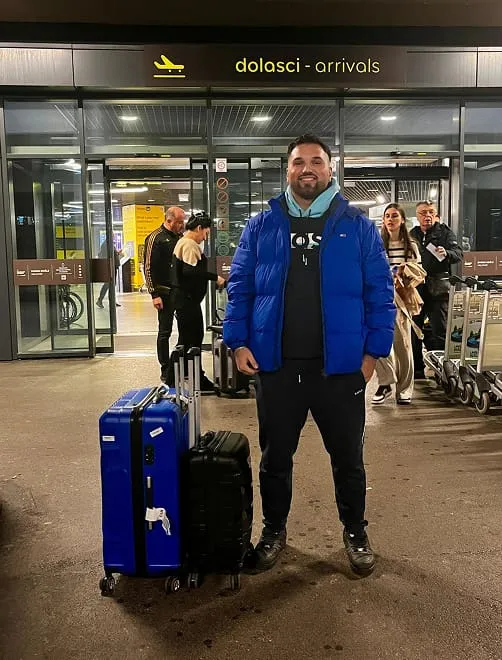
Ahmad
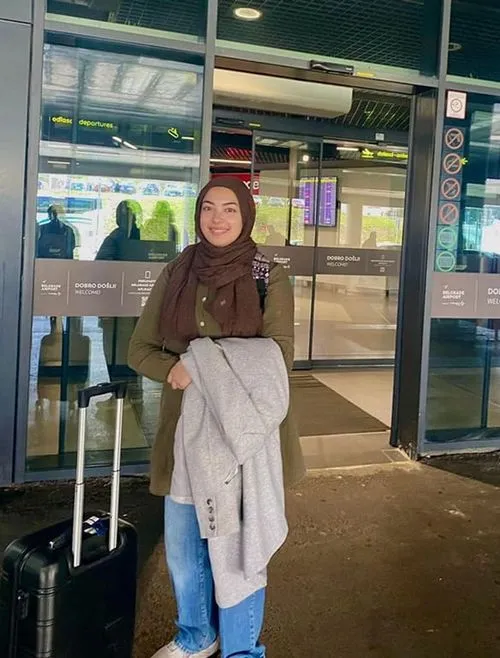
Sabrina
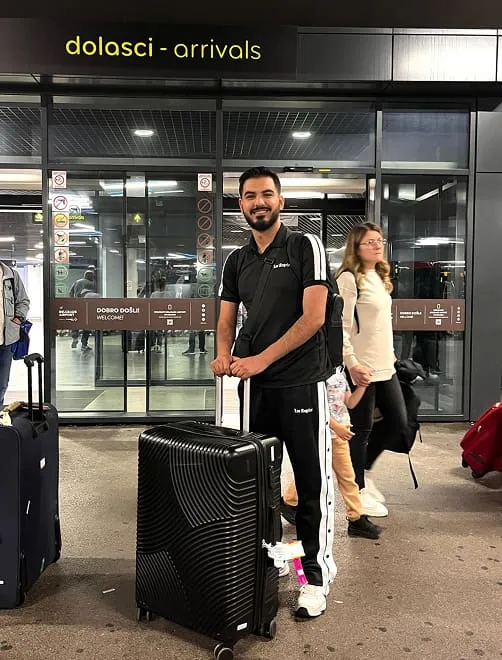
Rami
Noah
500+ students placed.
Now it's your turn!
No daydreaming, no empty promises. Just a clear plan — for the start of your medical degree.
40 minutes, no obligation