Study Medicine in Katowice – Academy of Silesia
Academy of Silesia · Katowice · Poland
Private university in Upper Silesia with an English-taught medicine programme over twelve semesters.
campus|Academy of Silesia in Katowice: the location at a glance|rlOStVzkB0Q
At a glance
The key facts about this university at a glance.
Programmes
Medicine
Tuition fees
7,200 EUR per semester (years 1–2), 7,950 EUR per semester (years 3–4), 8,250 EUR per semester (years 5–6)
Duration
6 years
Language of instruction
English
Admission process
Intake
October (main intake) and February (additional spring intake)
Recognition
Automatically recognised across the EU · Bologna/ECTS · state-accredited
Living costs
500 to 700 EUR per month
Total students
2000
How Safe Is This Study Location?
Based on assessments from residents and visitors collected by Numbeo over the past five years.
65.9
50
6 years
600
Climate
Average daytime highs by month.
✓ Placement without a grade cut-off — we place you regardless of your school-leaving grades. We go through the specific requirements together.
Get free advice →Where this university is
Drag the map to place the university in Europe — and to judge how far it is from home.
Why study medicine abroad at this university?
The Academy of Silesia is a private university based in Katowice. It grew out of Wyższa Szkoła Techniczna, founded in 2001, and adopted its current name in 2022. The medical programme belongs to the Prof. Zbigniew Religa Faculty of Medical Sciences, with teaching spread across Katowice and Zabrze. The programme lasts twelve semesters, is offered in Polish and English and leads to the Polish lekarz degree. The Polish Accreditation Committee (PKA) has given the programme a positive assessment. The Academy is not the same institution as the public Medical University of Silesia.
Dean and professors
The faculty is led by Dr. Grzegorz Religa as Dean. The cardiac surgeon is the son of Prof. Zbigniew Religa, the legendary founder of Polish cardiac surgery after whom the faculty is named — and he completed his own thoracic surgery training under him. Before becoming Dean, he worked as a senior consultant in the cardiac surgery department at Biegański Hospital in Łódź.
- Prof. Dr. Andrzej Bochenek – cardiac surgeon and Vice-Rector for Medical Affairs; took part in Poland's first successful heart transplant in 1985 and has performed more than 4,500 open-heart operations during his career.
- Prof. Dr. Klaudiusz Nadolny – Vice-Dean and head of the Department of Emergency Medicine; awarded an honorary doctorate by Ivano-Frankivsk National Medical University in Ukraine.
- Prof. Dr. Krzysztof Milewski – cardiologist and head of the Department of Internal Medicine and Cardiology; conducted research at the Cardiovascular Research Foundation in New York from 2008 to 2010 and has published in The Lancet, among other journals.
Accreditations of the Academy of Silesia in Poland
Is the Academy of Silesia a state-accredited university? Yes. The Medicine programme has been positively evaluated and accredited by the Polish Accreditation Committee (Polska Komisja Akredytacyjna, PKA) — the country's central state authority for the quality assurance and accreditation of higher education institutions in Poland. The PKA accredits both public and private universities in Poland to the same statutory standards.
The Academy of Silesia is registered in the World Directory of Medical Schools, the internationally recognised directory of medical schools maintained by WFME and FAIMER. The PKA itself is recognised by the World Federation for Medical Education (WFME) as an accrediting agency (WFME recognition valid until September 2035) — the basis for ECFMG's "Recognized Accreditation Policy," under which only graduates of programmes accredited by a WFME-recognised agency are eligible for ECFMG certification and, with it, admission to the USMLE.
Poland is also on the list of the US National Committee on Foreign Medical Education and Accreditation (NCFMEA), which identifies countries whose medical-education accreditation standards are comparable to those of the United States.
- Programmes: Medicine
- Language of instruction: English
- Standard duration: 6 years
- Start of studies: October (main intake) and February (additional spring intake)
- Requirement: General higher-education entrance qualification. Check in a free study consultation whether you meet the requirements for placement at this university through Medschool Experts.
Study medicine or dentistry: programmes and language of instruction
Structure, duration, language of instruction and degree — for every programme at this university.
- Medicine: The Medicine programme leads to a medical degree. The pre-clinical phase establishes the scientific foundations; the clinical phase adds patient-facing work.
Study conditions and campus life abroad
The programme runs over twelve semesters, or six years. In the first two years you build the pre-clinical foundations in anatomy, physiology, biochemistry, histology and embryology, alongside Polish language courses that you will need for patient contact later on. From the third year, the clinical phase begins with internal medicine, surgery, paediatrics, gynaecology, neurology and psychiatry; placements take place at the faculty's teaching hospitals in Katowice and Zabrze. The final year is entirely practical and works like a full clinical internship year.
Admission: how to get a place to study medicine abroad
The basic requirement for placement at this location is a general higher-education entrance qualification. When placed through Medschool Experts, there is no separate entrance test. Get in touch to find out whether we can place you at this university, and book a free study consultation.
Study medicine abroad at 350+ universities worldwide
- The right university and a secure placement
- A study place abroad with an internationally recognised degree
- Support with your start, preparation and finding accommodation
- Help with transferring to another university
- Guidance all the way to your first job
Preparing properly with Medschool Experts
We take care of your entire application, including all the necessary documents. In Katowice, we help you find accommodation, enrol at the Academy of Silesia and deal with the authorities — including for the second teaching site in Zabrze. Afterwards, we remain your point of contact for clinical electives, your final practical year and your next career steps.
Tuition fees and living costs to study medicine abroad
The tuition fee is 7,200 EUR per semester (years 1–2), 7,950 EUR per semester (years 3–4), 8,250 EUR per semester (years 5–6). Before making any decision, ask the International Office to confirm the amount in writing, specifying whether accommodation, insurance, and registration fees are included.
Additional one-off costs include the application fee, visa, health insurance, travel, and usually a deposit for accommodation. Budget 500 to 700 EUR per month for living costs.
Degree recognition and career prospects
Poland is a member of the European Union, so the Professional Qualifications Directive 2005/36/EC applies to your degree. The lekarz degree you earn at the Prof. Zbigniew Religa Faculty of the Academy of Silesia in Katowice is recognised automatically throughout the EU/EEA and in Switzerland, without an equivalence assessment or knowledge test.
To practise in Poland itself, the state exam (LEK) and the internship year (staż) would be required; for most other EU countries you do not need either. You apply for your licence with the competent authority of the country where you want to work and provide proof of medical-level proficiency in its national language. Processing times vary from country to country.
After that, specialist training is open to you on the same terms as graduates of domestic medical schools. Teaching is spread across Katowice and Zabrze, in the Upper Silesian metropolitan area of around two million people — so you will know how large hospitals work.
Alumni now practising internationally
Former students of this university who, according to publicly available sources, now work as doctors or dentists internationally. Anonymised overview — not an indication of any cooperation with Medschool Experts.
The city as a place to study medicine
Katowice is the lively heart of Silesia, with one of the youngest populations in Poland and a student and bar scene known far beyond the city. Rents are well below Western European levels, and the compact city centre is easy to explore on foot or by tram.
The climate is temperate continental: spring and autumn are pleasantly mild at around 4–14 °C, and summers reach highs of about 24 °C without becoming oppressive. The annual average is just under 9 °C.
Katowice Airport (KTW) is about 30 kilometres north of the city and offers direct flights to many European destinations.
- City: Katowice
- Country: Poland
- Living costs: 500 to 700 EUR per month
- Entry: Student visa required
About the author

Marcel Kloos
Federally recognised dentist, founder and owner of Medschool Experts
Marcel Kloos founded the company while still studying abroad himself; since then more than 500 study places have been arranged. Originally from Stuttgart, he studied dentistry in Sofia from 2015 to 2021 and is a federally recognised dentist.
He now lives in Bern and runs the company full-time as its owner. He visits the partner universities in person on a regular basis.
More universities to study medicine in this country
Compare the universities in the same country — programmes, fees and language of instruction side by side.
Student story
Videos about this university
Campus tour, first-hand accounts from students on the ground and answers to the most common questions — to watch rather than read.
campus|Academy of Silesia in Katowice: the location at a glance|rlOStVzkB0Q
Our curated universities
Our curated Top 20 — selected from the world's largest choice of universities with no entrance-exam restrictions for medicine, dentistry, pharmacy and veterinary medicine. We recommend each of these particularly, based on years of experience.
FAQ: studying medicine abroad at this university
What are the entry requirements for Academy of Silesia (Akademia Śląska) in Katowice?
You need a general higher-education entrance qualification (A-levels or equivalent). There is no numerus clausus, so your school-leaving grade does not determine your place. You will also need a sufficient command of English and a student visa.
How do I apply through Medschool Experts?
Medschool Experts handles placement at this location without a grade-based admission cap. Whether we can place you with your profile is something we clarify in a free, no-obligation consultation — where we also discuss which university is the best fit for you.
What does it cost to study at Academy of Silesia (Akademia Śląska)?
The tuition fee is 7,200 EUR per semester (years 1–2), 7,950 EUR per semester (years 3–4), 8,250 EUR per semester (years 5–6). Additional costs include the application fee, visa, health insurance, travel, and accommodation. Always ask the International Office to confirm every figure in writing — figures quoted by third-party portals can vary significantly.
How much money do I need per month in Katowice?
Budget 500 to 700 EUR per month for living costs. This is well below Western European levels. The exact amount depends mainly on whether you live in student accommodation or privately.
How is the programme structured and how long does it take?
The programme lasts 6 years. First comes the pre-clinical phase with the theoretical foundations, then the clinical phase with examination courses and placements at affiliated hospitals. The final year is primarily practical in focus.
Is the degree recognised in the EU?
As Poland is an EU member state, medical degrees are automatically recognised across the EU under the Professional Qualifications Directive, provided graduation requirements are met. For non-EU countries you wish to practise in, confirm requirements separately.
Will I receive a transcript of records?
Yes. Your performance is recorded in a transcript showing subjects, examinations, and grades. This is exactly the document the authorities need later for the equivalence assessment. Keep all semester certificates and grade reports safely — they are difficult to obtain retrospectively.
Can I transfer to a university in my home country during my studies?
There is no automatic transfer route. A transfer to a domestic faculty involves an individual credit-recognition process and depends on available places in higher semesters. Plan your studies as a complete path to graduation.
How does Medschool Experts support you on the ground?
We organise the application and all documents, support you through enrolment, accommodation, and administrative requirements, and remain your contact after your studies begin. We also tell you upfront where the weaknesses of this particular location lie.
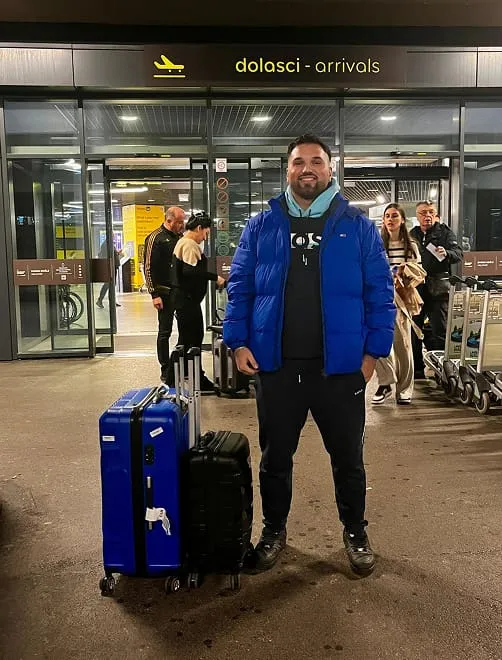
Ahmad
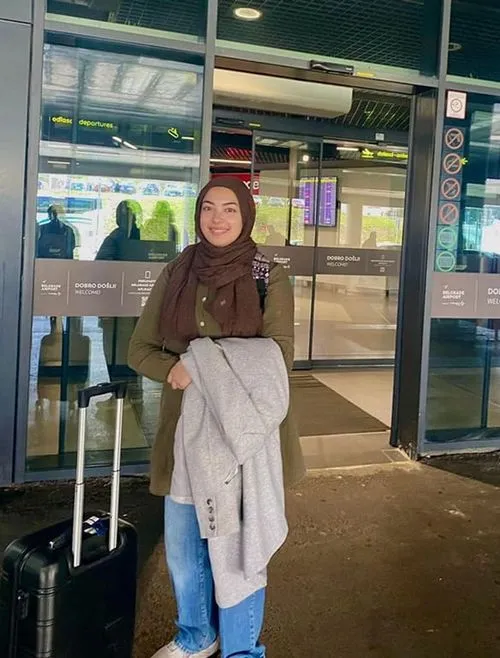
Sabrina
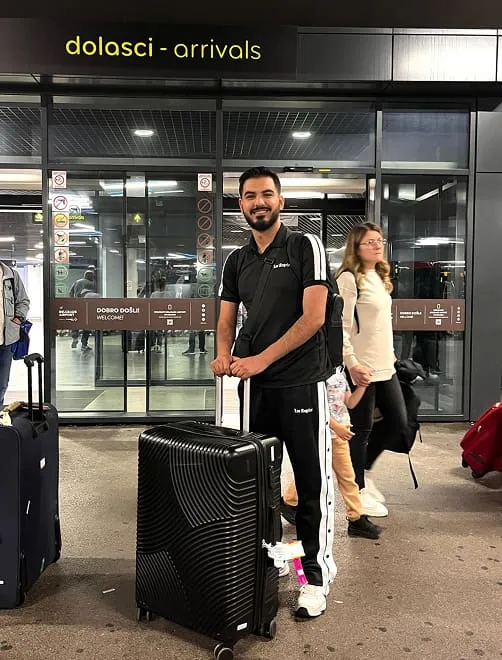
Rami
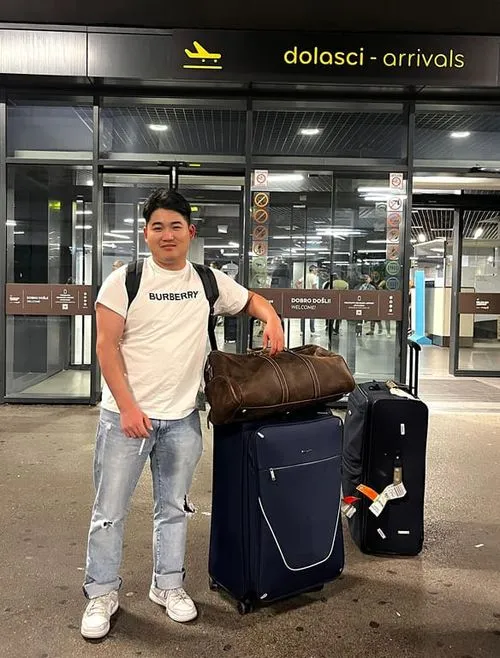
Noah
500+ students placed.
Now it's your turn!
No daydreaming, no empty promises. Just a clear plan — for the start of your medical degree.
40 minutes, no obligation