Study Medicine at Aristotle University of Thessaloniki
Aristotle University of Thessaloniki · Greece
English-taught medicine at one of the largest state universities in southern Europe.
At a glance
The key facts about this university at a glance.
Programmes
Medicine
Tuition fees
6,000 EUR per semester
Duration
6 years
Language of instruction
English
Admission process
Intake
October (autumn semester)
Recognition
Automatically recognised across the EU · Bologna/ECTS · state-accredited
Living costs
approx. 600 EUR per month
Total students
88283
How Safe Is This Study Location?
Based on assessments from residents and visitors collected by Numbeo over the past five years.
48.3
60
27
6 years
600
Climate
Average daytime highs by month.
✓ Placement without a grade cut-off — we place you regardless of your school-leaving grades. We go through the specific requirements together.
Get free advice →Where this university is
Drag the map to place the university in Europe — and to judge how far it is from home.
Why study medicine abroad at this university?
Aristotle University of Thessaloniki was founded in 1926 and, with more than 74,000 students, is one of the largest public universities in Greece. Its Faculty of Medicine includes seven university hospitals and 82 medical departments. The English-taught Medicine programme lasts six years, with cohorts capped at 60 students. Admission is based on the university's own selection procedure, not on your school-leaving grade.
Dean and professors
Since 2025, Prof. Dr. Stefanos Triaridis has led the School of Medicine (Τμήμα Ιατρικής) as its elected chair. The ENT specialist earned his doctorate at the faculty in 2005 and completed a fellowship in head and neck cancer surgery at the Royal Marsden Hospital in London; in June 2025 he was re-elected for a further three-year term with 302 of 363 votes cast.
- Prof. Dr. Kyriakos Anastasiadis – cardiac surgeon and director of the Department of Cardiothoracic Surgery at AHEPA University Hospital; formerly chair of the School of Medicine and, since June 2025, Rector of Aristotle University of Thessaloniki.
- Prof. Dr. Georgios Tsoulfas – surgeon specialising in transplant surgery, vice-chair of the School of Medicine and World President of the International College of Surgeons; in 2025 he was one of 103 surgeons worldwide inducted into the American College of Surgeons' Academy of Master Surgeon Educators.
- Prof. Dr. Apostolos Tsapas – internist specialising in diabetology, head of the Division of Internal Medicine and director of the 2nd Propaedeutic Department of Internal Medicine; completed postdoctoral fellowships at the Oxford Centre for Diabetes, Endocrinology and Metabolism and at the Mayo Clinic.
Accreditations of Aristotle University of Thessaloniki in Greece
Is Aristotle University of Thessaloniki a state-accredited university? Yes. It is one of the largest public universities in Greece and is accredited by the Hellenic Authority for Higher Education (HAHE), the national authority responsible for the quality assurance and accreditation of Greek higher education.
Aristotle University of Thessaloniki’s School of Medicine is listed in the World Directory of Medical Schools, the internationally recognised directory of medical schools maintained by WFME and FAIMER.
- Programmes: Medicine
- Language of instruction: English
- Standard duration: 6 years
- Start of studies: October (autumn semester)
- Requirement: General higher-education entrance qualification. Check in a free study consultation whether you meet the requirements for placement at this university through Medschool Experts.
Study medicine or dentistry: programmes and language of instruction
Structure, duration, language of instruction and degree — for every programme at this university.
- Medicine: The Medicine programme leads to a medical degree. The pre-clinical phase establishes the scientific foundations; the clinical phase adds patient-facing work.
Study conditions and campus life abroad
The programme lasts six years. In years one and two you complete the pre-clinical phase with anatomy, physiology, biochemistry, histology and embryology. From the third year, the clinical phase follows with internal medicine, surgery, paediatrics, gynaecology, neurology and psychiatry; the Faculty of Medicine includes seven university hospitals and 82 departments. The final year is practical and works like a full clinical internship year. English-taught cohorts are capped at 60 students.
Admission: how to get a place to study medicine abroad
The basic requirement for placement at this location is a general higher-education entrance qualification. When placed through Medschool Experts, there is no separate entrance test. Get in touch to find out whether we can place you at this university, and book a free study consultation.
Study medicine abroad at 350+ universities worldwide
- The right university and a secure placement
- A study place abroad with an internationally recognised degree
- Support with your start, preparation and finding accommodation
- Help with transferring to another university
- Guidance all the way to your first job
Preparing properly with Medschool Experts
We handle your entire application for you, usually online and always well before the deadline. In Thessaloniki, we help you find accommodation and support you with enrolment and paperwork. Even after your studies begin, you keep a dedicated contact person on our team.
Tuition fees and living costs to study medicine abroad
The tuition fee is 6,000 EUR per semester. Before making any decision, ask the International Office to confirm the amount in writing, specifying whether accommodation, insurance, and registration fees are included.
Additional one-off costs include the application fee, visa, health insurance, travel, and usually a deposit for accommodation. Budget approx. 600 EUR per month for living costs.
Degree recognition and career prospects
Greece is a member of the European Union, so a degree from Aristotle University of Thessaloniki falls under the Professional Qualifications Directive 2005/36/EC and is recognised automatically throughout the EU/EEA and in Switzerland. No equivalence assessment or knowledge test is required — even though you studied in English.
You apply for your licence to practise with the competent authority of the country where you want to work. Most countries ask for proof of medical-level proficiency in their national language, and processing times vary.
After that, specialist training is open to you on the same terms as graduates of domestic medical schools. With seven university hospitals and 82 departments, and an English-taught cohort capped at 60 students, Thessaloniki gives you both clinical breadth and personal supervision — an asset in Greece and in every other EU member state.
Alumni now practising internationally
Former students of this university who, according to publicly available sources, now work as doctors or dentists internationally. Anonymised overview — not an indication of any cooperation with Medschool Experts.
Head of Department, Vascular and Endovascular Surgery (Univ. Prof. Dr. med.)
Universitätsklinikum Frankfurt am Main
Frankfurt am Main
Head of Department, Psychiatry and Psychotherapy
calm Tagesklinik
Düsseldorf
2008–2014
The city as a place to study medicine
27 °C in July, a mild 4 °C in January and an annual average of just over 15 °C: Thessaloniki has exactly the climate you would expect from Greece — Mediterranean and sunny, with dry summers and winters that rarely get truly cold. The city lies directly on the Thermaic Gulf, and the Nea Paralia seafront promenade stretches for kilometres along the bay — in the evening, half of Thessaloniki goes for a stroll there.
For swimming, most people head a little further out. Agia Triada, one of the best-known city beaches, is about 22 kilometres south of the centre and reachable by bus every half hour; with more time, the Chalkidiki peninsula is a good hour's drive away. Thessaloniki Makedonia Airport (SKG) is only about 13 kilometres south-east of the city centre.
From there, direct flights connect you with many major European cities, operated by Aegean, Ryanair and other airlines — so getting home for the semester break is usually just one flight.
- City: Thessaloniki
- Country: Greece
- Living costs: approx. 600 EUR per month
- Entry: Student visa required
About the author
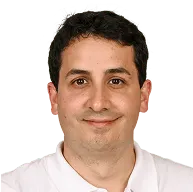
Marcel Kloos
Federally recognised dentist, founder and owner of Medschool Experts
Marcel Kloos founded the company while still studying abroad himself; since then more than 500 study places have been arranged. Originally from Stuttgart, he studied dentistry in Sofia from 2015 to 2021 and is a federally recognised dentist.
He now lives in Bern and runs the company full-time as its owner. He visits the partner universities in person on a regular basis.
More universities to study medicine in this country
Compare the universities in the same country — programmes, fees and language of instruction side by side.
Student story
Videos about this university
Campus tour, first-hand accounts from students on the ground and answers to the most common questions — to watch rather than read.
Our curated universities
Our curated Top 20 — selected from the world's largest choice of universities with no entrance-exam restrictions for medicine, dentistry, pharmacy and veterinary medicine. We recommend each of these particularly, based on years of experience.
FAQ: studying medicine abroad at this university
What are the entry requirements for Aristotle University of Thessaloniki in Thessaloniki?
You need a general higher-education entrance qualification (A-levels or equivalent). There is no numerus clausus, so your school-leaving grade does not determine your place. You will also need a sufficient command of English and a student visa.
How do I apply through Medschool Experts?
Medschool Experts handles placement at this location without a grade-based admission cap. Whether we can place you with your profile is something we clarify in a free, no-obligation consultation — where we also discuss which university is the best fit for you.
What does it cost to study at Aristotle University of Thessaloniki?
The tuition fee is 6,000 EUR per semester. Additional costs include the application fee, visa, health insurance, travel, and accommodation. Always ask the International Office to confirm every figure in writing — figures quoted by third-party portals can vary significantly.
How much money do I need per month in Thessaloniki?
Budget approx. 600 EUR per month for living costs. This is well below Western European levels. The exact amount depends mainly on whether you live in student accommodation or privately.
How is the programme structured and how long does it take?
The programme lasts 6 years. First comes the pre-clinical phase with the theoretical foundations, then the clinical phase with examination courses and placements at affiliated hospitals. The final year is primarily practical in focus.
Is the degree recognised in the EU?
As Greece is an EU member state, medical degrees are automatically recognised across the EU under the Professional Qualifications Directive, provided graduation requirements are met. For non-EU countries you wish to practise in, confirm requirements separately.
Will I receive a transcript of records?
Yes. Your performance is recorded in a transcript showing subjects, examinations, and grades. This is exactly the document the authorities need later for the equivalence assessment. Keep all semester certificates and grade reports safely — they are difficult to obtain retrospectively.
Can I transfer to a university in my home country during my studies?
There is no automatic transfer route. A transfer to a domestic faculty involves an individual credit-recognition process and depends on available places in higher semesters. Plan your studies as a complete path to graduation.
How does Medschool Experts support you on the ground?
We organise the application and all documents, support you through enrolment, accommodation, and administrative requirements, and remain your contact after your studies begin. We also tell you upfront where the weaknesses of this particular location lie.
Ahmad
Sabrina
Rami
Noah
500+ students placed.
Now it's your turn!
No daydreaming, no empty promises. Just a clear plan — for the start of your medical degree.
40 minutes, no obligation