Study Medicine in Frankfurt am Main at European University Cyprus, Campus Frankfurt
European University Cyprus, Frankfurt Campus · Germany
Study medicine in Frankfurt am Main in English: European University Cyprus runs its six-year MD programme on a campus here, and the EU degree is awarded by the university in Nicosia.
Last updated

University profile
The key facts about this university at a glance.
Programmes
Medicine
Tuition fees
12,500 EUR per semester
Duration
6 years
Language of instruction
English
Admission process
Intake
October (autumn semester)
Recognition
Internationally recognised · automatic recognition in the EU, EEA and Switzerland
Living costs
approx. 950 to 1,150 EUR per month
Total students
12000
How Safe Is This Study Location?
Based on assessments from residents and visitors collected by Numbeo over the past five years.
54.4
120
70
6 years
1050
Weather through the year
Average daytime highs by month.
✓ Placement without a grade cut-off — we place you regardless of your school-leaving grades. We go through the specific requirements together.
Get free advice →Where this university is
Drag the map to place the university in Europe — and to judge how far it is from home.
Why study medicine abroad at this university?
European University Cyprus (EUC) is a private university based in Nicosia. It began in 1961 as Cyprus College and became a university in 2007; today more than 12,000 students are enrolled, a large share of them from abroad. In 2022 its School of Medicine opened a branch on Im Vogelsgesang in Frankfurt am Main. The English-taught programme there leads to the same Doctor of Medicine (MD) that EUC awards in Nicosia, built on at least 5,500 hours of training, equal to 360 ECTS. Groups are small and international, clinical elements start in the first year, and the university takes part in Erasmus+. A building project of around 22 million € is set to add roughly 10,000 square metres of teaching and research space by 2028.
Who leads the medical school?
Prof. Dr. Elizabeth O. Johnson is Dean of the entire School of Medicine, for Nicosia and Frankfurt alike, and Professor of Anatomy. The neuroanatomist completed her doctorate at the University of Maryland and the National Institute of Mental Health, was Associate Professor in Ioannina and also holds an anatomy chair at the National and Kapodistrian University of Athens, with more than 300 publications and an h-index of 40.
- Prof. Dr. Ioannis Patrikios – Deputy Dean and Professor of Biochemistry, on the faculty since 2013; developed PLP10, a nutraceutical formula for relapsing multiple sclerosis.
- Prof. Dr. Nikolaos Zamboglou – Professor of Oncology and Radiotherapy; for about 25 years he ran radiotherapy and radiation oncology at Sana Klinikum Offenbach, a teaching hospital of Goethe University Frankfurt, and served as president of the German Society for Radiation Oncology.
- Prof. Dr. Gerhard Friehs – Professor of Neurosurgery and Director of Neuroscience; co-founder of Cyberkinetics Neurotechnology Systems and co-investigator in the BrainGate studies on brain–computer interfaces.
Degree recognized in India
Your degree from European University Cyprus, Campus Frankfurt is recognized in India: the university is listed in the World Directory of Medical Schools, so graduates can sit the FMGE/NExT licensing exam and register with the National Medical Commission.
Still comparing universities? The annual fee of 20 English-taught faculties is in one table in our guide to studying medicine in Europe in English.
- Private university, founded in 1961 as Cyprus College, university since 2007
- Frankfurt campus of the School of Medicine since 2022, on Im Vogelsgesang
- Doctor of Medicine: 6 years, 360 ECTS, taught in English
- Tuition: 12,500 € per semester
- Small international groups, Erasmus+ participation
- Dean: Prof. Dr. Elizabeth O. Johnson, Professor of Anatomy
- Is the campus right for you? Free consultation
Study medicine or dentistry: programmes and language of instruction
Structure, duration, language of instruction and degree — for every programme at this university.
- Medicine (MD): Six years and 360 ECTS in English with at least 5,500 hours of training; the degree is the one European University Cyprus awards in Nicosia, while clinical training takes place in hospitals around Frankfurt.
Study conditions and campus life abroad
Twelve semesters, all taught in English. Years one and two concentrate on anatomy, physiology, biochemistry, histology and embryology, yet your first clinical training already starts in year one, which is early for a medical degree. From year three internal medicine, surgery, paediatrics, gynaecology, neurology and psychiatry take over. The sixth year is spent almost entirely in practice, comparable to a full clinical internship year. Lectures and exams stay in English, but at the bedside in Frankfurt's hospitals you speak German with patients, so learn the key terms in both languages. Through Erasmus+ a period at a partner university is possible.
Admission: how to get a place to study medicine abroad
Whether the Frankfurt campus of European University Cyprus, with its fees and its English–German mix, is the right choice for you is what we work out together in a free consultation. Your high school diploma grades are not what decides the place.
Study medicine abroad at 350+ universities worldwide
- The right university and a secure placement
- A study place abroad with an internationally recognised degree
- Support with your start, preparation and finding accommodation
- Help with transferring to another university
- Guidance all the way to your first job
Preparing properly with Medschool Experts
EU citizens need no visa for Frankfurt; students from outside the EU apply for a German national visa for study purposes, and we help you put that file together. Because Frankfurt's housing market is tight, we start the flat search with you early and support you with enrolment and registering your address. Once your studies begin, you keep a dedicated contact person on our team.
Tuition fees and living costs to study medicine abroad
Tuition is 12,500 € per semester: 25,000 € a year and 150,000 € across twelve semesters, before living costs. Billing is in euros, so exchange rates play no role. For everyday life in Frankfurt we calculate with about 950 to 1,150 € a month. Rent is the biggest item, because flats are scarce and prices sit above the German average; most students take a room in a shared flat, live in the commuter belt with a good train link or stay with family in the Rhine-Main area. Textbooks, a lab coat and application costs come on top.
Degree recognition and career prospects
Automatically recognised, wherever you studied it
Students at the Frankfurt campus receive their Medicine degree from European University Cyprus, a university in an EU member state. Directive 2005/36/EC therefore applies in full: the diploma is recognised automatically in Germany, in every EU country, in the EEA and in Switzerland, and the location of your lecture halls makes no difference to that.
For most Frankfurt graduates the next stop is the licensing authority of a German federal state, where the Cypriot diploma and a certificate of German at professional level are enough for the Approbation. No knowledge test and no further examination are required. Having completed the clinical years in German hospitals, you already know the system and can start specialist training on the same terms as graduates of German universities. Austria, Switzerland and the other EU and EEA states grant recognition through their competent authority in the same automatic way.
Beyond Europe, the degree makes you eligible for the USMLE, the MCCQE and the PLAB, since European University Cyprus is listed in the World Directory of Medical Schools.
Alumni now practising internationally
Former students of this university who, according to publicly available sources, now work as doctors or dentists internationally. Anonymised overview — not an indication of any cooperation with Medschool Experts.
The city as a place to study medicine
Frankfurt am Main has about 780,000 inhabitants and is the largest city in Hesse, a finance and transport hub on the River Main. For all its towers it stays compact: flat, campus and centre are usually a short tram, U-Bahn or bike ride apart.
The climate is one of the mildest in Germany. The yearly mean is just under 11 °C, July averages around 20 °C, and winters slip into hard frost less often than in the east of the country or in the uplands.
Getting home rarely takes long. Frankfurt Airport, one of the largest in Europe, sits just outside the city, and the main station sends high-speed trains in every direction. In your free time you have the riverside lawns along the Main, the cider taverns of Sachsenhausen and a large international community; you stay in Germany, without a time difference to family and friends.
- State: Hesse, Germany, on the River Main
- Population: about 780,000
- One of Europe's largest airports on the city's edge
- Mild climate, annual mean just under 11 °C
About the author
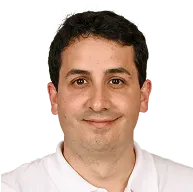
Marcel Kloos
Federally recognised dentist, founder and owner of Medschool Experts
Marcel Kloos founded the company while still studying abroad himself; since then more than 500 study places have been arranged. Originally from Stuttgart, he studied dentistry in Sofia from 2015 to 2021 and is a federally recognised dentist.
He now lives in Bern and runs the company full-time as its owner. He visits the partner universities in person on a regular basis.
Student reviews
Reviews by current and former students. We publish positive and negative reviews alike and state whether we placed the reviewer. Medschool Experts is a paid placement agency, so we are not an independent review site.
More universities to study medicine in this country
Compare the universities in the same country — programmes, fees and language of instruction side by side.
Student story
Videos about this university
Campus tour, first-hand accounts from students on the ground and answers to the most common questions — to watch rather than read.
Our curated universities
Our curated Top 20 — selected from the world's largest choice of universities for medicine, dentistry, pharmacy and veterinary medicine, independent of your high school diploma grades. We recommend each of these particularly, based on years of experience.
Problems at your university? Switch universities or train abroad
Exams not going well, trouble with the faculty, costs that have got out of hand, or you are simply not happy with the support you have had so far, including ours? You have options. We advise you free of charge on changing university and on completing parts of your clinical training abroad.
Change university
Move to another university and continue in a higher semester, usually without losing a year. We check your credits, find the right semester and handle the paperwork.
Clinical rotations abroad
Stay enrolled and complete single clinical blocks or rotations at a hospital abroad. You gain new hands-on experience and a fresh perspective on your degree.
Clinical internships abroad
Spend a few weeks at a hospital in another country, for example during the semester break, and see patients, ward routines and medicine from a different angle.
FAQ: studying medicine abroad at this university
How do you obtain the German Approbation with the Frankfurt campus MD?
You apply to the licensing authority of your federal state with the diploma issued by European University Cyprus and proof of German at a professional level. Because Cyprus is an EU member state, Directive 2005/36/EC applies and the Approbation is granted without a knowledge test. Studying in Frankfurt changes nothing about this route.
How much does the whole degree cost?
150,000 € in tuition: twelve semesters at 12,500 € each. With 950 to 1,150 € a month for living in Frankfurt, the full six years come to roughly 218,000 to 233,000 €.
Which language do you speak with patients?
German. Teaching and exams are in English, while the clinical elements take place in German hospitals, so you switch languages at the bedside but never have to learn a third language.
How can you finance 12,500 € per semester?
With a solid plan made before you start. Since the campus is in Germany, BAföG is not the obvious route; student loans, education funds, scholarships and family savings are the usual building blocks.
How early do you work with patients?
In year one. Clinical training elements begin straight away, the clinical phase proper starts in year three and the final year is entirely practical.
When does the programme start?
In October. There is no intake in the summer semester.

Ahmad

Sabrina

Rami

Noah
500+ students placed.
Now it's your turn!
No daydreaming, no empty promises. Just a clear plan — for the start of your medical degree.
40 minutes, no obligation