Study Medicine in Porto – Universidade Fernando Pessoa
Universidade Fernando Pessoa · Portugal
Study medicine in Porto at Universidade Fernando Pessoa, a private university founded in 1996: lectures in English, Portuguese up to B2 for the clinical years.
Last updated

University profile
The key facts about this university at a glance.
Programmes
Medicine
Tuition fees
10,250 EUR per semester
Duration
6 years
Language of instruction
English, with accompanying Portuguese courses up to B2
Admission process
Intake
September (autumn semester)
Recognition
Internationally recognised · automatic recognition in the EU, EEA and Switzerland
Living costs
approx. 700 to 900 EUR per month
Total students
5000
How Safe Is This Study Location?
Based on assessments from residents and visitors collected by Numbeo over the past five years.
66.2
30
6 years
800
Weather through the year
Average daytime highs by month.
✓ Placement without a grade cut-off — we place you regardless of your school-leaving grades. We go through the specific requirements together.
Get free advice →Where this university is
Drag the map to place the university in Europe — and to judge how far it is from home.
Why study medicine abroad at this university?
Who runs medicine at Universidade Fernando Pessoa?
Universidade Fernando Pessoa is a private university in Porto, founded in 1996 and home to around 5,000 students. Its main seat is in the Paranhos district, with a second unit in Ponte de Lima, and teaching is grouped into faculties of science and technology, health sciences, and humanities and social sciences. Medicine was approved in January 2023; classes take place in Porto and at a private health unit in Gondomar.
The Escola de Medicina e Ciências Biomédicas is headed by Prof. Doutor Lúcio Lara Santos, a surgeon and oncologist. He finished medical school at the Universidade de Angola in 1985, took his doctorate in medicine at the University of Porto in 2003 and leads the Department of Surgical Oncology at the Instituto Português de Oncologia do Porto (IPO Porto). In May 2025 he was elected Portugal's representative on the Scientific Council of the WHO's International Agency for Research on Cancer for four years. Other names on the teaching staff:
- Prof. Doutor Mário Dinis-Ribeiro, gastroenterologist: runs the gastroenterology department at IPO Porto and was the first Portuguese president of the European Society of Gastrointestinal Endoscopy, from 2019 to 2021.
- Prof. Doutor Humberto Machado, anaesthesiologist: head of anaesthesiology at Centro Hospitalar Universitário de Santo António in Porto.
- Prof. Doutor Antero Fernandes, intensive care physician: former president of the Sociedade Portuguesa de Cuidados Intensivos, ran the intensive care unit of Hospital Garcia de Orta from 1996 to 2021, with 68 publications and more than 1,700 citations.
Degree recognized in India
Your degree from Universidade Fernando Pessoa is recognized in India: graduates can sit the FMGE/NExT licensing exam and register with the National Medical Commission once the Indian requirements, such as a qualifying NEET score and a twelve-month internship, are met.
Still comparing universities? The annual fee of 20 English-taught faculties is in one table in our guide to studying medicine in Europe in English.
- Private university, founded in 1996
- Around 5,000 students; main seat in Porto, second unit in Ponte de Lima
- Medicine taught in English, with accompanying Portuguese courses up to B2
- Standard duration 6 years, start in September (autumn semester)
- Medical school headed by surgical oncologist Prof. Doutor Lúcio Lara Santos
- Not sure Porto suits you? Ask us in a free study consultation
Study medicine or dentistry: programmes and language of instruction
Structure, duration, language of instruction and degree — for every programme at this university.
- Medicine: six-year programme taught in English at the Escola de Medicina e Ciências Biomédicas, with Portuguese classes up to B2 in the first three years and a fully practical final year; tuition 10,250 EUR per semester.
Study conditions and campus life abroad
Six years, in three clear stages. Years one and two concentrate on anatomy, physiology, biochemistry, histology and embryology, yet hands-on elements are on the timetable from the very first semester. From year three you move into the clinical subjects: internal medicine, surgery, paediatrics, gynaecology, neurology and psychiatry. The sixth year is practical throughout and works like a full clinical internship year. Lectures are in English. Running alongside them in years one to three are Portuguese classes up to B2, and you will need that level, because patient contact on the wards happens in Portuguese. Teaching takes place in Porto itself and at a private health unit in neighbouring Gondomar.
Admission: how to get a place to study medicine abroad
Porto makes sense if you can finance a private programme and are ready to learn Portuguese to B2 next to your medical subjects. In a free consultation we go through your plans and check whether Universidade Fernando Pessoa fits them, with no minimum school grade standing in the way.
Study medicine abroad at 350+ universities worldwide
- The right university and a secure placement
- A study place abroad with an internationally recognised degree
- Support with your start, preparation and finding accommodation
- Help with transferring to another university
- Guidance all the way to your first job
Preparing properly with Medschool Experts
We prepare and submit your application on time, then help you find a room in Porto, where competition from students and newcomers is fiercest just before the autumn semester. Enrolment, residence paperwork and any visa you need for Portugal are part of our support, and a dedicated contact on our team stays with you after you start.
Tuition fees and living costs to study medicine abroad
Tuition is 10,250 EUR per semester: 20,500 EUR a year and roughly 123,000 EUR over twelve semesters, which puts Porto at the upper end of what medicine abroad costs. Before you commit, ask the International Office to confirm the amount in writing and to state whether accommodation, insurance or registration fees are included. One-off costs come on top: application fee, visa if you need one, health insurance, travel and usually a deposit for your room. For day-to-day living, budget approx. 700 to 900 EUR per month. Portugal uses the euro, so there is no exchange-rate risk.
Degree recognition and career prospects
A European degree, recognised at home and abroad
The medical degree from Universidade Fernando Pessoa is recognised internationally and automatically throughout the European Union. Portugal is a member state, so Directive 2005/36/EC applies: in Germany, in every other EU country, in the EEA states and in Switzerland, your diploma is accepted as it stands.
Applying for the German licence to practise (Approbation) means handing in the diploma and proof of German at professional level to the licensing authority of your federal state; a knowledge test or any further examination is not part of the procedure. The competent authorities of Austria, Switzerland and the remaining EU and EEA states grant their licences on the same automatic basis.
From there, specialist training (Facharzt) is open to you on equal terms with graduates of German faculties. Should you look beyond Europe, the degree qualifies you for the USMLE in the USA, the MCCQE in Canada, the PLAB in the UK and the licensing route in Australia.
Alumni now practising internationally
Former students of this university who, according to publicly available sources, now work as doctors or dentists internationally. Anonymised overview — not an indication of any cooperation with Medschool Experts.
The city as a place to study medicine
Porto lies where the Douro meets the Atlantic, about 280 km north of Lisbon. The city proper is compact, around 273,000 people on 41 km², but the metropolitan area holds roughly 1.9 million. Its historic centre, together with the Dom Luís I Bridge and the Serra do Pilar monastery, has been on the UNESCO list since 1996. The two-deck iron bridge, opened in 1886, carries metro trains on top and cars below, and on the far bank in Vila Nova de Gaia the old port-wine cellars climb the slope.
Take the blue metro line to Matosinhos Sul and you are on the ocean: about 25 minutes from the centre to Praia de Matosinhos, a wide sandy beach. Bus 500 from Praça da Liberdade makes the same trip above ground. Six metro lines cover 70 km, and line E runs out to Francisco Sá Carneiro Airport, with direct flights to many European cities on TAP, Ryanair and easyJet. Lisbon is 2 hours 42 minutes away on the Alfa Pendular train.
The climate is oceanic: around 9 °C in January and 21 to 22 °C in August, without scorching heat or hard frost. Locals still call Porto the Cidade Invicta, the undefeated city, because it held out through the siege of 1832 to 1833.
- Portugal's second-largest city, on the Douro estuary in the north
- About 273,000 inhabitants; 1.9 million in the metro area
- Historic centre a UNESCO World Heritage Site since 1996
- Living costs approx. 700 to 900 EUR per month
- Six metro lines, one of them running to the airport
About the author
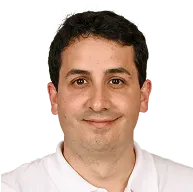
Marcel Kloos
Federally recognised dentist, founder and owner of Medschool Experts
Marcel Kloos founded the company while still studying abroad himself; since then more than 500 study places have been arranged. Originally from Stuttgart, he studied dentistry in Sofia from 2015 to 2021 and is a federally recognised dentist.
He now lives in Bern and runs the company full-time as its owner. He visits the partner universities in person on a regular basis.
Student reviews
Reviews by current and former students. We publish positive and negative reviews alike and state whether we placed the reviewer. Medschool Experts is a paid placement agency, so we are not an independent review site.
More universities to study medicine in this country
Compare the universities in the same country — programmes, fees and language of instruction side by side.
Student story
Videos about this university
Campus tour, first-hand accounts from students on the ground and answers to the most common questions — to watch rather than read.
Our curated universities
Our curated Top 20 — selected from the world's largest choice of universities for medicine, dentistry, pharmacy and veterinary medicine, independent of your high school diploma grades. We recommend each of these particularly, based on years of experience.
Problems at your university? Switch universities or train abroad
Exams not going well, trouble with the faculty, costs that have got out of hand, or you are simply not happy with the support you have had so far, including ours? You have options. We advise you free of charge on changing university and on completing parts of your clinical training abroad.
Change university
Move to another university and continue in a higher semester, usually without losing a year. We check your credits, find the right semester and handle the paperwork.
Clinical rotations abroad
Stay enrolled and complete single clinical blocks or rotations at a hospital abroad. You gain new hands-on experience and a fresh perspective on your degree.
Clinical internships abroad
Spend a few weeks at a hospital in another country, for example during the semester break, and see patients, ward routines and medicine from a different angle.
FAQ: studying medicine abroad at this university
How much does a year of medicine at Universidade Fernando Pessoa cost?
20,500 EUR, charged as 10,250 EUR per semester. Over six years that adds up to about 123,000 EUR in tuition alone.
What should I budget for living in Porto each month?
Approx. 700 to 900 EUR. Where you land in that range depends mostly on whether you take student accommodation or rent privately.
How good does my Portuguese need to be?
B2 by the clinical phase. The university teaches Portuguese alongside the medical subjects in years one to three, because ward work is in Portuguese.
In which countries does the Porto degree count?
In all EU and EEA states and in Switzerland, where Directive 2005/36/EC grants automatic recognition because Portugal is a member state. Outside Europe the degree qualifies you for the licensing examinations of the USA, Canada, the UK and Australia.
Which documents from my studies will I need later?
Above all your transcript of records, listing subjects, exams and grades. Licensing authorities ask for it, so keep every semester certificate from the start.
How do I get from Porto to the beach?
Ride the blue metro line to Matosinhos Sul, about 25 minutes from the centre, or take bus 500 from Praça da Liberdade.

Ahmad

Sabrina

Rami

Noah
500+ students placed.
Now it's your turn!
No daydreaming, no empty promises. Just a clear plan — for the start of your medical degree.
40 minutes, no obligation