Study Medicine in Bologna – University of Bologna
Medicine and Surgery (English) / Veterinary Medicine (English) · Bologna · Italy
Study Medicine or Veterinary Medicine in Bologna at the oldest university in continuous operation: two English-taught degrees, with 160 places in medicine and 50 in veterinary.
Last updated
University profile
The key facts about this university at a glance.
Programmes
Medicine, Veterinary Medicine
Tuition fees
Income-based fees (ISEE); approx. EUR 150–4,500 per year
Duration
6 years (Medicine), 5 years (Veterinary Medicine)
Language of instruction
English
Admission process
Assessed individually in a free consultation
Intake
September/October
Recognition
Internationally recognised · automatic recognition in the EU, EEA and Switzerland
Living costs
Total students
How Safe Is This Study Location?
Based on assessments from residents and visitors collected by Numbeo over the past five years.
160
6 years (Medicine), 5 years (Veterinary Medicine)
Weather through the year
Average daytime highs by month.
✓ Placement without a grade cut-off — we place you regardless of your school-leaving grades. We go through the specific requirements together.
Get free advice →Where this university is
Drag the map to place the university in Europe — and to judge how far it is from home.
Why study medicine abroad at this university?
The University of Bologna dates its first teaching to 1088, which makes it the oldest university still in continuous operation. Its Latin title, Alma Mater Studiorum, fits the story: a community of students and masters grew up in the city, gained a protective charter from Emperor Frederick Barbarossa in 1158 and became one of the first to award degrees. Bologna also wrote history for women in academia. Bettisia Gozzadini earned a degree and taught here in the 13th century, and Laura Bassi later became the first woman to hold a salaried university professorship. Nicolaus Copernicus is among its former students.
How large is the University of Bologna today?
With about 90,000 students it is one of Europe's largest universities. The public university is organised into 11 schools and 33 departments and teaches in Bologna as well as in Cesena, Forlì, Ravenna and Rimini. Medicine belongs to the School of Medicine and Surgery, whose clinical departments work in the Sant'Orsola university hospital east of the old town. Veterinary medicine is the domain of the Department of Veterinary Medical Sciences at Ozzano dell'Emilia, with its own veterinary hospital, which treats more than 10,000 cases a year, and a teaching farm. Both English-taught degrees are part of the university's international programmes, with exchange and internship options abroad.
Degree recognized in India
Your degree from University of Bologna is recognized in India: the university is listed in the World Directory of Medical Schools, so graduates can sit the FMGE/NExT licensing exam and register with the National Medical Commission.
Still comparing universities? The annual fee of 20 English-taught faculties is in one table in our guide to studying medicine in Europe in English.
- Teaching since 1088, the oldest university in continuous operation
- Public, state-accredited, about 90,000 students
- 11 schools and 33 departments on five campuses in Emilia-Romagna
- English medicine: 160 places (140 EU, 20 non-EU)
- English veterinary medicine: 50 places at Ozzano dell'Emilia
- University hospital: Sant'Orsola
Study medicine or dentistry: programmes and language of instruction
Structure, duration, language of instruction and degree — for every programme at this university.
- Medicine and Surgery (LM-41): six-year single-cycle degree in English with problem-based learning, clerkships from year one and clinical training at Sant'Orsola; 160 places a year.
- Veterinary Medicine (LM-42): five-year single-cycle degree in English at Ozzano dell'Emilia with a One Health focus, a veterinary hospital and a teaching farm; 50 places a year.
Study conditions and campus life abroad
The two English degrees differ in length and setting. Medicine and Surgery takes six years and follows an integrated, problem-based curriculum: clinical clerkships start in the very first year, and a medical humanities strand looks at illness in relation to the patient, the family and society. Your later years are spent on the wards of Sant'Orsola. Veterinary Medicine takes five years at Ozzano dell'Emilia, 12 km from the centre, and follows a One Health approach that joins clinical practice, animal production, veterinary public health and biomedical research. You work in small groups with teaching staff from year one, at the veterinary hospital and on the teaching farm. Both courses are taught entirely in English. Italian becomes important when you deal with patients or with animal owners.
Admission: how to get a place to study medicine abroad
Study medicine abroad at 350+ universities worldwide
- The right university and a secure placement
- A study place abroad with an internationally recognised degree
- Support with your start, preparation and finding accommodation
- Help with transferring to another university
- Guidance all the way to your first job
Preparing properly with Medschool Experts
Tuition fees and living costs to study medicine abroad
Both degrees charge income-based fees under the ISEE system, from about 150 to 4,500 € a year, plus the regional tax for student services and stamp duty. Housing is where Bologna gets expensive: it has one of the tightest rental markets among Italy's student cities, and a single room in a shared flat inside or near the ring road usually costs 450 to 650 € a month. ER.GO, the Emilia-Romagna student services agency, allocates residence places and grants by income. Veterinary students often look in San Lazzaro or Ozzano itself, closer to the Tolara campus.
Degree recognition and career prospects
Two professions, one European directive
Both degrees from the University of Bologna, the Laurea Magistrale in medicine and the one in veterinary medicine, are covered by Directive 2005/36/EC. Doctors and veterinary surgeons belong to the professions with automatic recognition in the European Union, so an Italian diploma is accepted in Germany, every other EU member state, the EEA countries and Switzerland without a knowledge test or extra examination.
As a doctor you apply for the Approbation with the licensing authority of your federal state, presenting the diploma and evidence of professional-level German, and you may then start Facharzt training like any domestic graduate. As a vet you apply in the same way to the veterinary authority of the state in which you intend to work. The other EU and EEA states and Switzerland handle the application through their competent authority.
Outside Europe, the medical degree qualifies you for the USMLE, MCCQE, PLAB and the Australian examinations, while veterinary graduates register through the national veterinary board of their destination.
Alumni now practising internationally
Former students of this university who, according to publicly available sources, now work as doctors or dentists internationally. Anonymised overview — not an indication of any cooperation with Medschool Experts.
The city as a place to study medicine
Bologna is the capital of Emilia-Romagna, a city of about 390,000 people between the Apennine foothills and the Po plain. Italians call it "la dotta, la grassa, la rossa": learned for its university, fat for tortellini, mortadella and ragù, and red for its terracotta roofs and its political past. Its porticoes, around 62 km of covered walkways, have been a UNESCO World Heritage Site since 2021 and keep you dry on the way to lectures. Students meet under the Two Towers, on Piazza Maggiore and in the university quarter around Via Zamboni, where bookshops and osterie share the arcades.
Bologna Centrale is a hub of the Italian high-speed network: Florence is about 40 minutes away, Milan around an hour and Rome a little over two hours. Guglielmo Marconi Airport lies about 6 km north-west of the centre. Winters are foggy and cold, summers hot and sticky. For the veterinary campus in Ozzano, take a regional train towards Imola or buses 90C and 131 to the Veterinary Department stop.
- Capital of Emilia-Romagna, northern Italy
- About 390,000 inhabitants
- Porticoes listed as UNESCO World Heritage since 2021
- Major high-speed rail junction between Milan, Florence and Rome
About the author
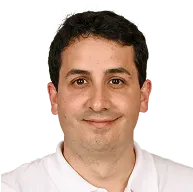
Marcel Kloos
Federally recognised dentist, founder and owner of Medschool Experts
Marcel Kloos founded the company while still studying abroad himself; since then more than 500 study places have been arranged. Originally from Stuttgart, he studied dentistry in Sofia from 2015 to 2021 and is a federally recognised dentist.
He now lives in Bern and runs the company full-time as its owner. He visits the partner universities in person on a regular basis.
Student reviews
Reviews by current and former students. We publish positive and negative reviews alike and state whether we placed the reviewer. Medschool Experts is a paid placement agency, so we are not an independent review site.
More universities to study medicine in this country
Compare the universities in the same country — programmes, fees and language of instruction side by side.
Student story
Videos about this university
Campus tour, first-hand accounts from students on the ground and answers to the most common questions — to watch rather than read.
Our curated universities
Our curated Top 20 — selected from the world's largest choice of universities for medicine, dentistry, pharmacy and veterinary medicine, independent of your high school diploma grades. We recommend each of these particularly, based on years of experience.
Problems at your university? Switch universities or train abroad
Exams not going well, trouble with the faculty, costs that have got out of hand, or you are simply not happy with the support you have had so far, including ours? You have options. We advise you free of charge on changing university and on completing parts of your clinical training abroad.
Change university
Move to another university and continue in a higher semester, usually without losing a year. We check your credits, find the right semester and handle the paperwork.
Clinical rotations abroad
Stay enrolled and complete single clinical blocks or rotations at a hospital abroad. You gain new hands-on experience and a fresh perspective on your degree.
Clinical internships abroad
Spend a few weeks at a hospital in another country, for example during the semester break, and see patients, ward routines and medicine from a different angle.
FAQ: studying medicine abroad at this university
What will medicine or veterinary medicine cost me per year in Bologna?
Tuition is about 150 to 4,500 €, depending on your family income. Rent is the bigger item: plan on 450 to 650 € a month for a single room.
Where can you work with a Bologna degree in medicine or veterinary medicine?
Throughout the EU, the EEA and Switzerland, since both doctors and veterinary surgeons fall under Directive 2005/36/EC and Italian diplomas are recognised automatically. In Germany you apply for the Approbation with the authority of your federal state, without a knowledge test. The medical degree also qualifies you for the USMLE, MCCQE and PLAB.
Why is the veterinary degree one year shorter than medicine?
Because Italian veterinary medicine is a five-year single-cycle degree, while human medicine takes six. Both end with a master's-level qualification.
How far is the veterinary campus from the city centre?
About 12 km. The Department of Veterinary Medical Sciences sits just outside Ozzano dell'Emilia and is reached by regional train or by buses 90C and 131.
How early do Bologna's medical students meet patients?
In the first year. Clinical clerkships are part of the curriculum from the start and grow into full ward rotations at Sant'Orsola in the later years.

Ahmad

Sabrina

Rami

Noah
500+ students placed.
Now it's your turn!
No daydreaming, no empty promises. Just a clear plan — for the start of your medical degree.
40 minutes, no obligation