Study Medicine in Tbilisi – Caucasus University
Study Medicine in English in the Georgian capital Tbilisi
Caucasus University in Tbilisi (Georgia): English-taught Medicine programme.
At a glance
The key facts about this university at a glance.
Programmes
Medicine
Tuition fees
6,000 USD per year
Duration
6 years (12 semesters)
Language of instruction
English (Georgian language modules compulsory)
Admission process
Intake
September / October
Recognition
ANABIN listed; knowledge test required
Living costs
approx. 500 to 750 EUR per month
Total students
How Safe Is This Study Location?
Based on assessments from residents and visitors collected by Numbeo over the past five years.
6 years (12 semesters)
5500
Climate
Average daytime highs by month.
✓ Placement without a grade cut-off — we place you regardless of your school-leaving grades. We go through the specific requirements together.
Get free advice →Where this university is
Drag the map to place the university in Europe — and to judge how far it is from home.
Why study medicine abroad at this university?
Caucasus University in Tbilisi trains international students in Medicine. Teaching is in English, the standard duration of study is 6 years (12 semesters). There is no numerus clausus (grade-based admission cap). Admission is decided not by your school-leaving average, but by the university's own procedure.
- Requirement: General higher-education entrance qualification. Check in a free study consultation whether you meet the requirements for a placement at this or another university through Medschool Experts.
Study medicine or dentistry: programmes and language of instruction
Structure, duration, language of instruction and degree — for every programme at this university.
Study conditions and campus life abroad
The Medicine programme at Caucasus University lasts six years: two pre-clinical and four clinical years. The first semesters focus on core subjects such as anatomy, biochemistry, physiology and histology — all in English and on a clearly structured timetable.
From the third year, the clinical phase begins with rotations through the various specialties at partner hospitals in Tbilisi. You gain practical experience in internal medicine, surgery, gynaecology, paediatrics and other disciplines under the guidance of experienced doctors.
On successful completion you receive the MD (Doctor of Medicine). Because Georgia is not an EU member state, the degree is not recognised automatically in the EU — depending on your target country, a licensing or equivalence procedure follows. We plan this route with you from the start.
Admission: how to get a place to study medicine abroad
The basic requirement for placement at this location is a general higher-education entrance qualification. When placed through Medschool Experts, there is no separate entrance test. Get in touch to find out whether we can place you at this university, and book a free study consultation.
Study medicine abroad at 350+ universities worldwide
- The right university and a secure placement
- A study place abroad with an internationally recognised degree
- Support with your start, preparation and finding accommodation
- Help with transferring to another university
- Guidance all the way to your first job
Preparing properly with Medschool Experts
We handle the complete application, including all formalities, and submit it on time. We guide you through the study visa, enrolment, and administrative requirements on the ground. Because Georgia is outside the EU, we plan the route to recognition in your target country from the outset — and tell you openly where the risks lie. We remain your point of contact after your studies begin.
Tuition fees and living costs to study medicine abroad
The tuition fee is 6,000 USD per year. Before making any decision, ask the International Office to confirm the amount in writing, specifying whether accommodation, insurance, and registration fees are included.
Additional one-off costs include the application fee, visa, health insurance, travel, and usually a deposit for accommodation. Budget approx. 500 to 750 EUR per month for living costs.
Alumni now practising internationally
Former students of this university who, according to publicly available sources, now work as doctors or dentists internationally. Anonymised overview — not an indication of any cooperation with Medschool Experts.
The city as a place to study medicine
Tbilisi is the capital of Georgia, with around 1.2 million inhabitants, and one of the oldest cities in the South Caucasus. It combines a historic old town, modern architecture and a lively culture — and in recent years has become a popular destination for international students.
Living in Tbilisi is considerably cheaper than in Western European cities: restaurants, public transport and leisure activities are affordable. The growing international student scene makes for a varied social life, and the famous Georgian hospitality makes it much easier to settle in.
Tbilisi is well connected by air to Europe and the Middle East. As Georgia lies outside the EU, the distance from home is a factor worth planning for realistically — both emotionally and for travel.
About the author
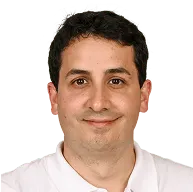
Marcel Kloos
Federally recognised dentist, founder and owner of Medschool Experts
Marcel Kloos founded the company while still studying abroad himself; since then more than 500 study places have been arranged. Originally from Stuttgart, he studied dentistry in Sofia from 2015 to 2021 and is a federally recognised dentist.
He now lives in Bern and runs the company full-time as its owner. He visits the partner universities in person on a regular basis.
More universities to study medicine in this country
Compare the universities in the same country — programmes, fees and language of instruction side by side.
Student story
Videos about this university
Campus tour, first-hand accounts from students on the ground and answers to the most common questions — to watch rather than read.
Our curated universities
Our curated Top 20 — selected from the world's largest choice of universities with no entrance-exam restrictions for medicine, dentistry, pharmacy and veterinary medicine. We recommend each of these particularly, based on years of experience.
FAQ: studying medicine abroad at this university
How long does the programme at Caucasus University last?
The Medicine programme lasts six years (twelve semesters). The first two years are pre-clinical; the last four are clinical, with rotations in Tbilisi.
What does studying at Caucasus University cost?
Tuition is approximately €5,200 per year (billed as USD 6,000), or roughly €31,000 over six years. Living costs in Tbilisi add around €500–750 per month.
Is the degree recognised internationally?
Because Georgia is not an EU member state, the degree is not recognised automatically in the EU; depending on your target country, you complete a licensing or equivalence procedure after graduation. We plan this pathway with you from day one.
How does the application work?
The application is handled entirely online through Medschool Experts — you normally do not need to travel to Tbilisi beforehand. Get in touch and we will explain the next steps.
Do I need English skills?
Yes, all teaching at Caucasus University is in English. You should have at least B2 to follow the course material comfortably.
Are there student dormitories?
Caucasus University offers accommodation options, and many international students also rent privately near campus. Rents in Tbilisi are very moderate by European standards.
When does the programme begin?
The programme usually starts in September or October. Exact dates can shift slightly from year to year — once you contact us, we keep you up to date.
How safe is Tbilisi for students?
Tbilisi is considered a safe city with a low crime rate, and locals are open and helpful towards international students.
Do I need a visa for Georgia?
Citizens of many countries, including all EU member states, can enter Georgia visa-free; for the full degree a residence permit is usually required. Requirements depend on your nationality — we explain the steps once you have been admitted.
Can I transfer to another university later?
A transfer is possible in principle but never guaranteed: the receiving university decides individually how much of your coursework it credits. If you are considering a transfer, talk to us early.
What makes Caucasus University stand out?
Caucasus University combines an internationally oriented curriculum with more personal supervision than many large state universities — plus the advantages of Tbilisi: a lively city with moderate prices and good flight connections.
Ahmad
Sabrina
Rami
Noah
500+ students placed.
Now it's your turn!
No daydreaming, no empty promises. Just a clear plan — for the start of your medical degree.
40 minutes, no obligation