Study Medicine at Mersin University
Mersin University · Faculty of Medicine · Mersin · Turkey
Mersin University's Faculty of Medicine took in its first 28 students in 1998 and moved onto its own campus a year later. Today around 1,400 students train in Turkish at a faculty with 42 departments and a university hospital on the Çiftlikköy campus by the Mediterranean.
Last updated
University profile
The key facts about this university at a glance.
Programmes
Medicine
Tuition fees
Set each year by the university for international students
Duration
6 years (final year as an intern)
Language of instruction
Turkish
Admission process
Competitive admission with a limited number of places
Intake
Academic year starts in September
Recognition
Internationally recognised · recognition in the EU via the national licensing procedure
Living costs
Total students
How Safe Is This Study Location?
Based on assessments from residents and visitors collected by Numbeo over the past five years.
6 years (final year as an intern)
Weather through the year
Average daytime highs by month.
✓ Placement without a grade cut-off — we place you regardless of your school-leaving grades. We go through the specific requirements together.
Get free advice →Where this university is
Drag the map to place the university in Europe — and to judge how far it is from home.
Why study medicine abroad at this university?
Study Medicine at Mersin University
Mersin University was created by Law No. 3837 of 3 July 1992, the same law that opened a wave of new state universities across Anatolia. The medical faculty was written into that law from the start, but it took six years before teaching could begin. The founding dean was appointed in April 1998, the first offices were rented in a business centre in the city, and in the 1998–1999 academic year a first cohort of just 28 students started their studies, initially supported by the long-established medical school of Çukurova University in neighbouring Adana.
Things moved quickly after that. The Yenişehir campus opened in February 1999, the faculty and its basic science departments moved there in June 1999, and from the 1999–2000 academic year Mersin taught its students on its own ground. The first doctors graduated in 2003–2004. By 2023–2024 the faculty had sent out 2,091 graduates, and it now teaches around 1,400 students with roughly 244 faculty members and 234 research assistants.
The hospital on the Çiftlikköy campus
The Mersin University Faculty of Medicine Research and Application Hospital opened on 15 March 1999, only weeks after the campus, as a 200-bed hospital with a 1,500 m² outpatient building. It has grown with the faculty and has since been joined by a newer oncology hospital on the same campus. Because Mersin is a port city and a regional centre on the eastern Mediterranean coast, the case mix is broad: trauma from the busy coastal highway, infectious disease, cardiology, oncology and a large obstetric and paediatric workload.
The faculty is organised into three divisions, basic medical sciences, internal medicine and surgery, with 42 departments and 33 sub-departments. Students therefore see most specialties in house rather than in distant partner hospitals.
A curriculum built on integration
Mersin describes its programme as learner-centred, with horizontal and vertical integration: subjects that belong together are taught together, and clinical questions appear early instead of waiting until year four. Problem-based learning sessions are part of the pre-clinical years. The faculty also runs a quality management system and was among the early Turkish medical schools to obtain ISO 9001 certification in 2003.
Competitive admission
The number of places is limited and admission is competitive. Teaching is in Turkish.
Who is Mersin University right for?
Turkish-speaking students who want a well-established state faculty with its own hospital, a structured integrated curriculum and the everyday life of a large Mediterranean city. If you are looking for a degree taught in English, the international universities in our index are the better match.
Still comparing universities? The annual fee of 20 English-taught faculties is in one table in our guide to studying medicine in Europe in English.
- University founded: 3 July 1992 (Law No. 3837)
- First medical students: 1998–1999 (28 students)
- First graduates: 2003–2004
- Students in medicine: about 1,400
- Departments: 42 in three divisions
- University hospital opened: 15 March 1999
- Language of instruction: Turkish
Study medicine or dentistry: programmes and language of instruction
Structure, duration, language of instruction and degree — for every programme at this university.
Study conditions and campus life abroad
The degree takes six years. Years one to three are the pre-clinical phase, taught in integrated blocks that bring anatomy, physiology, biochemistry, histology, microbiology, pathology and pharmacology together around organ systems, with laboratory practicals, communication skills and problem-based learning sessions. Years four and five are clinical rotations in the departments of the university hospital: internal medicine, general surgery, paediatrics, obstetrics and gynaecology, cardiology, neurology, psychiatry, emergency medicine, oncology and the smaller specialties. Year six is the internship, in which students take supervised responsibility for patients on the wards, in outpatient clinics and in the emergency department.
Lectures, exams and patient contact are in Turkish throughout, so fluent Turkish is needed from day one.
Admission: how to get a place to study medicine abroad
Study medicine abroad at 350+ universities worldwide
- The right university and a secure placement
- A study place abroad with an internationally recognised degree
- Support with your start, preparation and finding accommodation
- Help with transferring to another university
- Guidance all the way to your first job
Preparing properly with Medschool Experts
Tuition fees and living costs to study medicine abroad
Mersin University sets tuition for international students each academic year, so ask for the amount that applies to your intake; it is far below the fees of private medical schools. Living costs are moderate for a city of this size. Rooms in shared flats in Yenişehir and Mezitli, close to the campus, cost noticeably less than in Istanbul, and the city's markets, fish restaurants and tantuni stalls keep food cheap. Budget separately for health insurance, the residence permit, books, a lab coat and flights home.
Degree recognition and career prospects
The medical degree from Mersin University is recognised internationally and qualifies graduates to practise in Turkey. In Germany the route is the knowledge test (Kenntnisprüfung) followed by the Approbation; Austria, Switzerland and the other EU and EEA countries assess the diploma through their competent health authority. Graduates can also sit the licensing examinations of the USA, Canada, the United Kingdom and Australia.
Alumni now practising internationally
Former students of this university who, according to publicly available sources, now work as doctors or dentists internationally. Anonymised overview — not an indication of any cooperation with Medschool Experts.
The city as a place to study medicine
Mersin is Turkey's largest port on the Mediterranean and a young, fast-growing city spread along the coast. The long seafront promenade with its parks and cycle path is where students run, meet and spend summer evenings, and the beaches of Mezitli and Erdemli are a short bus ride from the campus. The climate is mild in winter and hot and humid in summer.
The surroundings are full of history: Tarsus, the birthplace of Saint Paul, is half an hour away, and the sea castle of Kızkalesi rises from the water further west. Mersin is known for tantuni, a spicy wrap of finely chopped meat, and for cezerye, a carrot sweet from Tarsus. The new Çukurova International Airport near Tarsus serves both Mersin and Adana, with frequent flights to Istanbul and onward connections worldwide.
- City: Mersin, eastern Mediterranean coast, Turkey
- Turkey's largest Mediterranean port
- Tarsus and Kızkalesi nearby
- Çukurova International Airport near Tarsus
About the author
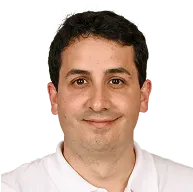
Marcel Kloos
Federally recognised dentist, founder and owner of Medschool Experts
Marcel Kloos founded the company while still studying abroad himself; since then more than 600 study places have been arranged. Originally from Stuttgart, he studied dentistry in Sofia from 2015 to 2021 and is a federally recognised dentist.
He now lives in Bern and runs the company full-time as its owner. He visits the partner universities in person on a regular basis.
Student reviews
Reviews by current and former students. We publish positive and negative reviews alike and state whether we placed the reviewer. Medschool Experts is a paid placement agency, so we are not an independent review site.
More universities to study medicine in this country
Compare the universities in the same country — programmes, fees and language of instruction side by side.
Student story
Videos about this university
Campus tour, first-hand accounts from students on the ground and answers to the most common questions — to watch rather than read.
Our curated universities
Our curated Top 20 — selected from the world's largest choice of universities for medicine, dentistry, pharmacy and veterinary medicine, independent of your high school diploma grades. We recommend each of these particularly, based on years of experience.
Problems at your university? Switch universities or train abroad
Exams not going well, trouble with the faculty, costs that have got out of hand, or you are simply not happy with the support you have had so far, including ours? You have options. We advise you free of charge on changing university and on completing parts of your clinical training abroad.
Change university
Move to another university and continue in a higher semester, usually without losing a year. We check your credits, find the right semester and handle the paperwork.
Clinical rotations abroad
Stay enrolled and complete single clinical blocks or rotations at a hospital abroad. You gain new hands-on experience and a fresh perspective on your degree.
Clinical internships abroad
Spend a few weeks at a hospital in another country, for example during the semester break, and see patients, ward routines and medicine from a different angle.
FAQ: studying medicine abroad at this university
When did the medical faculty in Mersin start teaching?
The first 28 students started in the 1998–1999 academic year. From 1999–2000 the faculty taught on its own campus, and the first doctors graduated in 2003–2004.
How big is the faculty today?
About 1,400 students, around 244 faculty members and 42 departments in three divisions. More than 2,000 doctors have graduated so far.
Does Mersin University have its own hospital?
Yes. The Research and Application Hospital opened on 15 March 1999 on the campus and has since been joined by an oncology hospital.
Is medicine at Mersin University taught in English?
No, the degree is taught in Turkish, which you need for lectures, exams and work with patients.
Where can I read Mersin University reviews?
On this page: students and graduates can rate the Faculty of Medicine of Mersin University and read reviews from other medical students.
Ahmad
Sabrina
Rami
Noah
600+ students placed.
Now it's your turn!
No daydreaming, no empty promises. Just a clear plan — for the start of your medical degree.
40 minutes, no obligation