Study Medicine in Skopje, North Macedonia
Faculty of Medicine · Ss. Cyril and Methodius University in Skopje · North Macedonia
🏛️ English-taught medicine at North Macedonia's oldest and largest university.
At a glance
The key facts about this university at a glance.
Programmes
Medicine
Tuition fees
€5,600 per academic year (2025/2026)
Duration
6 years
Language of instruction
English
Admission process
Intake
October (autumn semester)
Recognition
Living costs
approx. €400 to €650 per month
Total students
36000
How Safe Is This Study Location?
Based on assessments from residents and visitors collected by Numbeo over the past five years.
6 years
5600
525
Climate
Average daytime highs by month.
✓ Placement without a grade cut-off — we place you regardless of your school-leaving grades. We go through the specific requirements together.
Get free advice →Where this university is
Drag the map to place the university in Europe — and to judge how far it is from home.
Why study medicine abroad at this university?
Ss. Cyril and Methodius University in Skopje (UKIM) is the oldest and largest public university in North Macedonia. Since its founding in 1949 it has grown to more than 36,000 students, 23 faculties, several scientific institutes and over 3,000 academic, research and administrative staff. More than 700 international students are enrolled, and together with its predecessor institutions the university has awarded over 100,000 diplomas.
The Faculty of Medicine is the country's first and largest medical school, with more than 75 years of tradition. With 12 medical institutes, 35 departments, 29 university clinics, 3 centres and 8 accredited laboratories, it covers every area of medicine and the health sciences. No other faculty in the country has more PhD-qualified educators, more than 4,500 research papers have come out of it, and it works closely with Skopje's major teaching hospitals for clinical training. Students who enjoy research can join projects during their degree and go on to a PhD later.
Quality to European standards
- ECTS: In the 2002/03 academic year, UKIM became the first university in North Macedonia to introduce the European Credit Transfer and Accumulation System.
- Bologna Process: All study programmes are aligned with the Bologna Process and North Macedonia's Law on Higher Education.
- External evaluation: At least once every five years, the university is evaluated to the standards of the European Quality Assurance Register for Higher Education (EQAR).
International rankings
- U.S. News Best Global Universities: #1396 worldwide, #485 in Europe, #965 in Clinical Medicine
- QS World University Rankings: #103 in Eastern Europe, 601+ in Europe
- Times Higher Education: 1501+ worldwide, #518 in Europe, 801–1000 in Medical & Health
- EduRank: #1363 worldwide, #495 in Europe, #457 for Medicine in Europe
- SCImago Institutions Rankings: #2070 for Medicine worldwide, #118 for Medicine in Europe
- Center for World University Rankings: #1816 worldwide, #1760 in Research Performance, 801–1000 in Medical & Health
Member of academic networks
UKIM is a member of the European University Association (EUA), the International Association of Universities (IAU), the Network of Universities from the Capitals of Europe (UNICA), the Association of Universities of the Adriatic-Ionian Area (UniAdrion), the CEEPUS exchange programme, the European Association for International Education (EAIE) and the European Research Association, and is affiliated with UNESCO.
Dean and university leadership
The Faculty of Medicine is led by Dean Prof. Dr. Svetozar Antovikj. In his words: “Our fundamental goal is to train physicians who have a high degree of theoretical and practical knowledge, are able to think and make decisions on their own and are motivated to carry on learning for a lifetime.”
- Prof. Dr. Biljana Angelova – Rector of the university
- Prof. Dr. Sonja Topuzovska – Vice-Rector for Teaching
- Prof. Dr. Valentina Gečevska – Vice-Rector for Science
- Dr. Aleksandar Skeparovski – Vice-Rector for International Cooperation
- Founded: 1949
- Type: public
- Students: more than 36,000
- International students: more than 700
- Faculties: 23
- Faculty of Medicine: 12 institutes, 35 departments, 29 university clinics, 3 centres, 8 accredited laboratories
- Programme: Medicine (6 years, 360 ECTS)
- Language of instruction: English
- Intake: Autumn semester
- Dean: Prof. Dr. Svetozar Antovikj
Study medicine or dentistry: programmes and language of instruction
Structure, duration, language of instruction and degree — for every programme at this university.
- Medicine: integrated six-year programme (twelve semesters) with 5,876 teaching hours and 360 ECTS, taught entirely in English – two years of theory, one pre-clinical year and three years of clinical training.
Study conditions and campus life abroad
The integrated General Medicine programme runs for six years (twelve semesters) with 5,876 teaching hours and 360 ECTS credits. It is built on two years of theory, one pre-clinical year and three years of clinical training. Practical classes and clinical placements are a core part of the degree, with broad access to hospitals, clinics, laboratories and libraries. Every semester carries 30 ECTS, and most semesters include an elective subject.
Year 1 (795 hours, 60 ECTS)
- Semester 1: Biophysics, Cell Morphology and Physiology, Anatomy 1, Introduction to Medicine, Medical Psychology and Sociology, Histology and Embryology 1, Sports and Health
- Semester 2: Medical Chemistry, Anatomy 2, Histology and Embryology 2, Health Promotion, Medical Ethics, Introduction to Human Genetics, First Aid, elective
Year 2 (885 hours, 60 ECTS)
- Semester 3: Biochemistry 1, Physiology 1, Introduction to Immunology, Biostatistics with Medical Informatics, Anatomy 3
- Semester 4: Physiology 2, Biochemistry 2, Microbiology with Parasitology 1, Pathophysiology 1, Hygiene, Basics of Scientific Work, elective
Year 3 (890 hours, 60 ECTS)
- Semester 5: Microbiology with Parasitology 2, Pathophysiology 2, Pathology 1, Clinical Examination, Radiology, Nuclear Medicine
- Semester 6: Pathology 2, Clinical Examination, Pharmacology, Epidemiology, Transfusion Medicine, elective
Year 4 (1,017 hours, 60 ECTS)
- Semester 7: Internal Medicine, Infectious Diseases, Dermatovenereology, Neurology, elective
- Semester 8: Internal Medicine, Surgery, Gynaecology, Clinical Pharmacology, Clinical Biochemistry, Oncology
Year 5 (1,039 hours, 60 ECTS)
- Semester 9: Surgery, Gynaecology and Obstetrics, Paediatrics, Orthopaedics, Anaesthesiology, Resuscitation and Pain Management, Emergency Medicine, Physical Medicine and Rehabilitation
- Semester 10: Paediatrics, Psychiatry, Otorhinolaryngology, Ophthalmology, Family Medicine, Forensic Medicine, Occupational Medicine, Social Medicine and Health Economics
Year 6: clinical practice year (1,250 hours, 60 ECTS)
- Internal medicine: 8 weeks
- Surgery: 8 weeks
- Gynaecology and obstetrics: 4 weeks
- Paediatrics: 3 weeks
- Public health: 2 weeks
- Family medicine, gerontology and palliative medicine: 1 week each
- Seminars in differential diagnosis (internal medicine, surgery, paediatrics): 1 week
- Rational drug prescription and natural ways of healing: 1 week
- Clinical microbiology: 2 days
- Elective subject
Final-year seminars follow a mentoring model with professors and assistants: you take an active part in clinical work, attend seminars and workshops, and present case reports publicly.
Admission: how to get a place to study medicine abroad
Whether we can place you at this faculty is something we assess individually. Doctors are urgently needed worldwide, and there is a suitable path for almost every profile. In a free consultation, Marcel or another experienced consultant on our team looks at your profile, your budget and your personal goals, and tells you exactly where we can place you – reliably, through our network of partner medical faculties worldwide. Book your free consultation.
Study medicine abroad at 350+ universities worldwide
- The right university and a secure placement
- A study place abroad with an internationally recognised degree
- Support with your start, preparation and finding accommodation
- Help with transferring to another university
- Guidance all the way to your first job
Preparing properly with Medschool Experts
We are with you from your first assessment through to the start of your studies in Skopje. We take care of all the paperwork around your application, translations and visa, help you secure a hostel place and support you with enrolment and your residence permit. After you start, we stay your point of contact, for example for clinical electives or planning your studies.
Tuition fees and living costs to study medicine abroad
Tuition for the six-year English-taught medicine programme is €5,600 per year for the 2025/2026 academic year, the same in all six years. Over the full degree that adds up to €33,600 in tuition. Amounts are quoted in euros; payments are converted at the bank's rate on the day.
One-off and annual fees
- Application fee: €180 (one-off)
- Admission fee (administrative fee, registration fee etc.): €1,000 (first year only)
- Document translation and nostrification: €450 (one-off)
- Document apostille: €50 (one-off)
- Visa invitation: €120 (one-off)
- Temporary residence permit: €40 per year
- Health insurance: at actual cost
Housing and meals
- University hostel: €1,200 to €1,500 per year, depending on room availability
- Meals in the canteen: €1,500 per year
In your first year, tuition, one-off fees, residence permit, hostel and meals come to roughly €10,140 to €10,440; from year two onward it is roughly €8,340 to €8,640 per year, in both cases excluding health insurance. Add a little for local transport, leisure and personal spending; overall, living in Skopje costs around €400 to €650 a month, below most other European capitals.
Scholarships and financial support
UKIM awards scholarships to domestic and international students, some by selection and some by application:
- Academic merit scholarships: Atanas Bliznakoff Scholarships, Konstantin Stojanov Foundation Scholarships, the Fulbright Student Competition 2026–2027, scholarships for students with a single custodial parent, Merit Scholarship Award
- Government scholarships: undergraduate scholarships for foreign students and full scholarships from the Macedonian government
- External funding: more than 20 scholarships and 39 grants offered by external organisations in cooperation with the university
- Embassies and private foundations: many embassies fund students from their home country; these scholarships typically cover tuition and living costs, and sometimes visa fees, health insurance and travel
Alumni now practising internationally
Former students of this university who, according to publicly available sources, now work as doctors or dentists internationally. Anonymised overview — not an indication of any cooperation with Medschool Experts.
The city as a place to study medicine
Skopje sits on the banks of the River Vardar and is North Macedonia's capital and largest city. By day the centre, with its sculptures and grand buildings, feels like an open-air museum; at night the illuminated bridges shimmer on the river. The historic Stone Bridge links the modern city with the Old Bazaar, and Macedonia Square is home to the great equestrian statue of Alexander the Great. Mother Teresa was born in Skopje in 1910; she received the Nobel Peace Prize in 1979 and was canonised in 2016. Civilisations flourished in this region as early as 7000 BC.
The climate is moderate continental, with fairly mild winters and warm, dry summers. Summer temperatures range from 20 to 36°C, with July the warmest month, while winter days are usually between 1 and 7°C.
Skopje International Airport (SKP) is about 20 km from the city centre, with direct connections across Europe, including Wizz Air flights to Germany.
North Macedonia is a NATO member and an EU candidate country, and is considered one of the safest countries in the region. Visitors feel welcome quickly, and locals are known for their hospitality. Much of social life happens in cafés: “Let's have a coffee” is Skopje's invitation to almost anything, from an espresso to dinner. Add a lively nightlife and living costs noticeably below other European capitals.
Hostel for international students
The university runs its own hostels for international students, with separate buildings for men and women. Every room comes with beds, a study table, chairs and wardrobes, and all rooms are fully air-conditioned.
- Large rooms
- High-speed Wi-Fi around the clock
- Hot water and laundry service
- Library for studying late
- 24/7 CCTV and security
- 24/7 warden support
- Housekeeping
The canteen, with its own cook, serves vegetarian and non-vegetarian dishes three times a day.
- City: Skopje, capital of North Macedonia
- Country population: approx. 1.83 million
- Country area: 25,436 km²
- Neighbouring countries: Greece, Kosovo, Serbia, Albania, Bulgaria
- Currency: Macedonian denar (MKD)
- Dialling code: +389
- Languages: Macedonian, Albanian, English
- Religion: Christian and Muslim
- Memberships: NATO, Council of Europe, EU candidate country
- Climate: moderate continental, summer 20 to 36°C, winter 1 to 7°C
- Airport: Skopje International (SKP), approx. 20 km from the centre
- Cost of living: approx. €400 to €650 per month
About the author
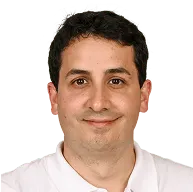
Marcel Kloos
Federally recognised dentist, founder and owner of Medschool Experts
Marcel Kloos founded the company while still studying abroad himself; since then more than 500 study places have been arranged. Originally from Stuttgart, he studied dentistry in Sofia from 2015 to 2021 and is a federally recognised dentist.
He now lives in Bern and runs the company full-time as its owner. He visits the partner universities in person on a regular basis.
More universities to study medicine in this country
Compare the universities in the same country — programmes, fees and language of instruction side by side.
Student story
Videos about this university
Campus tour, first-hand accounts from students on the ground and answers to the most common questions — to watch rather than read.
Our curated universities
Our curated Top 20 — selected from the world's largest choice of universities with no entrance-exam restrictions for medicine, dentistry, pharmacy and veterinary medicine. We recommend each of these particularly, based on years of experience.
FAQ: studying medicine abroad at this university
How do I get a place in Skopje through Medschool Experts?
We place students at this university without a grade-based admission cap. Whether we can place you in Skopje with your profile is something we work out in a free, no-obligation consultation, where we also look at which university suits you best overall.
How much does it cost to study medicine in Skopje?
€5,600 per year for 2025/2026, the same in all six years. Over the whole degree that is €33,600 in tuition. Payments are converted at the bank's rate on the day.
Which fees come on top in the first year?
One-off: the €180 application fee, the €1,000 admission fee, €450 for document translation and nostrification, €50 for the apostille and €120 for the visa invitation. The temporary residence permit costs €40 every year, and health insurance is charged at actual cost.
What do the hostel and meals cost?
A hostel place costs €1,200 to €1,500 a year, depending on which room is available – roughly €100 to €125 a month. The university budgets €1,500 a year for meals in the canteen.
How much money do I need per month?
Plan for around €400 to €650 a month for housing, food, transport and leisure. That makes Skopje one of Europe's more affordable capitals, and living in the hostel and eating in the canteen keeps your budget very predictable.
Are scholarships available?
Yes. UKIM offers academic merit scholarships, government scholarships for foreign students and full Macedonian government scholarships, plus more than 20 scholarships and 39 grants from external organisations. Many embassies also fund students from their home country.
How is the programme structured?
Six years, twelve semesters, 360 ECTS and 5,876 teaching hours. Two years of theory with anatomy, physiology, biochemistry and histology are followed by a pre-clinical year with pathology, pharmacology and radiology. The final three years are clinical, from internal medicine to forensic medicine.
How hands-on is the training?
Very. The faculty works with 29 university clinics and Skopje's major teaching hospitals. Year six is a dedicated clinical practice year of 1,250 hours, including eight weeks each of internal medicine and surgery, four weeks of gynaecology and three weeks of paediatrics.
Where does the university stand in international rankings?
U.S. News ranks UKIM #485 in Europe, EduRank #457 for Medicine in Europe and SCImago #118 for Medicine in Europe. In the QS rankings it is #103 in Eastern Europe.
Who leads the Faculty of Medicine?
The dean is Prof. Dr. Svetozar Antovikj. His goal is physicians with strong theoretical and practical knowledge who make their own decisions and keep learning for a lifetime.
How safe is Skopje?
North Macedonia is considered one of the safest countries in the region, with a very low crime rate. International students move freely around the city and enjoy its sights and cultural events. The hostels have 24/7 CCTV and staff on site.
What is the weather like?
Moderate continental. Summers are warm and dry at 20 to 36°C, while winter days are usually between 1 and 7°C.
How do I get to Skopje?
Flying is easiest. Skopje International Airport (SKP) has direct connections across Europe and is about 20 km from the city centre.
Where do international students live?
The university has its own fully air-conditioned hostels for international students, separate for men and women, with high-speed Wi-Fi, laundry, housekeeping, a library for late-night studying and a canteen serving three meals a day.
Who is Skopje a good fit for?
Anyone who wants to study medicine in English at a large, long-established public university while keeping costs predictable. For comparison, Foča and Varna are among our most popular locations. Which university suits you best is something we clarify in your free consultation.
Ahmad
Sabrina
Rami
Noah
500+ students placed.
Now it's your turn!
No daydreaming, no empty promises. Just a clear plan — for the start of your medical degree.
40 minutes, no obligation