Study Medicine in Nicosia – University of Nicosia
University of Nicosia · Cyprus
Study medicine in Nicosia in English at the University of Nicosia Medical School: a six-year MD whose years five and six move to Zurich hospitals of the Hirslanden Group, or a five-year graduate-entry MD.
Last updated
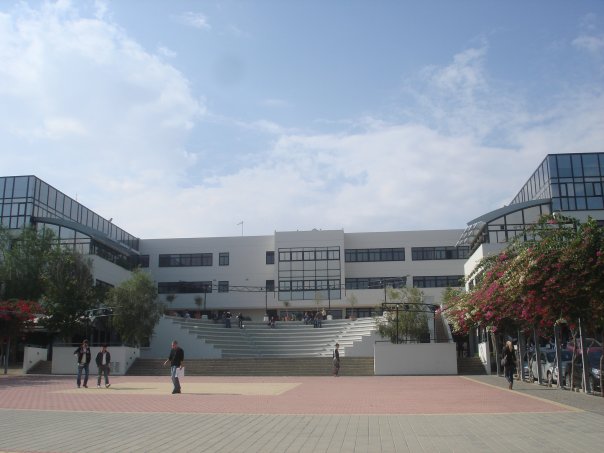
University profile
The key facts about this university at a glance.
Programmes
Medicine
Tuition fees
24,000 EUR per year; Graduate Entry 25,000 EUR per year
Duration
6 years (Graduate Entry 5 years)
Language of instruction
English
Admission process
Intake
September (autumn semester)
Recognition
Internationally recognised · automatic recognition in the EU, EEA and Switzerland
Living costs
approx. 500 to 700 EUR per month
Total students
14000
How Safe Is This Study Location?
Based on assessments from residents and visitors collected by Numbeo over the past five years.
68.0
100
6 years (Graduate Entry 5 years)
600
Weather through the year
Average daytime highs by month.
✓ Placement without a grade cut-off — we place you regardless of your school-leaving grades. We go through the specific requirements together.
Get free advice →Where this university is
Drag the map to place the university in Europe — and to judge how far it is from home.
Why study medicine abroad at this university?
Can you start medicine somewhere sunny and English-speaking and still finish your training inside a Swiss hospital? At the University of Nicosia Medical School you can. The six-year MD runs in Nicosia for the first four years; years five and six are spent in Zurich, at the clinics of the Hirslanden Group and selected partner hospitals, with psychiatry placements at Clienia Schlössli. For applicants from Switzerland this is the route we recommend first. A five-year graduate-entry MD exists alongside it for anyone who already holds a university degree.
Who runs the medical school in Nicosia?
Adonis Ioannides has been Dean since 2022, and in November 2025 he was re-elected unanimously for a further term. He took his MBChB with honours in Manchester and a PhD in developmental biology at University College London, and his research looks at how malformations of the oesophagus and trachea arise. Before becoming Dean he directed the school's MBBS course as Associate Dean for Academic Affairs.
- Aleksandar Jovanovic heads Basic and Clinical Sciences; he trained in clinical pharmacology at the Mayo Clinic and later held a chair in experimental medicine in Dundee.
- Andreas Charalambous, a neuroscientist with an Ohio State PhD, oversees every health discipline of the university as Executive Vice President of UNIC Health.
- Zoi Dorothea Pana teaches paediatric epidemiology and steers research as Associate Dean; she was previously a Scholar Fellow at Johns Hopkins.
The university as a whole teaches around 14,000 students from roughly 100 countries, so your year group will be thoroughly international. The MD programme is state-accredited in Cyprus.
Degree recognized in India
Your degree from University of Nicosia Medical School is recognized in India: the university is listed in the World Directory of Medical Schools, so graduates can sit the FMGE/NExT licensing exam and register with the National Medical Commission.
Student voices: What students say about studying medicine in Nicosia
International medical students in Nicosia stress how comfortable they feel there and how well they are looked after. Two voices in their own words.
„I feel extremely comfortable here.“
Julia Sophie Stenz, medical student from Germany, MD Class of 2028 [1]
„Huge help from the student service team“
Student from the USA, title of his review dated 20 November 2023 [2]
Sources
- Student profile, website of the University of Nicosia Medical School, accessed on 21 November 2026
- Student review, review portal EDUopinions, accessed on 21 November 2026
The statements refer to the university and to studying in Nicosia, not to Medschool Experts.
Still comparing universities? The annual fee of 20 English-taught faculties is in one table in our guide to studying medicine in Europe in English.
- Our preferred option for students from Switzerland
- Degree: MD, six years (graduate entry five years)
- Years 1 to 4 in Nicosia, years 5 and 6 in Zurich at the Hirslanden Group
- Teaching language: English
- About 14,000 students from around 100 countries
- State-accredited in Cyprus; intake in September
- Free joint consultation with the admissions office on request: contact us
Study medicine or dentistry: programmes and language of instruction
Structure, duration, language of instruction and degree — for every programme at this university.
- Medicine (MD), six years: taught in English and awarded by the University of Nicosia; years 1 to 4 in Nicosia, clinical years 5 and 6 at Hirslanden Group hospitals in Zurich.
- Medicine, graduate-entry MD: a five-year, English-taught track for students who already hold a university degree, leading to the same MD title.
Study conditions and campus life abroad
Plan for six years on the standard MD. Years one and two in Nicosia are preclinical: anatomy, physiology and biochemistry, with clinical practice woven in early on campus. Clinical teaching begins in year three at the university's teaching hospitals in Cyprus and continues through year four.
Then you relocate. Years five and six take place in Zurich at Hirslanden Group clinics and chosen partner hospitals, and psychiatry is taught at Clienia Schlössli. You work there as a sub-intern in blocks lasting several weeks, rotating through internal medicine, surgery, paediatrics, gynaecology, psychiatry and further disciplines under the supervision of each hospital's doctors. The sixth year is fully practical, comparable to an internship year.
Lectures and exams are in English throughout. Graduates of an earlier degree can take the five-year graduate-entry MD instead; both routes end with the MD of the University of Nicosia.
Admission: how to get a place to study medicine abroad
Whether Nicosia, with its later Zurich phase, suits your plans is something we look at together in a free consultation. Your place does not depend on your high school diploma grades; what matters to us is whether the budget, the move to Switzerland and the English-taught preclinical years fit you.
Study medicine abroad at 350+ universities worldwide
- The right university and a secure placement
- A study place abroad with an internationally recognised degree
- Support with your start, preparation and finding accommodation
- Help with transferring to another university
- Guidance all the way to your first job
Preparing properly with Medschool Experts
Entry formalities for Cyprus depend on your passport, since EU citizens and students from outside the EU follow different rules; we help you sort out the paperwork that applies to you and support you with enrolment and finding a flat close to campus in Nicosia. When years five and six come round, we stay with you for the move to Zurich as well. On request we also set up a free online meeting together with the medical school's admissions office, so that you and your parents can put your questions to the university directly.
Tuition fees and living costs to study medicine abroad
Tuition on the six-year MD is 24,000 EUR per year, which adds up to 144,000 EUR. The five-year graduate entry costs 25,000 EUR per year, or 125,000 EUR in total. That puts Nicosia among the more expensive places to study medicine in Europe, so work the budget through before deciding.
On top come the application costs, your English certificate, books, health insurance and flights. Day-to-day life in Nicosia runs at roughly 500 to 700 EUR a month; a room close to campus is the biggest item at about 470 to 560 EUR. For the two years in Zurich, budget for the move and for Swiss living costs.
Degree recognition and career prospects
Recognised automatically across the EU
Cyprus is a full EU member, so the MD from University of Nicosia Medical School falls under Directive 2005/36/EC and is recognised automatically throughout the European Union, the EEA states and Switzerland, with no knowledge test required, for both the six-year programme and the five-year graduate-entry route.
You then apply for your licence to practise with the competent authority of the country where you want to work; most ask for proof of medical-level language skill, and Germany, Austria and the other EU states process this through their own clear, well-established procedure.
Specialist training afterwards is open on the same terms as for graduates of a domestic faculty, and the Zurich clinical years mean you arrive with experience across several hospitals already. The diploma is also listed in the World Directory of Medical Schools and recognised worldwide, qualifying you for exams such as the USMLE or the PLAB outside Europe too.
Alumni now practising internationally
Former students of this university who, according to publicly available sources, now work as doctors or dentists internationally. Anonymised overview — not an indication of any cooperation with Medschool Experts.
The city as a place to study medicine
What is daily life like in Nicosia?
Nicosia sits in the middle of the island rather than on the coast. It is the capital of the Republic of Cyprus and the seat of government, which gives the city a working, administrative feel during the week and a large student population around its universities. The old centre is enclosed by Venetian walls, and the city remains divided to this day.
Winters are short and mild, with January averaging around 11 °C; in July and August the thermometer climbs to almost 30 °C. Because the city is inland, a beach day means a drive: Larnaca Bay and its Finikoudes seafront are about 45 kilometres away, roughly 35 to 40 minutes on the A2 motorway.
The same road takes you to Larnaca International Airport (LCA). From there Lufthansa and Eurowings fly direct to Frankfurt, Berlin, Munich, Düsseldorf and Stuttgart, and there are direct services to Zurich, which helps when you move for the clinical years. English is part of everyday life in shops, offices and lecture halls, and Cyprus uses the euro, so you will not deal with currency exchange until Switzerland.
- Capital of the Republic of Cyprus and seat of government
- Inland location; old town ringed by Venetian walls; still a divided city
- January around 11 °C, July and August close to 30 °C
- Larnaca airport and seafront about 45 km away
- Living costs roughly 500 to 700 EUR a month
About the author

Marcel Kloos
Federally recognised dentist, founder and owner of Medschool Experts
Marcel Kloos founded the company while still studying abroad himself; since then more than 500 study places have been arranged. Originally from Stuttgart, he studied dentistry in Sofia from 2015 to 2021 and is a federally recognised dentist.
He now lives in Bern and runs the company full-time as its owner. He visits the partner universities in person on a regular basis.
Student reviews
Reviews by current and former students. We publish positive and negative reviews alike and state whether we placed the reviewer. Medschool Experts is a paid placement agency, so we are not an independent review site.
More universities to study medicine in this country
Compare the universities in the same country — programmes, fees and language of instruction side by side.
Student story
Videos about this university
Campus tour, first-hand accounts from students on the ground and answers to the most common questions — to watch rather than read.
Our curated universities
Our curated Top 20 — selected from the world's largest choice of universities for medicine, dentistry, pharmacy and veterinary medicine, independent of your high school diploma grades. We recommend each of these particularly, based on years of experience.
Problems at your university? Switch universities or train abroad
Exams not going well, trouble with the faculty, costs that have got out of hand, or you are simply not happy with the support you have had so far, including ours? You have options. We advise you free of charge on changing university and on completing parts of your clinical training abroad.
Change university
Move to another university and continue in a higher semester, usually without losing a year. We check your credits, find the right semester and handle the paperwork.
Clinical rotations abroad
Stay enrolled and complete single clinical blocks or rotations at a hospital abroad. You gain new hands-on experience and a fresh perspective on your degree.
Clinical internships abroad
Spend a few weeks at a hospital in another country, for example during the semester break, and see patients, ward routines and medicine from a different angle.
FAQ: studying medicine abroad at this university
How many years of the Nicosia MD are spent in Zurich?
Two. On the six-year MD you study years one to four in Nicosia and complete years five and six at Hirslanden Group clinics and partner hospitals in Zurich, with psychiatry at Clienia Schlössli. The degree is still the MD of the University of Nicosia.
How much does the University of Nicosia Medical School cost in total?
144,000 EUR in tuition for the six-year MD (24,000 EUR a year) and 125,000 EUR for the five-year graduate entry (25,000 EUR a year). Living costs in Nicosia of around 500 to 700 EUR a month come on top, and the Zurich years cost more.
How do you obtain your licence to practise after a Cypriot MD?
Because Cyprus is an EU member, the MD falls under Directive 2005/36/EC and is recognised automatically across the EU and EEA; Switzerland applies the same rules through its agreement with the EU. You then apply directly for your licence with the authority in the country where you want to work.
Can my parents speak to the university before I commit?
Yes. On request we arrange a free online meeting with the admissions office of the medical school, where you and your family can ask about the Zurich phase, fees and recognition directly. We join the call.
What is the difference between the six-year MD and the graduate entry?
Length and prior study. The graduate entry takes five years and is meant for people who already have a university degree; the regular MD takes six. Both are taught in English and lead to an MD.
Why do you recommend Nicosia to students from Switzerland?
Because the final two years bring you back to Zurich. You start in English in Cyprus, then spend your clinical training in Swiss hospitals, close to family and to the place where you will probably look for your first job, with contacts already made.

Ahmad

Sabrina

Rami

Noah
500+ students placed.
Now it's your turn!
No daydreaming, no empty promises. Just a clear plan — for the start of your medical degree.
40 minutes, no obligation