Study Medicine in Vladikavkaz at North Ossetian State Medical Academy
North Ossetian State Medical Academy · Russia
Study medicine in Vladikavkaz at the North Ossetian State Medical Academy, a small state medical school at the foot of the Greater Caucasus with an English-taught six-year course.
Last updated
University profile
The key facts about this university at a glance.
Programmes
Medicine
Tuition fees
approx. 3,900 € per year
Duration
6 years
Language of instruction
English (clinical work in Russian)
Admission process
Intake
September
Recognition
Internationally recognised · recognition in the EU via the national licensing procedure
Living costs
250 to 400 EUR per month
Total students
How Safe Is This Study Location?
Based on assessments from residents and visitors collected by Numbeo over the past five years.
6 years
3900
Weather through the year
Average daytime highs by month.
✓ Placement without a grade cut-off — we place you regardless of your school-leaving grades. We go through the specific requirements together.
Get free advice →Where this university is
Drag the map to place the university in Europe — and to judge how far it is from home.
Why study medicine abroad at this university?
Since 1939 the North Ossetian State Medical Academy has trained the doctors of North Ossetia-Alania. It is a state institution focused entirely on medicine, and its main building stands at 40 Pushkinskaya Street in the middle of Vladikavkaz. For more than eight decades, many of the region's hospitals and polyclinics have been staffed by its graduates.
With roughly 2,000 to 3,000 students, the academy is one of Russia's smaller medical schools. You notice that in daily life: year groups are manageable, lecturers know their seminar groups, and the walk between teaching building, dormitory and clinic is short.
Does "academy" mean a lower level than a university?
No. In the Russian system the title marks a higher education institution with a single clear focus, in this case medicine. Besides general medicine, the academy trains paediatricians and dentists; those two programmes are taught in Russian. For international students it runs General Medicine in English. The academy is state-accredited and awards state medical diplomas.
Who is it for? Students who prefer a fixed rhythm at a small school to the anonymity of a city of millions. Language is the point to plan for: in the clinical years patients speak Russian, and many speak Ossetian among themselves.
Degree recognized in India
Your degree from North Ossetian State Medical Academy is recognized in India: the university is listed in the World Directory of Medical Schools, so graduates can sit the FMGE/NExT licensing exam and register with the National Medical Commission.
Still comparing universities? The annual fee of 20 English-taught faculties is in one table in our guide to studying medicine in Europe in English.
- Founded in 1939
- State medical academy, state-accredited
- Purely medical profile: general medicine, paediatrics, dentistry
- About 2,000 to 3,000 students
- Main building: 40 Pushkinskaya Street, Vladikavkaz
- General Medicine in English, six years, September start
- Is a small academy right for you? Ask us, the consultation is free.
Study medicine or dentistry: programmes and language of instruction
Structure, duration, language of instruction and degree — for every programme at this university.
- Medicine: Six-year General Medicine course in English leading to a state medical diploma, taught in small groups, with summer practical training on the wards and a clinical sixth year in Vladikavkaz hospitals.
Study conditions and campus life abroad
The English-taught General Medicine course lasts six years and begins in September. Early on you study anatomy, histology, biochemistry and physiology in small groups at the academy's departments, with Russian classes running in parallel, because from the third year the focus moves to the hospitals of Vladikavkaz.
There you rotate through internal medicine, surgery, paediatrics, obstetrics and neurology. Summer breaks bring compulsory practical training, first in nursing and later as an assistant on the ward. Year six is almost entirely clinical and ends with the state final examination and your medical diploma. Lectures and seminars stay in English; at the bedside you need Russian.
Admission: how to get a place to study medicine abroad
A small medical academy in the Caucasus is a deliberate choice, not a default. In a free consultation we check whether Vladikavkaz matches the way you like to study and where you want to work later; your high school diploma grades are not the deciding factor.
Study medicine abroad at 350+ universities worldwide
- The right university and a secure placement
- A study place abroad with an internationally recognised degree
- Support with your start, preparation and finding accommodation
- Help with transferring to another university
- Guidance all the way to your first job
Preparing properly with Medschool Experts
Most routes to Vladikavkaz run through Moscow to Beslan Airport, after a first leg with a change such as Istanbul. We help you with the Russian student visa, the paperwork Russia expects on arrival, and finding a dormitory place or a flat near the academy.
Tuition fees and living costs to study medicine abroad
Tuition is about 3,900 € a year. Russian universities usually set fees in roubles, so the euro amount moves with the exchange rate. Vladikavkaz is one of the cheaper student cities: a one-room flat costs about 130 to 190 € a month and a dormitory place considerably less, so 250 to 400 € a month covers rent, food and transport. Visa, the health insurance Russia requires, certified translations and travel are one-off costs. Bring cash or open a Russian account, because cards issued by German banks, for example, do not work in Russia.
Degree recognition and career prospects
Recognised in Europe and far beyond
A medical diploma from the North Ossetian State Medical Academy is eligible for recognition throughout the European Union. For Germany the path runs through the knowledge test (Kenntnisprüfung): once you have passed this oral and practical examination and shown professional-level German, the licensing authority of your federal state grants the licence to practise (Approbation). Every other EU and EEA country offers its own clearly defined procedure at the competent health authority.
The academy appears in the World Directory of Medical Schools, which makes your degree internationally recognised and qualifies you for the USMLE in the United States, the MCCQE in Canada, PLAB in the United Kingdom and the AMC examinations in Australia. Registration with the medical chamber of your home country is equally open to you.
We treat the German route as a project with a timetable rather than an afterthought: German courses, document preparation and exam registration are planned with you from your first semester in Vladikavkaz.
Alumni now practising internationally
Former students of this university who, according to publicly available sources, now work as doctors or dentists internationally. Anonymised overview — not an indication of any cooperation with Medschool Experts.
The city as a place to study medicine
Vladikavkaz sits at 692 metres on the Terek River, exactly where the plain ends and the Greater Caucasus begins. Just under 300,000 people live in the capital of North Ossetia. On clear days Mount Kazbek, over 5,000 metres high, fills the southern horizon. The city was founded in 1784 as a fortress, and the Georgian Military Road still starts here, crossing the ridge towards Tbilisi.
By Russian standards winters are mild: the January mean is minus 1.7 °C, July averages 21 °C. Rain is plentiful, over 950 millimetres a year, mostly in summer when clouds pile up against the mountains. The compact centre is built around Prospekt Mira, a pedestrian avenue; trams have run since 1904, with buses and shared taxis covering the rest.
Beslan Airport lies about nine kilometres outside the city and connects to Moscow. Weekend trips into the mountain valleys of North Ossetia are short, and Ossetian pies filled with cheese or meat are sold on nearly every corner.
- Capital of North Ossetia-Alania, North Caucasus
- Just under 300,000 inhabitants
- 692 m above sea level on the Terek River
- Starting point of the Georgian Military Road to Tbilisi
- Trams in service since 1904
About the author
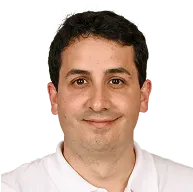
Marcel Kloos
Federally recognised dentist, founder and owner of Medschool Experts
Marcel Kloos founded the company while still studying abroad himself; since then more than 500 study places have been arranged. Originally from Stuttgart, he studied dentistry in Sofia from 2015 to 2021 and is a federally recognised dentist.
He now lives in Bern and runs the company full-time as its owner. He visits the partner universities in person on a regular basis.
Student reviews
Reviews by current and former students. We publish positive and negative reviews alike and state whether we placed the reviewer. Medschool Experts is a paid placement agency, so we are not an independent review site.
More universities to study medicine in this country
Compare the universities in the same country — programmes, fees and language of instruction side by side.
Student story
Videos about this university
Campus tour, first-hand accounts from students on the ground and answers to the most common questions — to watch rather than read.
Our curated universities
Our curated Top 20 — selected from the world's largest choice of universities for medicine, dentistry, pharmacy and veterinary medicine, independent of your high school diploma grades. We recommend each of these particularly, based on years of experience.
Problems at your university? Switch universities or train abroad
Exams not going well, trouble with the faculty, costs that have got out of hand, or you are simply not happy with the support you have had so far, including ours? You have options. We advise you free of charge on changing university and on completing parts of your clinical training abroad.
Change university
Move to another university and continue in a higher semester, usually without losing a year. We check your credits, find the right semester and handle the paperwork.
Clinical rotations abroad
Stay enrolled and complete single clinical blocks or rotations at a hospital abroad. You gain new hands-on experience and a fresh perspective on your degree.
Clinical internships abroad
Spend a few weeks at a hospital in another country, for example during the semester break, and see patients, ward routines and medicine from a different angle.
FAQ: studying medicine abroad at this university
How small is the North Ossetian State Medical Academy?
With roughly 2,000 to 3,000 students it is about the size of a mid-sized medical faculty. Your seminar group stays much the same over the years, and lecturers know you by name.
What will medical studies in Vladikavkaz cost you?
About 3,900 € in tuition each year, plus 250 to 400 € a month for rent, food and transport, which puts Vladikavkaz among the more affordable places to study in Russia.
Where can you work with the academy's medical diploma?
In Russia, in your home country and, after the national procedure, anywhere in the EU. Germany admits you to the knowledge test (Kenntnisprüfung) and then grants the licence to practise (Approbation); the USMLE, PLAB, MCCQE and AMC examinations are open to you for the USA, the United Kingdom, Canada and Australia.
Do you need to learn Ossetian?
No. Ossetian is an official language of the republic alongside Russian, but Russian is enough for studies and the clinic. A few Ossetian greetings still go down well with patients.
What is the weather like at the foot of the Caucasus?
Milder than most of Russia, but damp. January averages just below freezing, July about 21 °C, and summer brings heavy rain as clouds gather against the mountains.

Ahmad

Sabrina

Rami

Noah
500+ students placed.
Now it's your turn!
No daydreaming, no empty promises. Just a clear plan — for the start of your medical degree.
40 minutes, no obligation