Study Medicine in Rome at UniCamillus – International Medical University
Medicine and Surgery (English) · Rome · Italy
Study medicine in Rome at UniCamillus, a private university founded in 2017 that teaches only health sciences and offers its six-year Medicine and Surgery degree in English.
Last updated

University profile
The key facts about this university at a glance.
Programmes
Medicine
Tuition fees
Approx. EUR 21,000 per year
Duration
6 years
Language of instruction
English
Admission process
Assessed individually in a free consultation
Intake
September/October
Recognition
Internationally recognised · automatic recognition in the EU, EEA and Switzerland
Living costs
Total students
How Safe Is This Study Location?
Based on assessments from residents and visitors collected by Numbeo over the past five years.
650
6 years
21000
Weather through the year
Average daytime highs by month.
✓ Placement without a grade cut-off — we place you regardless of your school-leaving grades. We go through the specific requirements together.
Get free advice →Where this university is
Drag the map to place the university in Europe — and to judge how far it is from home.
Why study medicine abroad at this university?
What makes UniCamillus different from other medical schools in Rome?
UniCamillus, officially the Saint Camillus International University of Health Sciences, teaches nothing but medicine and health care, and it was set up with international students in mind. The Italian Ministry of University and Research recognised it on 28 November 2017. Its name honours Camillus de Lellis, the 16th-century priest who founded an order devoted to nursing the sick.

Its academic profile is unusual for Italy. Teaching and research lean towards health problems of the Global South, such as malaria, HIV/AIDS, tuberculosis and neglected tropical diseases, and towards medicine in war zones and disaster areas. Cooperation agreements with Haiti, Egypt and other countries outside Europe reflect that orientation, and humanitarian organisations are among its partners. If you picture yourself working in global health one day, you will feel this focus in lectures and research projects.
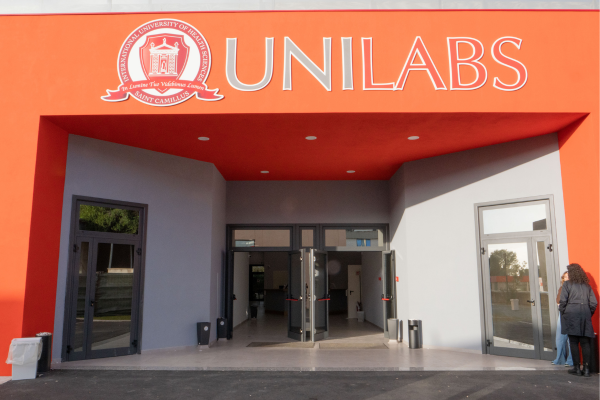
The university has grown quickly. About 5,100 students are enrolled, and besides the main site at Via di Sant'Alessandro 8 in north-eastern Rome it now teaches in Venice and in Cefalù, Sicily. Its range covers Medicine and Surgery in English or Italian, Dentistry and Dental Prosthetics, a master's in human nutrition and bachelor's degrees in nursing, physiotherapy, midwifery, dental hygiene, laboratory and radiology techniques. It is private and state-accredited, led by rector Gianni Profita.

Degree recognized in India
Your degree from UniCamillus – International Medical University is recognized in India: the university is listed in the World Directory of Medical Schools, so graduates can sit the FMGE/NExT licensing exam and register with the National Medical Commission.
Student voices: What students say about studying medicine in Rome
UniCamillus lets its students speak on its website. There, a future dentist explains why she chose the university. One voice in her own words.
„[…] UniCamillus is the right choice to become a successful dentist.“
Eleonora, 27, dentistry student [1]
Sources
- Report dated 17 December 2020, website of UniCamillus, accessed on 21 November 2026
The statements refer to the university and to studying in Rome, not to Medschool Experts.
Still comparing universities? The annual fee of 20 English-taught faculties is in one table in our guide to studying medicine in Europe in English.
- Recognised by the Italian ministry on 28 November 2017
- Private, state-accredited university for health sciences only
- About 5,100 students
- Campuses in Rome, Venice and Cefalù
- Research focus on diseases of the Global South and humanitarian medicine
- Main site: Via di Sant'Alessandro 8, Rome
Study medicine or dentistry: programmes and language of instruction
Structure, duration, language of instruction and degree — for every programme at this university.
- Medicine and Surgery (English), 6 years: single-cycle master's degree at the Rome campus with a pronounced global-health profile, including tropical diseases and humanitarian medicine.
Study conditions and campus life abroad
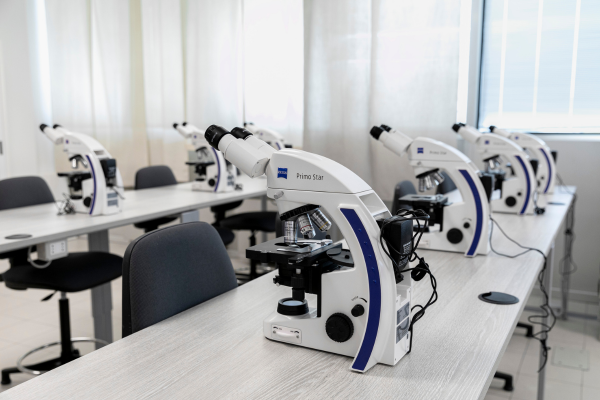
Medicine and Surgery at UniCamillus is a six-year single-cycle master's degree, taught in English at the Rome campus with an Italian-language version running in parallel. The early years cover the biomedical sciences, and from the middle of the course clinical teaching and internships take over, in healthcare facilities that cooperate with the university.


What sets the curriculum apart is its global-health angle: tropical and infectious diseases and humanitarian medicine get more room here than in a typical Italian programme. With classmates from many countries, English is the everyday language on campus, while Italian becomes essential once you start talking to patients on the wards.

Admission: how to get a place to study medicine abroad
Study medicine abroad at 350+ universities worldwide
- The right university and a secure placement
- A study place abroad with an internationally recognised degree
- Support with your start, preparation and finding accommodation
- Help with transferring to another university
- Guidance all the way to your first job
Preparing properly with Medschool Experts
Tuition fees and living costs to study medicine abroad
For 2025/26, first-year tuition for the English Medicine and Surgery course in Rome is €21,000, split into four instalments of €2,000, €6,000, €6,500 and €6,500. EU and non-EU students pay the same rate. You also owe the regional right-to-study fee, €140 in the latest published figure, and a €16 stamp duty at enrolment. North-eastern Rome is cheaper than the centre: a room in a shared flat around Tiburtino or Pietralata generally costs €450 to €650 a month.
Degree recognition and career prospects
Medicine and Surgery at UniCamillus leads to a degree that is recognised across the whole European Union under Directive 2005/36/EC, with the same automatic standing in the EEA states and in Switzerland. Graduates move between these countries without sitting any further academic test.
For Germany this means applying straight for the Approbation, the licence to practise, once you hold your diploma and the required level of German. Other EU and EEA states simply ask their own competent authority to issue the equivalent licence, after which specialist training stands open on the same footing as for locally trained doctors.
The reach of the degree carries past Europe as well: UniCamillus graduates sit the same licensing exams as other EU-trained doctors who choose the United States, Canada, Britain or Australia, among them the USMLE, the MCCQE, the PLAB and the AMC exam, and can register for medical practice back home just as readily.
Alumni now practising internationally
Former students of this university who, according to publicly available sources, now work as doctors or dentists internationally. Anonymised overview — not an indication of any cooperation with Medschool Experts.
The city as a place to study medicine
UniCamillus is not in the postcard Rome of fountains and piazzas but in the residential north-east, beyond the Tiburtino district. That has its advantages. Rents are lower, the local markets serve families rather than tourists, and the green banks of the Aniene river are close by for a run. Metro Line B reaches this part of the city and takes you to Termini and the Colosseum, while Tiburtina station, a stop on the high-speed network, puts Naples, Florence and Milan within easy reach.
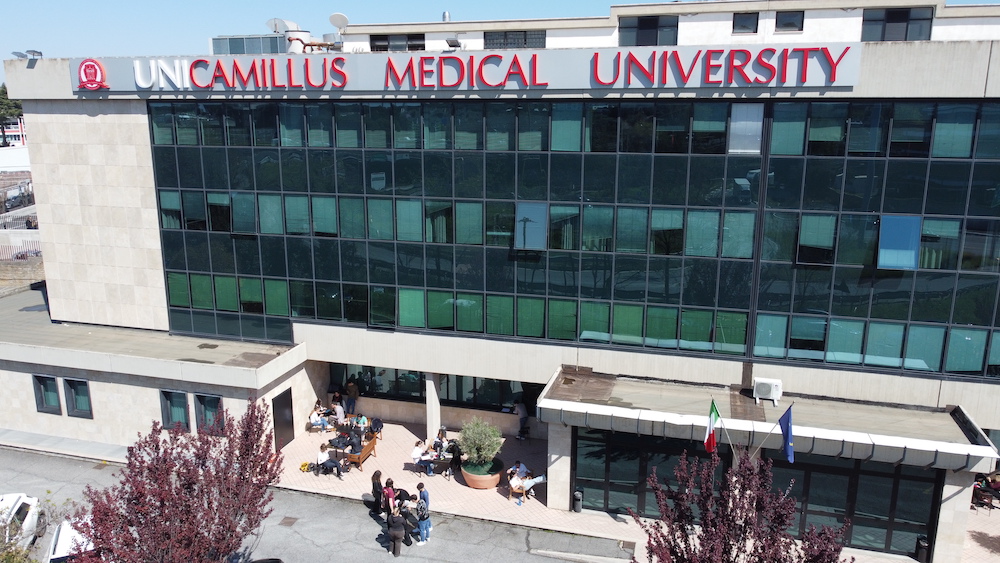

Rome itself, home to about 2.75 million people, is Italy's capital and largest city. Its historic centre has been a UNESCO World Heritage Site since 1980, and Vatican City, an independent state, lies inside its boundaries. Expect mild winters, with January highs of about 13 °C, and long, hot summers. Because students at UniCamillus come from so many countries, international dinners, football matches and weekend trips to the coast at Ostia or the Castelli Romani hills fill the calendar.

- Italy's capital, Lazio region
- Around 2.75 million inhabitants, 4.2 million in the metropolitan city
- UniCamillus sits in the residential north-east of the city
- Tiburtina station links Rome to the high-speed rail network
About the author

Marcel Kloos
Federally recognised dentist, founder and owner of Medschool Experts
Marcel Kloos founded the company while still studying abroad himself; since then more than 500 study places have been arranged. Originally from Stuttgart, he studied dentistry in Sofia from 2015 to 2021 and is a federally recognised dentist.
He now lives in Bern and runs the company full-time as its owner. He visits the partner universities in person on a regular basis.
Student reviews
Reviews by current and former students. We publish positive and negative reviews alike and state whether we placed the reviewer. Medschool Experts is a paid placement agency, so we are not an independent review site.
More universities to study medicine in this country
Compare the universities in the same country — programmes, fees and language of instruction side by side.
Student story
Videos about this university
Campus tour, first-hand accounts from students on the ground and answers to the most common questions — to watch rather than read.
Our curated universities
Our curated Top 20 — selected from the world's largest choice of universities for medicine, dentistry, pharmacy and veterinary medicine, independent of your high school diploma grades. We recommend each of these particularly, based on years of experience.
Problems at your university? Switch universities or train abroad
Exams not going well, trouble with the faculty, costs that have got out of hand, or you are simply not happy with the support you have had so far, including ours? You have options. We advise you free of charge on changing university and on completing parts of your clinical training abroad.
Change university
Move to another university and continue in a higher semester, usually without losing a year. We check your credits, find the right semester and handle the paperwork.
Clinical rotations abroad
Stay enrolled and complete single clinical blocks or rotations at a hospital abroad. You gain new hands-on experience and a fresh perspective on your degree.
Clinical internships abroad
Spend a few weeks at a hospital in another country, for example during the semester break, and see patients, ward routines and medicine from a different angle.
FAQ: studying medicine abroad at this university
How much is tuition for Medicine and Surgery in English at UniCamillus?
€21,000 a year for first-year students in 2025/26, the same for EU and non-EU citizens. Add the regional fee of about €140 and a €16 stamp duty.
Where besides Italy can you practise with a UniCamillus degree?
The degree is recognised automatically across the whole EU under Directive 2005/36/EC, so any member state accepts it for registration. If you plan to work outside the EU, that country's own authority makes the decision.
Is UniCamillus a good fit if you want to work in global health?
Very likely, since tropical and infectious diseases and medicine in crisis zones are central to its teaching and research. Its partnerships with countries such as Haiti and Egypt point the same way.
Can you study at UniCamillus outside Rome?
Yes, the university also teaches in Venice and in Cefalù, Sicily. This page covers the English-taught course at the Rome campus.
Who was Saint Camillus?
Camillus de Lellis was a 16th-century Italian priest who founded an order dedicated to caring for the sick. The university carries his name and his emphasis on care for the vulnerable.

Ahmad

Sabrina

Rami

Noah
500+ students placed.
Now it's your turn!
No daydreaming, no empty promises. Just a clear plan — for the start of your medical degree.
40 minutes, no obligation