Study Medicine or Dentistry in Pembroke – ASOMI College of Sciences (ACS)
ASOMI College of Sciences · Pembroke, Malta
Private college on Malta's north-east coast: Medicine and Dentistry taught entirely in English, with the degree awarded by the state Medical University of Plovdiv in Bulgaria.
At a glance
The key facts about this university at a glance.
Programmes
Medicine, Dentistry
Tuition fees
15,500 EUR per year (Medicine and Dentistry)
Duration
6 years
Language of instruction
English
Admission process
Entrance test in biology and chemistry; taken online when you apply through Medschool Experts
Intake
November (applications open from February until the end of September)
Recognition
Automatically recognised across the EU · Degree awarded by the Medical University of Plovdiv (Bulgaria) · Bologna/ECTS
Living costs
900 to 1,100 EUR per month
Total students
How Safe Is This Study Location?
Based on assessments from residents and visitors collected by Numbeo over the past five years.
63.8
28
6 years
15500
1000
Climate
Average daytime highs by month.
✓ Placement without a grade cut-off — we place you regardless of your school-leaving grades. We go through the specific requirements together.
Get free advice →Where this university is
Drag the map to place the university in Europe — and to judge how far it is from home.
Why study medicine abroad at this university?
ASOMI College of Sciences, ACS for short, is a private higher-education college on Malta, licensed by the Maltese higher-education authority MFHEA since 2020. It grew out of the Italian osteopathy academy ASOMI in Turin and has developed within a few years into a health-sciences college offering physiotherapy, osteopathy, dental hygiene, psychology and health management. The most important step came recently: together with the Medical University of Plovdiv, a Bulgarian state university founded in 1945, ACS offers a six-year Medicine programme and a six-year Dentistry programme, both taught entirely in English.
The model is a franchise. Plovdiv provides the curriculum and the teaching staff, who teach on site and partly by video link; ACS provides the campus, the laboratories and the library. The diploma carries the name of the Medical University of Plovdiv, so it is a Bulgarian state degree. For you that means studying on Malta, in an English-speaking EU environment with a Mediterranean climate, and graduating from an established state university.
The campus is spread across three sites in Pembroke, Swieqi and St Julian's, all a few minutes apart on the north-east coast of the island. For the pre-clinical subjects there is an anatomy hall with virtual 3D dissection tables and AR headsets, chemistry and biology laboratories, and a dental simulation lab with phantom heads and treatment units. The first cohort started with 28 students, most of them from Italy. Groups are correspondingly small and contact with lecturers is close.
Ownership and leadership
ACS is run as a private company; its directors include Dario Silvestri, who also heads the ASOMI Accademia di Osteopatia in Turin. Since 2025 the college has held the Erasmus Charter for Higher Education and can offer exchange semesters within the EU.
- Programmes: Medicine and Dentistry (six years each, 360 ECTS)
- Degree: diploma of the Medical University of Plovdiv (state university, Bulgaria)
- Ownership: private college delivering a state university's programme under franchise
- Language of instruction: English
- Standard duration: 6 years
- Admission: entrance test in biology and chemistry, no grade cap
- Licensed by the Maltese higher-education authority MFHEA since 2020; Erasmus Charter since 2025
- Requirement: general higher-education entrance qualification. Check in a free study consultation whether you meet the requirements for placement at this or another university through Medschool Experts.
Study medicine or dentistry: programmes and language of instruction
Structure, duration, language of instruction and degree — for every programme at this university.
- Medicine: six years, 360 ECTS, taught in English, diploma awarded by the Medical University of Plovdiv; clinical training on Malta and at European partner hospitals.
- Dentistry: six years, 360 ECTS, taught in English, diploma awarded by the Medical University of Plovdiv; practical training in the college's simulation laboratory and in partner clinics and practices.
Study conditions and campus life abroad
Both programmes last six years and comprise 360 ECTS with around 9,000 learning hours, fully on campus and in English. The early years belong to the foundations: anatomy, histology, biochemistry, physiology, microbiology and pathology, taught according to the curriculum of the Medical University of Plovdiv. The anatomy hall with its virtual dissection tables and the science laboratories on the Pembroke campus are built for exactly that.
From the middle of the programme the clinical subjects move to the fore. Practical training takes place in hospitals on Malta and at partner institutions in other European countries; in dentistry it additionally takes place in the college's simulation laboratory and in partner practices. The sixth year is the practical year, with rotations through the major disciplines. At the end come the state examinations following the Bulgarian model and the award of the diploma by the University of Plovdiv.
Admission: how to get a place to study medicine abroad
To apply you need a general higher-education entrance qualification (A-levels, high-school diploma or equivalent) and a criminal-record certificate, because medicine is a regulated clinical profession. No particular grade average is required. Admission is decided by an entrance test in biology and chemistry, the content of which is set by the Medical University of Plovdiv. When you apply through Medschool Experts, you sit this test online. Teaching is entirely in English; solid school-level English is enough, and a formal certificate is not currently required.
The application window is long: it opens in February and closes at the end of September, with studies starting in November. If you need one more summer after school, you have more room here than at many other locations.
Whether we can place you at this faculty is something we check individually. In a free consultation we look at your profile, your budget and your personal preferences and tell you concretely whether Malta is the right fit, or whether one of our other partner universities suits you better.
Study medicine abroad at 350+ universities worldwide
- The right university and a secure placement
- A study place abroad with an internationally recognised degree
- Support with your start, preparation and finding accommodation
- Help with transferring to another university
- Guidance all the way to your first job
Preparing properly with Medschool Experts
We organise your entire application, including all formalities, and submit it on time before the end of September. We prepare you specifically for the entrance test in biology and chemistry, which you sit online when you apply through us. On the ground we help you find accommodation in Pembroke or St Julian's, and support you with enrolment and paperwork. After your studies begin we remain your point of contact.
Transfer and change of university: Study transfer from Malta | Studying medicine in Valletta in detail
Tuition fees and living costs to study medicine abroad
Tuition is 15,500 EUR per year, the same for Medicine and for Dentistry, payable per semester. Over six years that adds up to 93,000 EUR in tuition fees. The college does not publish an application fee; anything that comes on top we clarify with you before you apply.
For living costs on Malta you should budget 900 to 1,100 EUR per month. A room in a shared flat in Pembroke, Swieqi or St Julian's costs roughly 400 to 600 EUR, a studio 650 to 900 EUR. Public transport is cheap: a monthly pass for the entire island bus network costs under 30 EUR, and students often pay less. Eating out and grocery shopping are at southern European levels.
Degree recognition and career prospects
The diploma is not awarded by the college itself but by the Medical University of Plovdiv, a state university in Bulgaria. Bulgarian degrees in medicine and dentistry are listed in Annex V of the Professional Qualifications Directive 2005/36/EC. They are recognised automatically in every EU member state as well as in Switzerland, without an equivalence assessment and without a knowledge test. The programme is coordinated with the Bulgarian Ministry of Education and the national accreditation agency and runs under Maltese and Bulgarian law in parallel.
What you do need is language proficiency. If you want to work in a country whose language is not your native language and in which you have not previously lived, two proofs are usually required: a general language examination at level B2 in the national language, and a specialist language examination in that language for medicine, or for dentistry respectively. The knowledge test that applies to degrees from outside the EU does not apply here — only the language requirement remains.
Because the programme on Malta started only recently, there are no graduates yet. We accompany you through the recognition procedure in your target country and know how the process works from the inside.
Alumni now practising internationally
Former students of this university who, according to publicly available sources, now work as doctors or dentists internationally. Anonymised overview — not an indication of any cooperation with Medschool Experts.
The city as a place to study medicine
Pembroke lies on the north-east coast of Malta, right next to St Julian's and the nightlife district of Paceville. The campus is a few minutes' walk from the sea, the sandy beach at St George's Bay is about one kilometre away and the rocky swimming coves of Pembroke are even closer. Valletta, the capital with its baroque streets, is half an hour away by bus.
The climate is one of the arguments for Malta. With an annual average of a good 19 degrees the island is among the warmest regions in Europe. In August temperatures sit around 32 degrees and the sea reaches 26 to 27 degrees; even in January the thermometer shows 12 to 20 degrees during the day. Around 3,000 hours of sunshine a year, with rain falling almost only between November and February. English is an official language alongside Maltese, so you get through daily life without learning a new one.
Malta International Airport (MLA) near Luqa is about twelve kilometres from campus, a quarter of an hour by car. From there Lufthansa, Ryanair, easyJet, Wizz Air and others fly directly to most major European cities, with several daily connections to the large hubs.
- Pembroke: coastal town on Malta's north-east coast, next to St Julian's and Paceville
- Country: Malta (EU member since 2004; official languages Maltese and English)
- Climate: annual average around 19 degrees, roughly 3,000 hours of sunshine a year
- Beach: St George's Bay about one kilometre from campus
- Living costs: 900 to 1,100 EUR per month
- Travel: Malta International Airport (MLA) about 12 km away, with direct flights across Europe
About the author

Marcel Kloos
Federally recognised dentist, founder and owner of Medschool Experts
Marcel Kloos founded the company while still studying abroad himself; since then more than 500 study places have been arranged. Originally from Stuttgart, he studied dentistry in Sofia from 2015 to 2021 and is a federally recognised dentist.
He now lives in Bern and runs the company full-time as its owner. He visits the partner universities in person on a regular basis.
More universities to study medicine in this country
Compare the universities in the same country — programmes, fees and language of instruction side by side.
Student story
Videos about this university
Campus tour, first-hand accounts from students on the ground and answers to the most common questions — to watch rather than read.
Our curated universities
Our curated Top 20 — selected from the world's largest choice of universities with no entrance-exam restrictions for medicine, dentistry, pharmacy and veterinary medicine. We recommend each of these particularly, based on years of experience.
FAQ: studying medicine abroad at this university
Is there a grade cap for admission to ASOMI College of Sciences?
No. Your school-leaving grade does not decide your place. Admission goes to those who pass the entrance test in biology and chemistry. When you apply through Medschool Experts you sit the test online.
Who awards the degree in the end?
The Medical University of Plovdiv in Bulgaria, a state university founded in 1945. ACS on Malta provides the campus, the laboratories and the organisation; Plovdiv provides the curriculum and the lecturers. Your diploma carries the name of the University of Plovdiv.
Is the degree recognised across the EU?
Yes. Bulgarian degrees in medicine and dentistry fall under the automatic recognition of EU Directive 2005/36/EC. You obtain your licence to practise without an equivalence assessment and without a knowledge test, in every EU member state and in Switzerland.
Do I need to pass a language examination?
If you want to practise in a country whose language is not your native language and in which you have not lived before, yes: a general language examination at level B2 in the national language plus a specialist medical language examination in that language — for dentists, the dental equivalent. The knowledge test required of non-EU graduates does not apply to this degree.
What does the programme cost?
15,500 EUR per year, the same for Medicine and Dentistry, payable per semester. Over six years that is 93,000 EUR in tuition. On top of that, 900 to 1,100 EUR per month for accommodation, food and daily life.
When do studies start?
In November. You can apply from February until the end of September, so if you finish school in summer there is still enough time for the application and the entrance test.
Where exactly is the campus?
In Pembroke on the north-east coast of Malta, with further facilities in Swieqi and St Julian's. All three are a few minutes apart, the sea is within walking distance and Valletta is half an hour away by bus.
How large are the study groups?
Small. The first cohort started with 28 students in Medicine and Dentistry together. You know your lecturers personally and you are not lost in the crowd in the laboratories.
Do I have to learn Maltese?
No. English is an official language; teaching, authorities and everyday life all work in English. For the clinical years a basic knowledge of Maltese helps, but it is not a requirement.
What is the climate like?
Malta is among the warmest regions of Europe: around 32 degrees in summer with sea temperatures up to 27 degrees, 12 to 20 degrees during the day in winter, and roughly 3,000 hours of sunshine a year.
How easy is it to travel home?
Malta International Airport is about 15 minutes by car from the campus, with direct flights to most major European cities.
Who is ASOMI College of Sciences a good fit for?
For applicants who want to study in an English-speaking EU environment with a Mediterranean climate, who value small groups and who can cover around 15,500 EUR per year. If your budget is tighter, Foča or Varna offer an alternative with considerably lower fees. Which route fits you is what we work out in the free consultation.
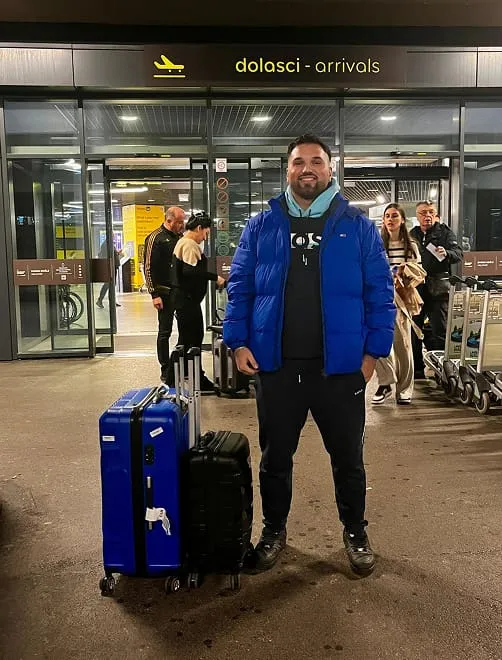
Ahmad
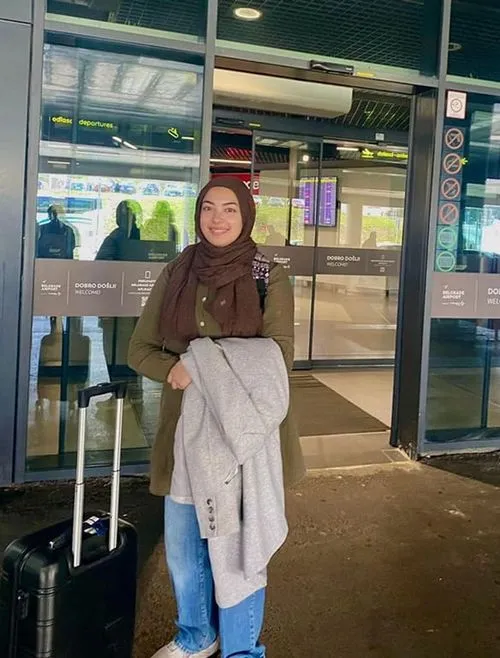
Sabrina
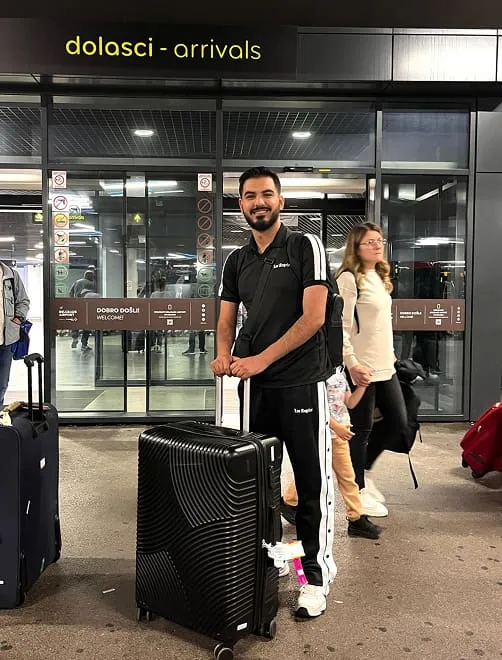
Rami
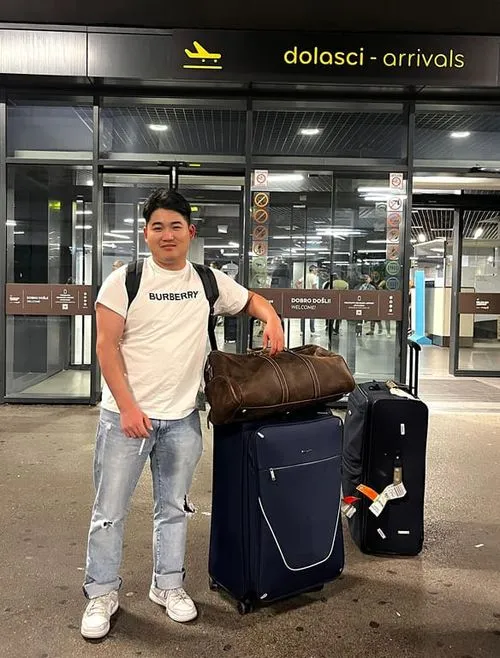
Noah
500+ students placed.
Now it's your turn!
No daydreaming, no empty promises. Just a clear plan — for the start of your medical degree.
40 minutes, no obligation