Study Medicine at Leipzig University
Faculty of Medicine · Universität Leipzig · Germany
Leipzig University's Faculty of Medicine was founded on 10 July 1415, making it the second-oldest continuously operating university medical school in Germany. Today it is Saxony's largest training centre for medicine and dentistry, linked to University Hospital Leipzig.
Last updated
University profile
The key facts about this university at a glance.
Programmes
Medicine, Dentistry
Tuition fees
No tuition fees for a first degree; semester contribution only
Duration
6 years and 3 months (state examination)
Language of instruction
German
Admission process
Competitive admission, based on school grades or a national selection
Intake
Winter semester (October)
Recognition
Living costs
Total students
30000
How Safe Is This Study Location?
Based on assessments from residents and visitors collected by Numbeo over the past five years.
6 years and 3 months (state examination)
950
Weather through the year
Average daytime highs by month.
✓ Placement without a grade cut-off — we place you regardless of your school-leaving grades. We go through the specific requirements together.
Get free advice →Where this university is
Drag the map to place the university in Europe — and to judge how far it is from home.
Why study medicine abroad at this university?
Study Medicine at Leipzig University
Leipzig University opened on 2 December 1409 in the refectory of the St Thomas monastery, founded by masters and students who had left Prague. Seven physicians were among the founding members, and on 10 July 1415 nine masters gave themselves the statutes of a separate medical faculty. Since then medicine has been taught in Leipzig without interruption, which makes it the second-oldest continuously existing university medical school in Germany. In the nineteenth century the faculty became one of the centres of scientific medicine, with laboratories that drew students from across Europe and America.
Today the Faculty of Medicine is one of the largest of the university's 14 faculties, with more than 100 professorships and some 50 institutes. It is the largest training centre for medicine, dentistry and midwifery in Saxony and the only one for pharmacy. Around 3,600 students are enrolled, about 2,800 of them in medicine and some 360 in dentistry. Clinical teaching takes place at University Hospital Leipzig (UKL), the city's largest hospital with about 1,450 beds and around 400,000 patients a year. Faculty and hospital have existed in their current legal form since 1999 and share a compact medical quarter around Liebigstraße, south-east of the city centre.
What makes medicine in Leipzig different
- Size and tradition: with around 340 first-year places in medicine and about 53 in dentistry every October, Leipzig is one of the largest medical schools in eastern Germany.
- Research clusters: obesity and metabolic research (including a Helmholtz institute run together with the faculty), heart medicine with the Heart Center Leipzig, and cell therapy with the Fraunhofer Institute for Cell Therapy and Immunology.
- Everything close together: the institutes and clinics of the medical quarter are a few tram stops from the main campus on Augustusplatz.
- No tuition fees: Saxony charges no tuition for a first degree; students only pay the semester contribution.
Who studying medicine in Leipzig suits
Leipzig suits students who want a real city with culture, music and nightlife, but at rents well below Munich, Hamburg or Berlin. It is a good fit for anyone who likes a large faculty with many electives and doctoral projects, and for those who value a lively student scene in neighbourhoods such as Connewitz, Plagwitz or the Südvorstadt. Students who prefer the intimacy of a small university town may find the scale of Leipzig less personal.
Competitive admission
Medicine in Leipzig is a German state degree with limited places. Admission is competitive and based on school grades or a national selection, and only part of the applicants receive a place.
Still comparing universities? The annual fee of 20 English-taught faculties is in one table in our guide to studying medicine in Europe in English.
- Founded: 2 December 1409; Faculty of Medicine 10 July 1415
- Type: Public university with 14 faculties
- Students: approx. 30,000 across the whole university
- Faculty of Medicine: more than 100 professorships, some 50 institutes, approx. 3,600 students
- University hospital: University Hospital Leipzig (UKL), approx. 1,450 beds, around 400,000 patients a year
- Legal form of faculty and hospital: current structure since 1999
- First-year places: about 340 in medicine and about 53 in dentistry
- Intake: winter semester only
- Language of instruction: German
- Degree: State examination in medicine or dentistry
Study medicine or dentistry: programmes and language of instruction
Structure, duration, language of instruction and degree — for every programme at this university.
- Medicine (state examination): the largest programme of the faculty, taught in German over twelve semesters plus the final examination period. Around 340 first-year places open every October; there is no summer intake. The degree ends with the German state examination and leads directly to the licence to practise.
- Dentistry (state examination): about 53 first-year places each winter semester. After the preclinical subjects students train on phantom heads and then treat patients under supervision at the university dental clinic in the medical quarter.
- Pharmacy: the Faculty of Medicine is the only place in Saxony where pharmacy is taught, which makes it a natural meeting point for future doctors and pharmacists in pharmacology and clinical teaching.
- Midwifery: taught as an academic degree at the faculty, with practical training in the university hospital's obstetrics department.
- Further programmes: the faculty also runs continuing-education and master's programmes in clinical and health sciences, which add a broad postgraduate community to the medical quarter.
Study conditions and campus life abroad
Medicine at Leipzig lasts twelve semesters plus the final examination period, about six years and three months in total, and always begins in the winter semester. Because Leipzig admits only once a year, each cohort moves through the degree together, which many students find helps with study groups and friendships.
Years one and two: preclinical phase
Anatomy, physiology, biochemistry, physics, chemistry, biology and medical psychology and sociology make up the first two years. Leipzig has a long tradition here: Carl Ludwig built one of the first modern physiological institutes in the city in the 1860s, and Paul Flechsig mapped the development of the brain's pathways at the Leipzig psychiatric clinic. Students complete a three-month nursing internship and a first-aid course before the first part of the medical examination.
Years three to five: clinical phase
The clinical years take place in the medical quarter around Liebigstraße. Students rotate through internal medicine, surgery, paediatrics, gynaecology, neurology, psychiatry and all other major specialties, with bedside teaching in small groups and skills training before they go onto the wards. Four months of clinical clerkships (Famulatur) during the semester breaks complete the phase; many students use one of them for a stay abroad.
Year six: practical year
The practical year is split into three 16-week blocks in internal medicine, surgery and an elective subject, at University Hospital Leipzig or at academic teaching hospitals across Saxony. The oral and practical part of the state examination follows directly afterwards.
Research during the degree
Metabolic and obesity research, cardiology, cell therapy and neuroscience offer many doctoral projects. Leipzig's tradition in brain research also reaches into psychology: Wilhelm Wundt, trained as a physician, opened his laboratory for experimental psychology here in 1879.
Admission: how to get a place to study medicine abroad
Study medicine abroad at 350+ universities worldwide
- The right university and a secure placement
- A study place abroad with an internationally recognised degree
- Support with your start, preparation and finding accommodation
- Help with transferring to another university
- Guidance all the way to your first job
Preparing properly with Medschool Experts
Tuition fees and living costs to study medicine abroad
Leipzig charges no tuition fees for a first degree. Each semester students pay a contribution of a few hundred euros that covers student services and the Germany-wide public transport ticket.
Living costs are among the lowest of any large German university city: around 850 to 1,050 € a month is enough for most students. A typical budget: 350 to 450 € for a room in a shared flat, 230 to 280 € for food, about 130 € for health insurance, 40 to 50 € for books and equipment and 120 to 150 € for phone and leisure. Rents in Leipzig have risen but remain well below those of western German cities. Shared flats in the Südvorstadt or Reudnitz are popular, as the medical quarter is close by, and the student services run several halls of residence.
Over six years and three months, living costs in Leipzig add up to roughly 64,000 to 79,000 € (own calculation based on the monthly range above), noticeably less than in Munich, Hamburg or Frankfurt. Many students work part-time in the university hospital, as tutors in the preclinical courses or in research groups in the medical quarter.
Many teaching hospitals pay an allowance during the practical year. German students can apply for BAföG; international students should plan their own financing for the full duration of the degree.
Alumni now practising internationally
Former students of this university who, according to publicly available sources, now work as doctors or dentists internationally. Anonymised overview — not an indication of any cooperation with Medschool Experts.
The city as a place to study medicine
Leipzig has more than 600,000 inhabitants and is one of Germany's fastest-growing cities. Johann Sebastian Bach worked for 27 years as cantor of St Thomas Church, the Gewandhaus Orchestra is one of the oldest civic orchestras in the world, and Auerbachs Keller appears in Goethe's Faust. In autumn 1989 the Monday demonstrations that began at St Nicholas Church helped bring down the Berlin Wall.
The city has a long tradition as a trade fair and book city, and its arcades and passages in the centre are unique in Germany. The Monument to the Battle of the Nations, completed in 1913, rises in the south-east, not far from the medical quarter. Neighbourhoods such as Connewitz, Plagwitz and the Südvorstadt are known for their student bars, galleries and converted factories.
South of the city, former open-cast mines have become lakes such as the Cospudener See, easy to reach by bike and popular for swimming and sailing in summer. Berlin is about 75 minutes away by ICE, Dresden around an hour, and Leipzig/Halle airport serves many European destinations. Summers are warm and dry, winters colder than in western Germany.
- City: Leipzig, Saxony
- Inhabitants: approx. 620,000
- Location: about 75 minutes from Berlin and an hour from Dresden by train
- Known for: Bach, the Gewandhaus, the Peaceful Revolution of 1989, trade fairs and books
- Nature: the lakes of the Leipzig New Lakeland south of the city
- Living costs: approx. 850 to 1,050 € per month
About the author
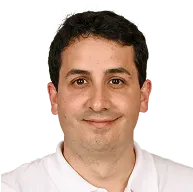
Marcel Kloos
Federally recognised dentist, founder and owner of Medschool Experts
Marcel Kloos founded the company while still studying abroad himself; since then more than 600 study places have been arranged. Originally from Stuttgart, he studied dentistry in Sofia from 2015 to 2021 and is a federally recognised dentist.
He now lives in Bern and runs the company full-time as its owner. He visits the partner universities in person on a regular basis.
Student reviews
Reviews by current and former students. We publish positive and negative reviews alike and state whether we placed the reviewer. Medschool Experts is a paid placement agency, so we are not an independent review site.
More universities to study medicine in this country
Compare the universities in the same country — programmes, fees and language of instruction side by side.
Student story
Videos about this university
Campus tour, first-hand accounts from students on the ground and answers to the most common questions — to watch rather than read.
Our curated universities
Our curated Top 20 — selected from the world's largest choice of universities for medicine, dentistry, pharmacy and veterinary medicine, independent of your high school diploma grades. We recommend each of these particularly, based on years of experience.
Problems at your university? Switch universities or train abroad
Exams not going well, trouble with the faculty, costs that have got out of hand, or you are simply not happy with the support you have had so far, including ours? You have options. We advise you free of charge on changing university and on completing parts of your clinical training abroad.
Change university
Move to another university and continue in a higher semester, usually without losing a year. We check your credits, find the right semester and handle the paperwork.
Clinical rotations abroad
Stay enrolled and complete single clinical blocks or rotations at a hospital abroad. You gain new hands-on experience and a fresh perspective on your degree.
Clinical internships abroad
Spend a few weeks at a hospital in another country, for example during the semester break, and see patients, ward routines and medicine from a different angle.
FAQ: studying medicine abroad at this university
Is medicine at Leipzig University taught in English?
No. The state examination programme is taught in German, and clinical work with patients also takes place in German.
When does medicine start in Leipzig?
Only in the winter semester in October. Leipzig has no summer intake for first-year medicine.
How old is the medical faculty in Leipzig?
It was founded on 10 July 1415 and has taught medicine without interruption since then, which makes it the second-oldest continuously existing university medical school in Germany.
Where does clinical training take place?
At University Hospital Leipzig (UKL) in the medical quarter around Liebigstraße and at teaching hospitals across Saxony during rotations and the practical year.
How many places does Leipzig offer?
Around 340 first-year places in medicine and about 53 in dentistry each October.
Can I study pharmacy or midwifery in Leipzig?
Yes. Both are taught at the Faculty of Medicine, which is the only place in Saxony offering pharmacy.
Which famous physicians worked in Leipzig?
Among others the physiologist Carl Ludwig, the brain researcher Paul Flechsig and Wilhelm Wundt, a physician who founded experimental psychology in Leipzig in 1879.
Is Leipzig cheap for students?
Compared with other large German cities, yes. Around 850 to 1,050 € a month covers rent, food, insurance and leisure for most students.
How far is Leipzig from Berlin?
About 75 minutes by ICE, with frequent connections throughout the day.

Ahmad

Sabrina

Rami

Noah
600+ students placed.
Now it's your turn!
No daydreaming, no empty promises. Just a clear plan — for the start of your medical degree.
40 minutes, no obligation