Study Medicine at Otto von Guericke University Magdeburg
Faculty of Medicine · Otto-von-Guericke-Universität Magdeburg · Germany
Medicine in Magdeburg goes back to the Medical Academy founded in 1954 and has been part of Otto von Guericke University since 1993. The faculty admits around 185 first-year students a year to a German-taught medical degree, with almost all clinics and institutes gathered on one campus in the capital of Saxony-Anhalt.
Last updated
University profile
The key facts about this university at a glance.
Programmes
Medicine
Tuition fees
No tuition fees; semester contribution only
Duration
6 years and 3 months (state examination)
Language of instruction
German
Admission process
Competitive admission, based on school grades, aptitude criteria or a national selection
Intake
Winter semester (October)
Recognition
Living costs
Total students
How Safe Is This Study Location?
Based on assessments from residents and visitors collected by Numbeo over the past five years.
185
6 years and 3 months (state examination)
875
Weather through the year
Average daytime highs by month.
✓ Placement without a grade cut-off — we place you regardless of your school-leaving grades. We go through the specific requirements together.
Get free advice →Where this university is
Drag the map to place the university in Europe — and to judge how far it is from home.
Why study medicine abroad at this university?
Study Medicine at the University of Magdeburg
Magdeburg's medical school is younger than most in Germany, and that shapes its character. On 7 September 1954 the city hospital in the district of Sudenburg, whose buildings date back to the 1890s, became the Medical Academy Magdeburg. The first lecture was held the next day in the lecture hall of the women's clinic, and the first semester counted just 47 students, most of them from Berlin and Leipzig. A year later 157 students began their clinical studies here, and from 1960 the academy offered the complete medical degree.
After German reunification the academy merged with the Technical University and the Teacher Training College. On 3 October 1993 they became Otto von Guericke University Magdeburg, named after the 17th-century mayor and physicist who demonstrated the force of the vacuum with his famous Magdeburg hemispheres. The former academy became the Faculty of Medicine, one of nine faculties of a university with more than 14,000 students.
One campus, short distances
The most striking feature of studying medicine in Magdeburg is the campus. Apart from the women's clinic, which lies in the district of Stadtfeld, all clinics, institutes, lecture halls, laboratories and the medical library are concentrated on one site in the south of the city. A central building opened in 2003 brought together wards with nearly 500 beds and the central emergency department, and a later seven-storey extension houses 16 operating theatres and four intensive care units used by 13 clinics. For students this means that the walk from the anatomy course to the bedside, from the library to the emergency room, takes minutes rather than tram rides. A student hall of residence stands right next to the campus.
University Medicine Magdeburg
University Medicine Magdeburg is the largest hospital in the north of Saxony-Anhalt and a maximum-care centre for the whole region. It comprises more than two dozen clinics and around twenty institutes covering every major specialty, from cardiology and neurosurgery to paediatrics and transplant medicine. Since 2006 the hospital has been an independent public institution of the state, working closely with the faculty in teaching and research. Students meet a broad patient population from both the city and the surrounding rural districts, which gives them a realistic view of medicine in a region with an ageing population.
Neuroscience and immunology
Magdeburg has two clearly defined research profiles. The first is neuroscience. The faculty works closely with the Leibniz Institute for Neurobiology and a site of the German Center for Neurodegenerative Diseases, and research ranges from learning and memory to dementia and stroke. A 7-tesla MRI scanner, one of only a handful in Germany, allows imaging of the living human brain in exceptional detail. The second profile is immunology and the molecular medicine of inflammation, with collaborative research centres and research training groups funded by the German Research Foundation and a master's programme in immunology with 20 places a year. Further growth areas include translational oncology, cardiovascular medicine and cell and immune therapies.
Practical skills from the start
Teaching follows the German medical licensing regulations, with integrated, case-based and problem-oriented lectures and a large share of independent learning. Since 2009 the faculty has run its own skills lab, where students practise examinations, injections, suturing and emergency procedures on simulators and with actors before they work with real patients. Many students also take part in an exchange: the faculty has partner universities in Europe and the Americas, including in France, Austria, Poland, the Netherlands, Lithuania, Bulgaria, Turkey, the United States, Mexico and Chile.
What makes medicine in Magdeburg different
- Everything on one campus: almost all clinics and institutes within walking distance, with a student residence next door.
- Focused research profile: neuroscience and immunology, with leading non-university institutes on the doorstep.
- High-end imaging: a 7-tesla MRI for brain research.
- Skills lab since 2009: structured practical training before the first patient contact.
- Medicine only: the faculty concentrates fully on human medicine, without a dental programme.
- No tuition fees and moderate rents: Saxony-Anhalt charges no tuition for a first degree.
- Central location: Berlin, Hanover and Leipzig are all within reach by train.
Who studying medicine in Magdeburg suits
Magdeburg suits students who value short distances and a compact, well-organised campus over the bustle of a big-city university hospital spread across many sites. It is a strong choice for anyone interested in neurology, psychiatry, neurosurgery or immunology, and for students who would like to combine their degree with a research doctorate in one of these fields. The city is larger and greener than many expect, and living costs remain moderate. Students who want to study dentistry need to look elsewhere, since Magdeburg offers medicine only, and all teaching and patient contact are in German.
Competitive admission
Medicine in Magdeburg is a German state degree with a limited number of places. Admission is competitive and based on school grades, additional aptitude criteria or a national selection, and only part of the applicants receive a place.
Still comparing universities? The annual fee of 20 English-taught faculties is in one table in our guide to studying medicine in Europe in English.
- Founded: 7 September 1954 as Medical Academy Magdeburg
- Part of Otto von Guericke University since: 3 October 1993
- First-year places: about 185 in medicine
- University hospital: University Medicine Magdeburg, maximum-care centre with almost all clinics on one campus
- Research: neuroscience; immunology and molecular medicine of inflammation
- Special features: skills lab since 2009, 7-tesla MRI, master's in immunology
- Intake: winter semester
- Language of instruction: German
- Degree: state examination in medicine
Study medicine or dentistry: programmes and language of instruction
Structure, duration, language of instruction and degree — for every programme at this university.
- Medicine (state examination): the faculty's core programme, taught in German over twelve semesters plus the final examination period, with about 185 first-year places each winter semester and clinical training on the campus of University Medicine Magdeburg.
- Immunology (master's): a research-oriented programme with 20 places a year, linked to the faculty's inflammation research.
- Doctoral training: structured support for medical doctorates in neuroscience and immunology.
Study conditions and campus life abroad
Medicine in Magdeburg lasts twelve semesters plus the final examination period, about six years and three months, and ends with the German state examination and the licence to practise. First-year students start in the winter semester.
Semesters one to four: preclinical phase
The first two years cover anatomy, physiology, biochemistry, physics, chemistry, biology, medical psychology and medical sociology, with at least 784 hours of instruction. Lectures are integrated and case-based, linking basic sciences to clinical problems from the start. Before the first part of the state examination, students complete three months of nursing service and a first-aid course.
Semesters five to ten: clinical phase
The clinical years take place on the campus of University Medicine Magdeburg. Students rotate through internal medicine, surgery, neurology, psychiatry, paediatrics, gynaecology and the other main specialties, with bedside teaching in small groups and regular training in the skills lab. Four months of clinical clerkships (Famulatur) during the semester breaks complete the phase; they can be done in Germany or abroad.
Semesters eleven and twelve: practical year
The practical year consists of three 16-week blocks in internal medicine, surgery and general practice or an elective subject, at the university hospital or at academic teaching hospitals in Saxony-Anhalt and neighbouring states. The oral and practical part of the state examination follows.
Research during the degree
Many students write a doctoral thesis in neuroscience or immunology, often in cooperation with the non-university institutes nearby. A structured programme supports young researchers from the doctorate onwards, and the master's programme in immunology brings medical students and life scientists together in the same laboratories.
Admission: how to get a place to study medicine abroad
Study medicine abroad at 350+ universities worldwide
- The right university and a secure placement
- A study place abroad with an internationally recognised degree
- Support with your start, preparation and finding accommodation
- Help with transferring to another university
- Guidance all the way to your first job
Preparing properly with Medschool Experts
Tuition fees and living costs to study medicine abroad
Saxony-Anhalt charges no tuition fees for a first degree, regardless of nationality. Each semester students pay a contribution of a few hundred euros for the student services, the student union and a semester ticket for local public transport. A discounted Germany-wide public transport ticket is also available to students.
Living costs in Magdeburg are moderate by German standards. Around 800 to 950 € a month is enough for most students. A typical monthly budget: 300 to 400 € for a room in a shared flat, 220 to 270 € for food, about 130 € for health insurance, 40 to 50 € for books and instruments, and 100 to 130 € for phone, sport and leisure.
The student services run several halls of residence, including one directly next to the medical campus. Popular districts for students are Sudenburg, close to the campus, Stadtfeld with its old buildings and cafés, and the area around the city centre. Trams connect the campus with the centre and the main station in a few minutes, and the flat city is easy to cross by bike, including along the Elbe cycle path.
Over six years and three months, living costs in Magdeburg add up to roughly 60,000 to 71,000 € (own calculation based on the monthly range above). Typical student jobs include tutoring, research assistant posts in the institutes and shifts in patient care at the university hospital. German students can apply for BAföG; international students should plan the financing of the whole degree in advance.
Alumni now practising internationally
Former students of this university who, according to publicly available sources, now work as doctors or dentists internationally. Anonymised overview — not an indication of any cooperation with Medschool Experts.
The city as a place to study medicine
Magdeburg has about 240,000 inhabitants and is the capital of Saxony-Anhalt. It lies on the Elbe, and its river parks, the Elbauenpark and the Rotehornpark on an island in the river, make it one of the greenest cities in Germany. The Gothic cathedral, the oldest Gothic cathedral on German soil, holds the tomb of Emperor Otto the Great, who made Magdeburg one of the most important cities of medieval Europe.
The city's modern landmarks include the Green Citadel, a colourful residential building designed by Friedensreich Hundertwasser, and the Magdeburg Water Bridge, where the Mittelland Canal crosses the Elbe on a navigable aqueduct. Otto von Guericke, the namesake of the university, is remembered with monuments and a museum, and his hemispheres experiment is re-enacted for visitors.
Student life centres on the Hasselbachplatz with its bars and on the riverbanks in summer. Berlin and Hanover are each about an hour and a half by train, Leipzig a little over an hour, and the Harz mountains are close for weekend hiking and skiing. The climate is continental and relatively dry.
- City: Magdeburg, capital of Saxony-Anhalt
- Inhabitants: approx. 240,000
- Known for: Gothic cathedral, Otto von Guericke, Green Citadel, Water Bridge
- Location: about 1.5 hours from Berlin and Hanover by train
- Living costs: approx. 800 to 950 € per month
About the author
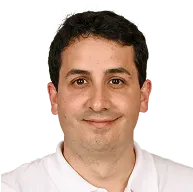
Marcel Kloos
Federally recognised dentist, founder and owner of Medschool Experts
Marcel Kloos founded the company while still studying abroad himself; since then more than 600 study places have been arranged. Originally from Stuttgart, he studied dentistry in Sofia from 2015 to 2021 and is a federally recognised dentist.
He now lives in Bern and runs the company full-time as its owner. He visits the partner universities in person on a regular basis.
Student reviews
Reviews by current and former students. We publish positive and negative reviews alike and state whether we placed the reviewer. Medschool Experts is a paid placement agency, so we are not an independent review site.
More universities to study medicine in this country
Compare the universities in the same country — programmes, fees and language of instruction side by side.
Student story
Videos about this university
Campus tour, first-hand accounts from students on the ground and answers to the most common questions — to watch rather than read.
Our curated universities
Our curated Top 20 — selected from the world's largest choice of universities for medicine, dentistry, pharmacy and veterinary medicine, independent of your high school diploma grades. We recommend each of these particularly, based on years of experience.
Problems at your university? Switch universities or train abroad
Exams not going well, trouble with the faculty, costs that have got out of hand, or you are simply not happy with the support you have had so far, including ours? You have options. We advise you free of charge on changing university and on completing parts of your clinical training abroad.
Change university
Move to another university and continue in a higher semester, usually without losing a year. We check your credits, find the right semester and handle the paperwork.
Clinical rotations abroad
Stay enrolled and complete single clinical blocks or rotations at a hospital abroad. You gain new hands-on experience and a fresh perspective on your degree.
Clinical internships abroad
Spend a few weeks at a hospital in another country, for example during the semester break, and see patients, ward routines and medicine from a different angle.
FAQ: studying medicine abroad at this university
Is medicine at the University of Magdeburg taught in English?
No. The state examination programme in medicine is taught in German, and all work with patients is in German.
How many first-year places does Magdeburg offer?
The faculty admits around 185 first-year students in medicine each year.
Can I study dentistry in Magdeburg?
No. The Faculty of Medicine in Magdeburg offers human medicine only.
Are there tuition fees in Magdeburg?
No. Saxony-Anhalt charges no tuition fees for a first degree; students pay only the semester contribution.
When was the medical school in Magdeburg founded?
The Medical Academy Magdeburg opened on 7 September 1954 and became part of Otto von Guericke University on 3 October 1993.
What is Magdeburg known for in medical research?
Neuroscience and immunology, including the molecular medicine of inflammation.
Where does clinical training take place?
On the campus of University Medicine Magdeburg in the south of the city, where almost all clinics and institutes are located.
How much does it cost to live in Magdeburg as a student?
Around 800 to 950 € a month covers rent, food, insurance and leisure for most students.
How far is Magdeburg from Berlin?
About an hour and a half by train.
Ahmad
Sabrina
Rami
Noah
600+ students placed.
Now it's your turn!
No daydreaming, no empty promises. Just a clear plan — for the start of your medical degree.
40 minutes, no obligation