Study Medicine at the University of Jena
Faculty of Medicine · Friedrich-Schiller-Universität Jena · Germany
The Faculty of Medicine in Jena has existed since 1558 and is the only university medical school in Thuringia. Medicine and dentistry are taught in German together with Jena University Hospital, which has 1,451 beds and is the largest employer in the state.
Last updated
University profile
The key facts about this university at a glance.
Programmes
Medicine, Dentistry
Tuition fees
No tuition fees; semester contribution only
Duration
6 years and 3 months (state examination)
Language of instruction
German
Admission process
Competitive admission, based on school grades or a national selection
Intake
Winter semester (October)
Recognition
Living costs
Total students
2700
How Safe Is This Study Location?
Based on assessments from residents and visitors collected by Numbeo over the past five years.
287
6 years and 3 months (state examination)
925
Weather through the year
Average daytime highs by month.
✓ Placement without a grade cut-off — we place you regardless of your school-leaving grades. We go through the specific requirements together.
Get free advice →Where this university is
Drag the map to place the university in Europe — and to judge how far it is from home.
Why study medicine abroad at this university?
Study Medicine at the University of Jena
Medicine has been taught in Jena for more than 450 years. When the university was founded in 1558, the Faculty of Medicine was one of its four original faculties, next to theology, law and philosophy. Over the centuries Jena became a place where medicine and the natural sciences grew together: the city's optical industry, built by Carl Zeiss, Ernst Abbe and Otto Schott in the 19th century, supplied microscopes to laboratories all over the world, and in 1924 the Jena psychiatrist Hans Berger recorded the first human electroencephalogram, the EEG.
Today the faculty is the only university medical institution in Thuringia. Together with Jena University Hospital it teaches more than 2,700 students in medicine, dentistry, molecular medicine and medical photonics. Each year about 287 first-year students begin medicine and about 57 begin dentistry. The university as a whole, named after the poet Friedrich Schiller, who taught history here from 1789, has around 17,000 students.
Jena University Hospital is by far the largest hospital in the state. In 2024 it had 1,451 beds, treated around 47,000 inpatients and recorded more than 540,000 outpatient consultations. With 7,204 employees it is Thuringia's largest employer. Most clinics have moved to the modern campus in Lobeda in the south of the city, where wards, operating theatres, the emergency department and research buildings are concentrated in one complex.
A medical faculty in a science city
Jena calls itself a city of science, and for medical students this is noticeable every day. Research institutes for optics, photonics, infection biology and ageing sit within a few kilometres of the hospital. The faculty's research focuses on sepsis and infection, the ageing of cells and organs, neuroscience and medical optics, and medical photonics is taught as a master's programme of its own. Doctoral students regularly work with physicists, chemists and biologists from neighbouring institutes.
What makes medicine in Jena different
- Tradition and modern campus: a faculty founded in 1558 that teaches in one of the newest hospital complexes in eastern Germany.
- Medium-sized cohorts: about 287 first-year students in medicine, large enough for a wide range of electives, small enough for personal contact.
- Strong research culture: sepsis, infection and ageing research and medical optics offer doctoral topics that few faculties can match.
- Dentistry on site: a dental programme with its own clinic, so medical and dental students share many preclinical courses.
- No tuition fees: Thuringia charges no tuition for a first degree.
- Affordable student city: rents are well below those in Munich, Hamburg or Frankfurt.
Who studying medicine in Jena suits
Jena suits students who like a lively, young city shaped by its university, and who want a university hospital with a broad range of specialties at a moderate cost of living. It is a good choice for anyone interested in intensive care, infectious diseases, neurology or the technical side of medicine. Students who prefer the anonymity of a metropolis may find Jena compact; Leipzig and Erfurt are close for a change of scene.
Competitive admission
Medicine and dentistry in Jena are German state degrees with limited places. Admission is competitive and based on school grades or a national selection, and only part of the applicants receive a place.
Still comparing universities? The annual fee of 20 English-taught faculties is in one table in our guide to studying medicine in Europe in English.
- Faculty of Medicine founded: 1558 (one of the four founding faculties)
- Type: state university, only university medical school in Thuringia
- Students: more than 2,700 in medicine, dentistry, molecular medicine and medical photonics
- First-year places: about 287 in medicine, about 57 in dentistry
- University hospital: Jena University Hospital, 1,451 beds (2024), 7,204 employees
- Research: sepsis and infection, ageing, neuroscience, medical optics
- Intake: winter semester
- Language of instruction: German
- Degrees: state examination in medicine and in dentistry
Study medicine or dentistry: programmes and language of instruction
Structure, duration, language of instruction and degree — for every programme at this university.
- Medicine (state examination): the largest programme of the faculty, taught in German over twelve semesters plus the final examination period, with about 287 first-year places each winter semester and clinical training at Jena University Hospital.
- Dentistry (state examination): taught in German at the university's dental clinic, with about 57 first-year places a year.
- Molecular medicine (master's): a research-oriented programme for graduates in life sciences, closely linked to the faculty's laboratories.
- Medical photonics (master's): combines optics and medicine, building on Jena's tradition as a centre of the optical industry.
Study conditions and campus life abroad
Medicine in Jena lasts twelve semesters plus the final examination period, about six years and three months, and ends with the German state examination. First-year students start in the winter semester, so each cohort begins together.
Semesters one to four: preclinical phase
The first two years cover anatomy, physiology, biochemistry, physics, chemistry, biology and medical psychology and sociology. Dissection courses take place in the faculty's anatomy institute, and early clinical seminars link the basic sciences to patients. A three-month nursing placement and a first-aid course are required before the first part of the state examination.
Semesters five to ten: clinical phase
The clinical years take place at Jena University Hospital, mainly on the Lobeda campus. Students rotate through internal medicine, surgery, paediatrics, gynaecology, neurology, psychiatry, anaesthesiology and intensive care and the other main specialties, with bedside teaching and practical training in small groups. Four months of clinical clerkships (Famulatur) in the semester breaks complete the phase; they can be done in Germany or abroad.
Semesters eleven and twelve: practical year
The practical year consists of three 16-week blocks in internal medicine, surgery and an elective subject, at the university hospital or at academic teaching hospitals in Thuringia and neighbouring states. The oral and practical part of the state examination follows and leads to the licence to practise.
Research during the degree
Many students start a doctoral thesis during their clinical years. Popular fields are sepsis and infection research, where Jena has built one of the leading centres in Germany, research on ageing, neuroscience and medical optics in cooperation with the city's photonics institutes. The master's programmes in molecular medicine and medical photonics bring researchers and medical students together in the same laboratories.
Admission: how to get a place to study medicine abroad
Study medicine abroad at 350+ universities worldwide
- The right university and a secure placement
- A study place abroad with an internationally recognised degree
- Support with your start, preparation and finding accommodation
- Help with transferring to another university
- Guidance all the way to your first job
Preparing properly with Medschool Experts
Tuition fees and living costs to study medicine abroad
Thuringia charges no tuition fees for a first degree, regardless of nationality. Every semester students pay a contribution of a few hundred euros for the student services, the student union and the semester ticket for local transport; a discounted Germany-wide public transport ticket is also available for students.
Living costs in Jena are among the lower ones for a German university town, although the city is the most expensive in Thuringia. Around 850 to 1,000 € a month is enough for most students. A typical budget: 330 to 430 € for a room in a shared flat, 230 to 280 € for food, about 130 € for health insurance, 40 to 50 € for books and instruments and 110 to 140 € for phone, sport and leisure.
The student services run halls of residence in several districts, including near the Lobeda campus. Many students live in the city centre, in the Westviertel or in Lobeda, which is connected to the centre by tram in about fifteen minutes. Because Jena lies in the narrow Saale valley, distances are short and many students cycle.
Over six years and three months, living costs in Jena add up to roughly 64,000 to 75,000 € (own calculation based on the monthly range above). Typical student jobs are tutoring in anatomy or physiology, research assistant posts in the institutes and shifts in patient care at the university hospital. German students can apply for BAföG; international students should plan the financing of the whole degree in advance.
Alumni now practising internationally
Former students of this university who, according to publicly available sources, now work as doctors or dentists internationally. Anonymised overview — not an indication of any cooperation with Medschool Experts.
The city as a place to study medicine
Jena has about 110,000 inhabitants and lies in the valley of the Saale, framed by limestone hills that turn green in spring and are covered with orchids in early summer. The skyline is marked by the round JenTower, a former university building and today the city's tallest landmark, from whose platform students look out over the whole valley.
The city's history is closely tied to the names that shaped it: Goethe, who supervised the university as a minister and loved its botanical garden, Schiller, Hegel, Fichte and the early Romantics, and later Carl Zeiss, Ernst Abbe and Otto Schott, whose optical works made Jena world-famous. The Optical Museum and the Zeiss Planetarium, the oldest working planetarium in the world, are reminders of that heritage.
Jena is a young city: roughly one in seven inhabitants studies at the university, and the student scene is lively, with clubs, cafés and cultural venues in the old town and summer evenings on the Saale meadows. The hills around the city are popular for hiking, climbing and mountain biking, and the Saale is used for canoeing.
Weimar is about 15 minutes and Erfurt about half an hour away by train, Leipzig around an hour and Berlin about two and a half hours. The climate is continental, with warm summers in the sheltered valley and cold winters.
- City: Jena, Thuringia
- Inhabitants: approx. 110,000
- Known for: optics (Zeiss, Abbe, Schott), EEG discovery by Hans Berger in 1924, JenTower
- Location: 15 minutes from Weimar and Erfurt, about 1 hour from Leipzig by train
- Living costs: approx. 850 to 1,000 € per month
About the author
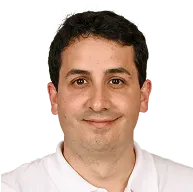
Marcel Kloos
Federally recognised dentist, founder and owner of Medschool Experts
Marcel Kloos founded the company while still studying abroad himself; since then more than 600 study places have been arranged. Originally from Stuttgart, he studied dentistry in Sofia from 2015 to 2021 and is a federally recognised dentist.
He now lives in Bern and runs the company full-time as its owner. He visits the partner universities in person on a regular basis.
Student reviews
Reviews by current and former students. We publish positive and negative reviews alike and state whether we placed the reviewer. Medschool Experts is a paid placement agency, so we are not an independent review site.
More universities to study medicine in this country
Compare the universities in the same country — programmes, fees and language of instruction side by side.
Student story
Videos about this university
Campus tour, first-hand accounts from students on the ground and answers to the most common questions — to watch rather than read.
Our curated universities
Our curated Top 20 — selected from the world's largest choice of universities for medicine, dentistry, pharmacy and veterinary medicine, independent of your high school diploma grades. We recommend each of these particularly, based on years of experience.
Problems at your university? Switch universities or train abroad
Exams not going well, trouble with the faculty, costs that have got out of hand, or you are simply not happy with the support you have had so far, including ours? You have options. We advise you free of charge on changing university and on completing parts of your clinical training abroad.
Change university
Move to another university and continue in a higher semester, usually without losing a year. We check your credits, find the right semester and handle the paperwork.
Clinical rotations abroad
Stay enrolled and complete single clinical blocks or rotations at a hospital abroad. You gain new hands-on experience and a fresh perspective on your degree.
Clinical internships abroad
Spend a few weeks at a hospital in another country, for example during the semester break, and see patients, ward routines and medicine from a different angle.
FAQ: studying medicine abroad at this university
Is medicine at the University of Jena taught in English?
No. The state examination programme in medicine is taught in German, and work with patients also takes place in German.
How many first-year places does Jena offer?
About 287 places in medicine and about 57 in dentistry each year.
Are there tuition fees in Jena?
No. Thuringia charges no tuition fees for a first degree; students pay only the semester contribution.
How old is the Faculty of Medicine in Jena?
It was one of the four founding faculties of the university in 1558.
Where does clinical training take place?
At Jena University Hospital, mainly on the Lobeda campus, and during the practical year also at academic teaching hospitals.
How big is Jena University Hospital?
In 2024 it had 1,451 beds, around 47,000 inpatients and 7,204 employees.
What is Jena known for in research?
Sepsis and infection research, ageing research, neuroscience and medical optics.
Is Jena expensive for students?
Around 850 to 1,000 € a month covers rent, food, insurance and leisure for most students.
How far is Jena from Leipzig and Berlin?
Leipzig is about an hour and Berlin about two and a half hours away by train.

Ahmad

Sabrina

Rami

Noah
600+ students placed.
Now it's your turn!
No daydreaming, no empty promises. Just a clear plan — for the start of your medical degree.
40 minutes, no obligation