Study Medicine at the University of Lübeck
Section of Medicine · Universität zu Lübeck · Germany
The University of Lübeck began in 1964 as a medical academy with 14 students and has grown into a small, focused life-science university. Medicine is taught in German on a single campus shared with the Lübeck site of University Hospital Schleswig-Holstein.
Last updated
University profile
The key facts about this university at a glance.
Programmes
Medicine
Tuition fees
No tuition fees for a first degree; semester contribution only
Duration
6 years and 3 months (state examination)
Language of instruction
German
Admission process
Competitive admission, based on school grades or a national selection
Intake
Winter semester (October)
Recognition
Living costs
Total students
6000
How Safe Is This Study Location?
Based on assessments from residents and visitors collected by Numbeo over the past five years.
6 years and 3 months (state examination)
950
Weather through the year
Average daytime highs by month.
✓ Placement without a grade cut-off — we place you regardless of your school-leaving grades. We go through the specific requirements together.
Get free advice →Where this university is
Drag the map to place the university in Europe — and to judge how far it is from home.
Why study medicine abroad at this university?
Study Medicine at the University of Lübeck
Lübeck is one of the youngest and smallest places to study medicine in Germany, and that is exactly its appeal. The Medical Academy Lübeck was founded in 1964 as the second medical faculty of Kiel University; the founding ceremony took place on 3 November 1964 in the audience hall of Lübeck's Gothic town hall, and the first cohort consisted of just 14 students. Two years later there were already 300. At first only the clinical part of the degree was taught in Lübeck; the preclinical subjects were built up during the 1970s.
The institution became independent step by step: Medical College Lübeck in 1973, Medical University of Lübeck on 10 May 1985, and finally University of Lübeck in 2002, after computer science and the natural sciences had grown around the medical core. Since 2015 it has been a foundation university, a legal form that gives it more autonomy and ties it to the old Hanseatic tradition of civic foundations. Its motto is “Im Focus das Leben”, focus on life.
Today around 6,000 students are enrolled, a little under half of them in medicine. Everything is on one campus in the south of the city along Ratzeburger Allee: lecture halls, institutes, the library and the Lübeck campus of University Hospital Schleswig-Holstein (UKSH), which Lübeck shares with Kiel and which is the second-largest university hospital in Germany.
A life-science university built around medicine
Lübeck has no law, humanities or economics faculties. Its programmes all revolve around health: medicine, nursing and midwifery science, psychology, molecular life science, medical engineering, medical informatics and biomedical technology. For medical students this means that the engineers, computer scientists and biologists on campus work on medical questions too, and doctoral projects at the interface of medicine and technology are easy to find. The university is also a partner in the excellence cluster on chronic inflammation that it runs together with Kiel.
What makes medicine in Lübeck different
- Small and personal: a compact cohort, short distances and teachers who know their students by name.
- Three teaching priorities: prevention, communication and emergency medicine run through the whole curriculum as practical training.
- Problem-oriented learning: cases are worked through across subjects in guided small groups.
- Early research: an interdisciplinary doctoral culture, with many students starting a thesis during the clinical years.
- One campus with the hospital: preclinical institutes and clinics are within walking distance of each other.
- No tuition fees: Schleswig-Holstein charges no tuition for a first degree.
Who studying medicine in Lübeck suits
Lübeck suits students who prefer a close-knit community to an anonymous mass faculty, who like the idea of knowing most of their year, and who enjoy a historic city by the sea. It is ideal for anyone curious about medical technology or digital medicine. Students who want a big-city scene will find Hamburg 45 minutes away by train; those who want to study dentistry need to look elsewhere, as Lübeck offers human medicine only.
Competitive admission
Medicine in Lübeck is a German state degree with limited places. Admission is competitive and based on school grades or a national selection, and only part of the applicants receive a place.
Still comparing universities? The annual fee of 20 English-taught faculties is in one table in our guide to studying medicine in Europe in English.
- Founded: 1964 as Medical Academy Lübeck (first cohort: 14 students)
- Milestones: Medical College 1973, Medical University 10 May 1985, University of Lübeck 2002, foundation university 2015
- Type: public foundation university focused on life sciences
- Students: around 6,000, a little under half in medicine
- University hospital: UKSH, Campus Lübeck
- Teaching priorities: prevention, communication, emergency medicine
- Intake: winter semester
- Language of instruction: German
- Degree: state examination in medicine
Study medicine or dentistry: programmes and language of instruction
Structure, duration, language of instruction and degree — for every programme at this university.
- Medicine (state examination): the core programme of the university, taught in German over twelve semesters plus the final examination period, with one intake each October and clinical training at the UKSH campus next door.
- Health sciences around medicine: nursing, midwifery science, physiotherapy and psychology are taught on the same campus, so interprofessional teaching with future colleagues is part of everyday life.
- Medical engineering and informatics: bachelor's and master's programmes in medical engineering, medical informatics and biomedical technology make Lübeck a natural place for doctoral projects in imaging, robotics and digital medicine.
- Molecular life science: a research-oriented programme whose laboratories also host many medical doctoral students.
Study conditions and campus life abroad
Medicine in Lübeck lasts twelve semesters plus the final examination period, about six years and three months. First-year students always start in the winter semester, so each cohort stays together from the first anatomy lecture to the practical year.
Years one and two: preclinical phase
The first two years cover anatomy, physiology, biochemistry, physics, chemistry, biology and medical psychology and sociology. In Lübeck these subjects are taught together with the natural science and informatics sections of the university, which grew out of the preclinical teaching in the 1970s. Clinical references are built in early, and problem-oriented case seminars connect the basic sciences to patients. A three-month nursing internship and a first-aid course are required before the first part of the state examination.
Years three to five: clinical phase
The clinical years take place at the UKSH campus next door. Students rotate through internal medicine, surgery, paediatrics, gynaecology, neurology, psychiatry and all other major specialties, with bedside teaching in small groups. The three Lübeck priorities shape this phase: prevention, structured communication training with simulated patients, and emergency medicine with repeated practical sessions. Four months of clinical clerkships (Famulatur) in the semester breaks complete the phase; partners around the Baltic make Scandinavia and the Baltic states popular destinations.
Year six: practical year
The practical year consists of three 16-week blocks in internal medicine, surgery and an elective subject, at UKSH or at academic teaching hospitals in Schleswig-Holstein and neighbouring states. The oral and practical part of the state examination follows and leads to the licence to practise.
Research during the degree
Because the whole university is organised around the life sciences, doctoral projects are unusually varied: inflammation and infection research, endocrinology and the body's internal clocks, neuroscience, medical imaging, robotics and artificial intelligence in medicine. Research groups on the science campus work across medicine, informatics, biosciences and engineering, and medical students are welcome in all of them.
Admission: how to get a place to study medicine abroad
Study medicine abroad at 350+ universities worldwide
- The right university and a secure placement
- A study place abroad with an internationally recognised degree
- Support with your start, preparation and finding accommodation
- Help with transferring to another university
- Guidance all the way to your first job
Preparing properly with Medschool Experts
Tuition fees and living costs to study medicine abroad
The University of Lübeck charges no tuition fees for a first degree. Each semester students pay a contribution of a few hundred euros for the student services and the Germany-wide public transport ticket, which covers the city buses, the trains to Hamburg and Kiel and the short ride to the beach at Travemünde.
Living costs are moderate. Around 850 to 1,050 € a month is enough for most students. A typical budget: 350 to 450 € for a room in a shared flat, 230 to 280 € for food, about 130 € for health insurance, 40 to 50 € for books and instruments and 120 to 150 € for phone, sport and leisure. Rents are clearly lower than in Hamburg, which is why some Hamburg students even commute the other way.
Popular areas are St. Jürgen, the district around the campus, and the old town island, about ten minutes away by bike. The Studentenwerk Schleswig-Holstein runs halls of residence close to the university, and because the city is flat and compact almost everyone cycles.
Over six years and three months, living costs in Lübeck add up to roughly 64,000 to 79,000 € (own calculation based on the monthly range above). Many students work as tutors in anatomy or in the skills lab, as student assistants in research groups or in patient care at UKSH. Teaching hospitals often pay an allowance during the practical year. German students can apply for BAföG; international students should plan their financing for the whole degree.
Alumni now practising internationally
Former students of this university who, according to publicly available sources, now work as doctors or dentists internationally. Anonymised overview — not an indication of any cooperation with Medschool Experts.
The city as a place to study medicine
Lübeck has about 220,000 inhabitants and was for centuries the “Queen of the Hanseatic League”, the leading trading city of the Baltic. Its old town, an island surrounded by the river Trave, has been a UNESCO World Heritage Site since 1987. The Holstentor, the brick Gothic churches with their seven spires and the merchants' houses with stepped gables give the city a character unlike any other German university town.
Lübeck is also the city of three Nobel laureates: Thomas Mann, whose novel Buddenbrooks is set here, Günter Grass, who lived and worked in the city, and Willy Brandt, who was born here. Their houses are museums today. And then there is marzipan, which Lübeck has made famous around the world.
The sea is close. Travemünde, the city's own seaside resort with a wide sandy beach and ferries to Scandinavia and the Baltic states, is about twenty minutes away by train. In summer students swim, sail and barbecue on the beach; in winter the Christmas markets fill the old town.
Hamburg is about 45 minutes away by regional train, Kiel a little over an hour, and Copenhagen can be reached by train in a few hours. The climate is maritime, with mild summers, windy autumns and grey but rarely harsh winters.
- City: Hanseatic City of Lübeck, Schleswig-Holstein
- Inhabitants: approx. 220,000
- Old town: UNESCO World Heritage Site since 1987
- Known for: Holstentor, marzipan, Thomas Mann, Günter Grass, Willy Brandt
- Location: 45 minutes from Hamburg, 20 minutes from the Baltic beach at Travemünde
- Living costs: approx. 850 to 1,050 € per month
About the author
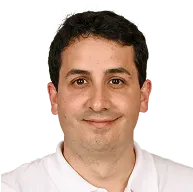
Marcel Kloos
Federally recognised dentist, founder and owner of Medschool Experts
Marcel Kloos founded the company while still studying abroad himself; since then more than 600 study places have been arranged. Originally from Stuttgart, he studied dentistry in Sofia from 2015 to 2021 and is a federally recognised dentist.
He now lives in Bern and runs the company full-time as its owner. He visits the partner universities in person on a regular basis.
Student reviews
Reviews by current and former students. We publish positive and negative reviews alike and state whether we placed the reviewer. Medschool Experts is a paid placement agency, so we are not an independent review site.
More universities to study medicine in this country
Compare the universities in the same country — programmes, fees and language of instruction side by side.
Student story
Videos about this university
Campus tour, first-hand accounts from students on the ground and answers to the most common questions — to watch rather than read.
Our curated universities
Our curated Top 20 — selected from the world's largest choice of universities for medicine, dentistry, pharmacy and veterinary medicine, independent of your high school diploma grades. We recommend each of these particularly, based on years of experience.
Problems at your university? Switch universities or train abroad
Exams not going well, trouble with the faculty, costs that have got out of hand, or you are simply not happy with the support you have had so far, including ours? You have options. We advise you free of charge on changing university and on completing parts of your clinical training abroad.
Change university
Move to another university and continue in a higher semester, usually without losing a year. We check your credits, find the right semester and handle the paperwork.
Clinical rotations abroad
Stay enrolled and complete single clinical blocks or rotations at a hospital abroad. You gain new hands-on experience and a fresh perspective on your degree.
Clinical internships abroad
Spend a few weeks at a hospital in another country, for example during the semester break, and see patients, ward routines and medicine from a different angle.
FAQ: studying medicine abroad at this university
Is medicine at the University of Lübeck taught in English?
No. The state examination programme is taught in German, and work with patients also takes place in German.
When does medicine start in Lübeck?
First-year students always start in the winter semester in October.
How old is the University of Lübeck?
It was founded in 1964 as the Medical Academy Lübeck, became the Medical University of Lübeck in 1985 and has been called University of Lübeck since 2002. Since 2015 it has been a foundation university.
Where does clinical training take place?
At the Lübeck campus of University Hospital Schleswig-Holstein (UKSH), directly next to the university, and during the practical year also at academic teaching hospitals.
Can I study dentistry in Lübeck?
No. Lübeck offers human medicine; the only dental programme in Schleswig-Holstein is in Kiel.
What are the teaching priorities in Lübeck?
Prevention, communication and emergency medicine, all taught through practical exercises, together with problem-oriented learning in small groups.
How big is the university?
Around 6,000 students, a little under half of them in medicine. All programmes are related to health and the life sciences.
Is Lübeck expensive for students?
No. Around 850 to 1,050 € a month covers rent, food, insurance and leisure for most students.
How far is Lübeck from Hamburg and the sea?
Hamburg is about 45 minutes by train; the beach at Travemünde is around twenty minutes away.
Ahmad
Sabrina
Rami
Noah
600+ students placed.
Now it's your turn!
No daydreaming, no empty promises. Just a clear plan — for the start of your medical degree.
40 minutes, no obligation